Manufacturing Systems and Automation

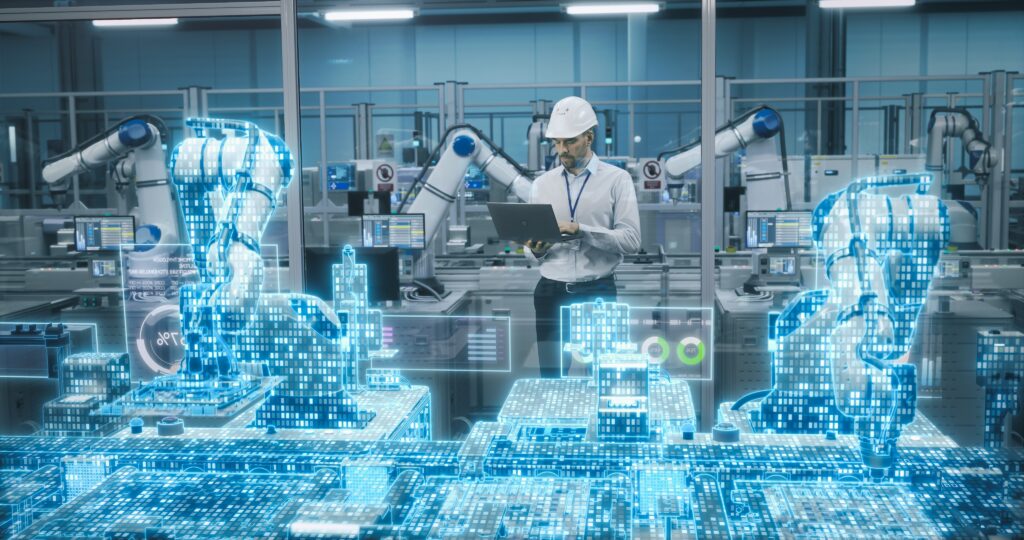
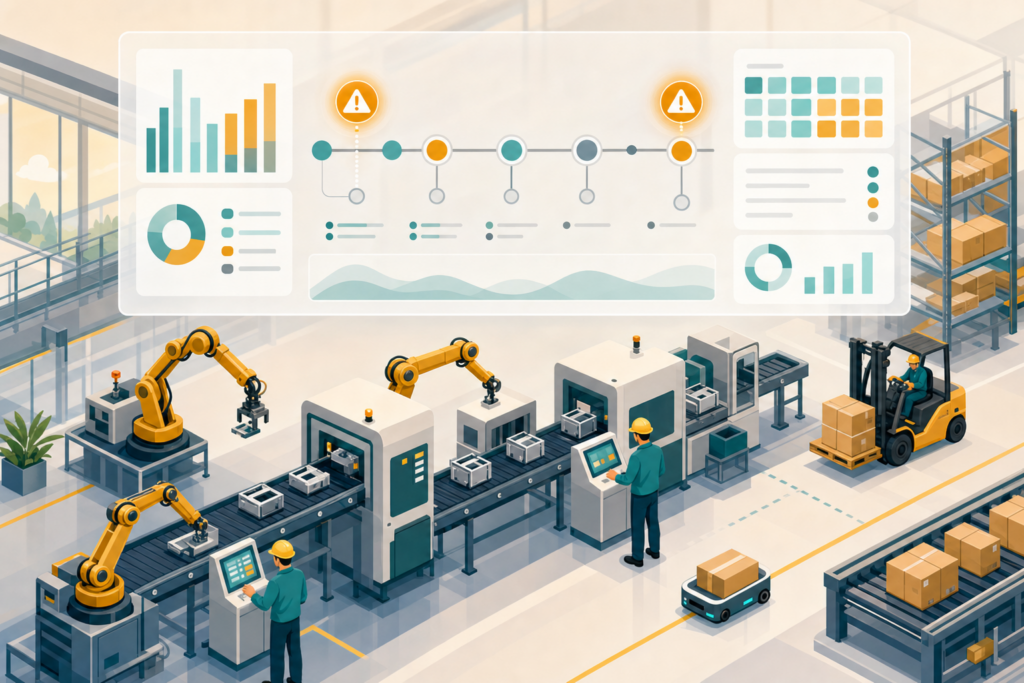
Enterprise Resource Planning (ERP) upholds Manufacturing Systems and Automation by smoothly integrating core functionalities. ERP optimizes production processes, inventory management, and supply chain operations. It provides real-time visibility into manufacturing workflows, facilitating informed decision-making. Through automation, ERP streamlines production scheduling, reduces lead times, and enhances resource utilization. With modules dedicated to quality control and compliance, ERP ensures adherence to industry standards. The integration of ERP with Manufacturing Systems enables data-driven insights, supporting predictive maintenance and minimizing downtime. By unifying manufacturing data, ERP fosters collaboration between departments, suppliers, and partners. This synergy helps organizations to achieve operational excellence, improve production efficiency, and respond adeptly to market demands, creating a robust foundation for success in the manufacturing industry.

Automating SAP Batch Genealogy, Material Certificates Through EDI Integration
Manufacturing organizations face challenges in managing material certification documents and batch genealogy across multiple plants, leading to delays and errors; however, by automating these processes one global manufacturer significantly improved operational efficiency, reducing manual effort by 4,000 hours annually and enhancing compliance response times.
Rootstock Ready Cuts ERP Implementation Time, Costs for Midmarket Manufacturers
Rootstock Software has introduced Rootstock Ready, a streamlined ERP solution for midmarket manufacturers and distributors that offers a fixed-fee implementation model, promising faster deployment, reduced costs and immediate access to AI readiness on the Salesforce platform.
Manufacturers face deployment hurdles for smart technologies: SYSPRO
Syspro Marketplace Expands ERP Reach for Manufacturers and Distributors
Syspro has launched a curated marketplace to help manufacturers and distributors enhance their ERP platforms by providing access to a growing ecosystem of integrated solutions, thereby reducing the need for costly custom integrations and accelerating operational performance.
Sage Agentic ERP Shifting From Passive Recording to Active Prevention
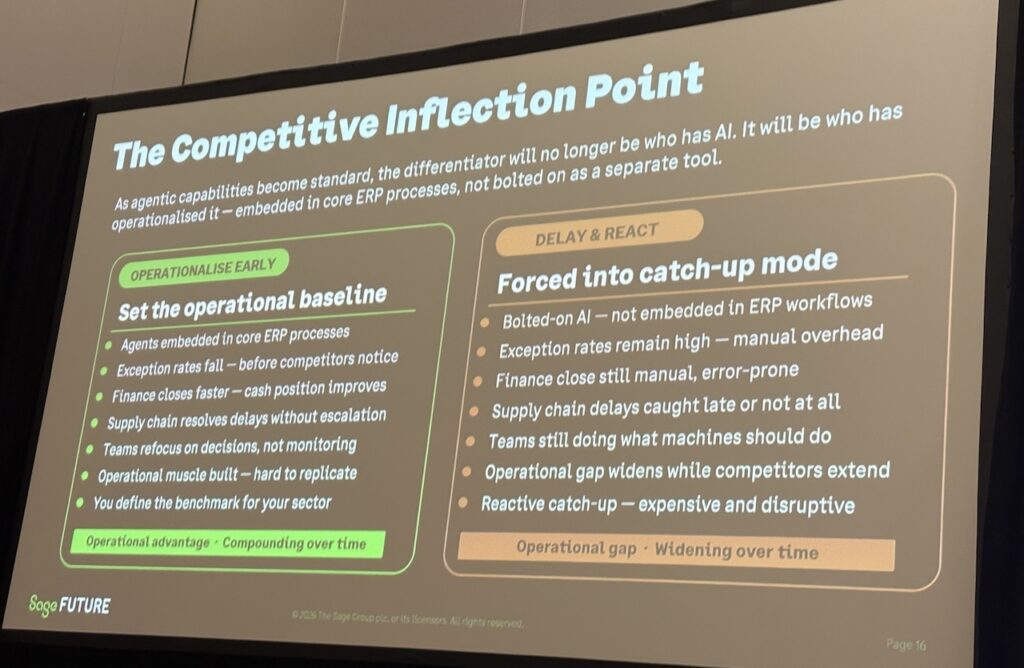
The evolution of ERP systems from passive record-keeping to proactive, AI-powered agents capable of real-time monitoring and decision-making is outlined by Sage, emphasizing the necessity for companies to integrate such capabilities to remain competitive.
Sage HCM Targets Cost Gaps Bleeding Product Manufacturers Dry
Manufacturers, facing tight margins, are turning to Sage HCM to unify HR, payroll, and financial data in real time, enabling better visibility and management of labor costs to prevent margin losses.
Sage X3 Helping Food, Beverage Manufacturers Tackle AI and Compliance Challenges
Food and beverage manufacturers are leveraging Sage X3 ERP to enhance inventory management, compliance, and AI adoption amidst operational complexities.
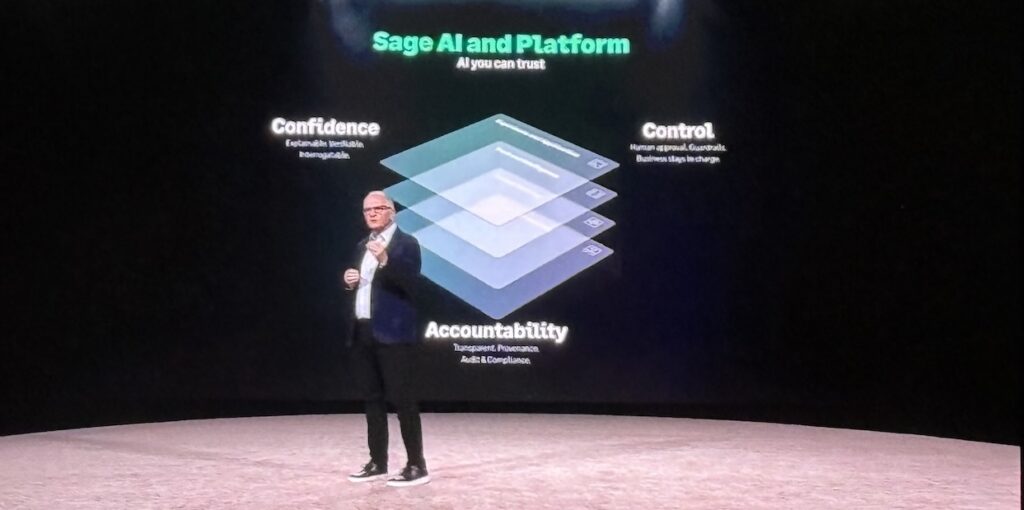
Sage CEO Steve Hare talking about the future of AI and ERP systems.
Sage Future Keynote Highlights Discipline, Transparency for AI Finance
Sage Future 2026 in San Francisco highlighted the integration of AI in finance that enhances decision-making while maintaining human accountability as experts demonstrated the shift towards empowered, data-driven finance operations leveraging modern ERP systems.
AETC Implements Rootstock Cloud ERP to Strengthen Planning, Growth
Applied Energy Technology Corp. has successfully implemented Rootstock Cloud ERP to modernize its manufacturing processes for small explosive devices, enhancing operational efficiency, compliance and scalability.
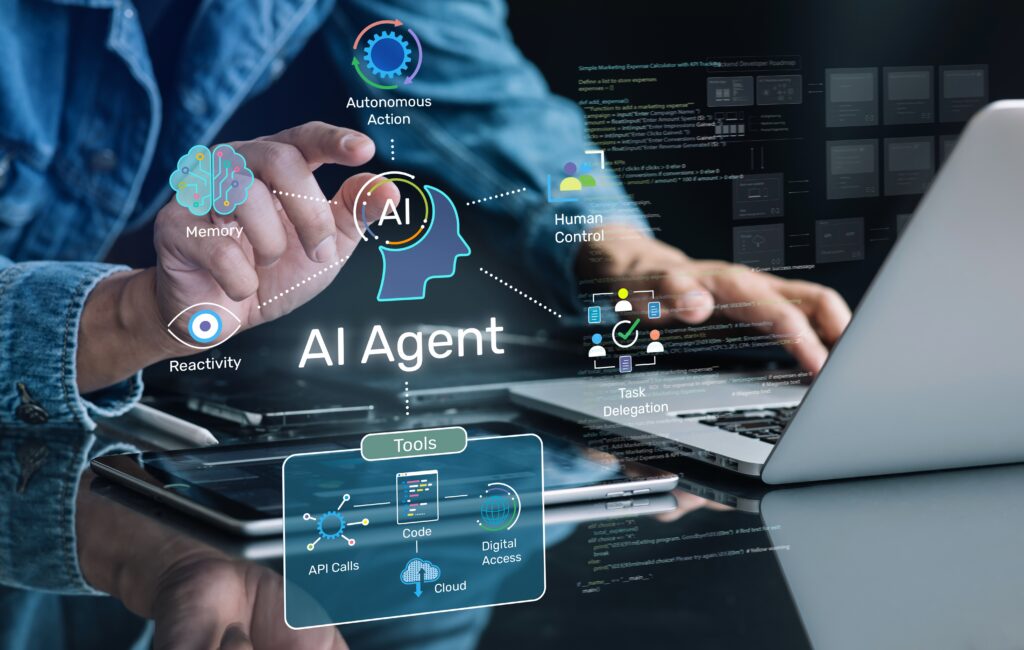
Sage and AI Agents
Sage Acquires Doyen AI to Improve SMB AI Migration
Sage's acquisition of Doyen AI aims to enhance ERP and financial system implementations by embedding AI in migration workflows, promising faster, more efficient deployments for SMBs while ensuring transparency and governance in data handling.
stock image of manufacturing tool_SAP AI use cases Hannover Messe
Four AI Use Cases SAP Unveiled at Hannover Messe for Embedded Intelligence in Operations
At Hannover Messe 2026, SAP highlighted the integration of AI within core enterprise workflows, showcasing four use cases that illustrate how embedded intelligence can streamline supply chain orchestration, smart production, intelligent packaging, and humanoid robotics.
Syspro Betting On AI to Activate Manufacturing ERP’s Future
Syspro is transforming its ERP system into a proactive decision-support tool for manufacturers and distributors by embedding AI directly into workflows to enhance real-time validation, reduce disruptions and improve operational efficiency while maintaining governance and accountability.
IFS Starts 2026 Strong As Industrial AI Embeds In Ops
IFS reported 25% YoY growth in annual recurring revenue to start 2026 and a shift in industrial AI usage from single-task support to integration into planning and execution processes, highlighting the company's deepening role in asset-intensive sectors.
A humanoid robot checking for misplaced or improperly stacked items_SAP EWM humanoid robotics
SAP EWM Meets Humanoid Robotics in New Accenture and Vodafone Warehouse Pilot
SAP, Accenture, and Vodafone Procure & Connect have launched a warehouse pilot that integrates humanoid robots with SAP Extended Warehouse Management, showcasing how SAP EWM could become a control layer for physical AI, governed automation, and real-time warehouse execution.
Fujitsu GLOVIA One Targets AI Era of Japanese ERP
Fujitsu is launching GLOVIA One, a cloud-based ERP suite tailored for mid-sized Japanese companies, integrating AI agents and a composable architecture to address local business needs while streamlining compliance and decision-making processes.
SAP agentic AI manufacturing Hannover Messe 2026
Infor Expands Manufacturing Strategy with Deloitte MES Alliance and AWS AI Push
Infor expands its manufacturing strategy through a Deloitte MES alliance and AWS AI agents, connecting shop floor execution with ERP and automation at scale.
SAP agentic AI manufacturing Hannover Messe 2026
SAP at Hannover Messe 2026: New AI Agents Push ERP Execution Closer to the Edge of Operations
SAP unveiled new agentic AI capabilities at Hannover Messe 2026, outlining how manufacturers can improve resilience across production, logistics, service and supply chain operations.
Choosing the Right Integration Strategy and Framework for Manufacturers
Manufacturers face integration challenges as their systems become increasingly complex and interdependent, necessitating a strategic shift from point-to-point connections to a more cohesive approach like integration platform as a service (iPaaS) to effectively manage growth, change, and operational efficiency.
Bluerock TMS Targets Last Mile’s Costliest Blind Spots
Bluerock TMS is launching a cloud-native Last Mile Distribution solution that integrates the entire delivery lifecycle, leveraging AI to enhance operational efficiency and reduce costs, while providing vital data for ERP systems, as showcased at Modex 2026.
SaaS Growth Wave Forcing New ERP Approaches
The SaaS market is rapidly expanding, projected to reach $1.58 trillion by 2033, prompting CIOs and ERP leaders to rethink system integration, security, and governance as small and midsize enterprises increasingly adopt cloud software while managing multi-region portfolios and addressing challenges like data security and vendor lock-in.
How GenAI Fixed Withholding Tax at Scale, Improved Processes
A global agribusiness faced inefficiencies in handling withholding tax certificates in Latin America, especially in Argentina, involving time-consuming manual processes; by implementing a hybrid cloud architecture with AI-driven automation, they significantly streamlined data extraction and compliance, reducing manual errors and reclaiming analyst productivity.
How Embedded MOM Closes the ERP Visibility Gap
Syspro's Manufacturing Operations Management solution integrates seamlessly with ERP to enhance shop floor visibility and performance through real-time data collection, scheduling, and analytics, addressing the inefficiencies traditional ERPs face in mid-market manufacturing.
Clorox manufacturing team at Aberdeen, MD plant during SAP S/4HANA cutover, showing frontline operations and production environment.
What Happened During Clorox’s SAP S/4HANA Cutover—Insights from the CSCO
Clorox’s SAP S/4HANA cutover shows how ERP changes manufacturing and supply chain execution. From inventory timing effects to stabilization and workflow integration, the transformation reshapes how work moves across the network.
Navigating ERP Migrations Without the Usual Pitfalls
Aptean highlights that successful ERP migrations depend more on data readiness, process simplification, and user preparedness than on software itself, advocating for disciplined data strategies and industry-specific best practices to minimize risks and complexities.
Manufacturers Are Rushing ERP Modernization and Paying the Price
Manufacturers' urgency to modernize their ERP systems amid rising AI demands must prioritize careful sequencing over risky big bang implementations, as organizational readiness and data maturity are critical for successful transformation amidst growing complexity.
Syspro Names Leanne Taylor CEO as Part of Leadership Succession Plan
Syspro has appointed Leanne Taylor as CEO, succeeding Jaco Maritz, to spearhead the company's next phase of growth driven by AI and operational intelligence in ERP, reflecting a strategic alignment with its new ownership under Advent.
‘The Biggest Opportunity is Moving From Reactive to Proactive Decision-Making:’ Jon Pollock
Acumatica’s 2026 R1 release introduces embedded AI into core workflows to enhance decision-making, enabling mid-market organizations to proactively manage supply chain challenges and improve operational efficiency.
Cell and gene therapy manufacturing vials arranged in a controlled lab tray for traceability and processing
Cell and Gene Therapy Manufacturing Exposes the Cost of Delayed Digital Infrastructure
Cell and gene therapy manufacturing is exposing the limits of manual coordination. As programs scale, digital orchestration is becoming essential to ensure traceability, reduce risk, and support operational execution.