
Magazine Reads

Inside the Global Data Center Investment Surge and Why It Matters for ERP Leaders
Recent massive investments in data centers by major tech companies signify a transformative buildout of global computing capacity, driven by the demands of enterprise AI, geographic strategic importance, and energy constraints, reshaping how cloud and AI services will be delivered in the future.
SAP Security Has the Board’s Attention—Now What?
SAP security has gained visibility at the executive level but often fails to drive decisions due to a lack of effective translation of cyber risks into clear business impacts, as highlighted by Asha Vartak, emphasizing that awareness alone is insufficient for action in a landscape increasingly influenced by AI and regulatory pressures.
The Power BI Crash That Sparked a Data Revolution at Dodge Industrial
Dodge Industrial underwent a radical data transformation, shifting from a fragmented legacy system to a unified architecture using SAP Datasphere and S/4HANA, enabling agile governance and reliable data access for users.
Lift-and-Shift ERP Strategies NTT DATA and Microsoft
Demystifying SAP Business Suite and Cloud ERP with SAP Transformation Leader Anurag Barua
As SAP customers navigate the challenges of transformation deadlines, increasing cloud options, and rapid AI advancements, Anurag Barua emphasizes a structured approach to modernize with clarity amidst complexity, presenting vital insights at SAPinsider 2026 on utilizing RISE and GROW strategies for successful migration to SAP Cloud ERP.
Emerging AI Laws in Asia Are Raising New Questions for ERP Systems
AI regulation across Asia is evolving from voluntary guidance to binding rules, creating a fragmented compliance landscape that influences ERP design and implementation of AI, particularly concerning AI-generated content, high-impact decision-making, and the need for documentation and explainability.
Real-Time Requirements for Accurate Tax Calculations
E-invoicing is often misidentified as the sole challenge of indirect tax compliance, whereas it is merely a symptom of a broader need for enterprises to develop resilient tax architectures capable of adapting to emerging regulatory demands and continuous transaction controls.
Four-Step Guide for Turning a One-Time Cloud Migration into a Platform for Sustained Value
To successfully harness the potential of modern cloud ERP platforms, organizations must approach transformations as ongoing operational models rather than mere migrations, focusing on careful assessment, standardization in design, efficient deployment, and continuous optimization to bridge the gap between expected and realized value.
NetSuite’s Long Bet Pays Off: Why Unified ERP Is the Real Foundation of AI
Evan Goldberg founded NetSuite to address the chaos of disconnected systems in business, aiming for a unified platform that offers a single source of truth, which now positions the company to effectively incorporate AI and adapt to evolving hybrid business models while maintaining a focus on simplicity and operational clarity.
Rise with SAP Security Risk Is Increasingly Shaped by Timing, Data, Assurance
As organizations accelerate their migration to SAP S/4HANA Cloud Private Edition, security risks intensify, prompting a shift in focus towards proactive security measures, data-centric access control, and a structured assurance model to ensure effective protection and compliance in increasingly complex cloud environments.
Cloud ERP Growth Set to Grow Worldwide as Digital Transformation Accelerates
The global cloud ERP market is projected to grow to $128.3 billion by 2033, driven by enterprises' focus on scalability and efficiency, with cloud ERP adoption yielding significant productivity gains, proven ROI, and resilience in crises, despite ongoing challenges in data migration and implementation complexities.
Achieving Manufacturing Operational Excellence in the Marketplace
The partnership between Syspro and SugarCRM introduces Sugar for Syspro, designed to enhance sales navigation and operational efficiency in complex manufacturing environments by eliminating manual data entry errors and fostering collaboration through integrated ERP-CRM visibility.
Agentforce Manufacturing Addresses Labor Shortages, Operational Inefficiencies
Salesforce released Agentforce Manufacturing, a suite of AI agent templates enabling manufacturers to enhance autonomy and efficiency while mitigating labor shortages, marking a significant shift in the industry toward predictive and proactive operations.
Autonomous AI and Composable Architectures are Helping ERPs Transforming Energy Sector
The oil, gas and chemical industries are shifting their enterprise resource planning strategies towards autonomous operations and composable architectures, spurred by low commodity prices and increasing regulatory demands, leading to improved decision-making through AI and enhanced operational efficiencies.
Agentic AI, Composable Architectures Are Redefining Manufacturing ERP as Autonomous Operations
Manufacturing technology executives are experiencing a major shift in ERP systems from transactional backends to autonomous AI-driven decision engines that automate procurement and production processes, with successful implementations emphasizing governance frameworks over algorithm sophistication.
Businessperson hold an image of an AI agent in hand.
What CData Connect AI Does for Microsoft Copilot Studio and Microsoft Agent 365
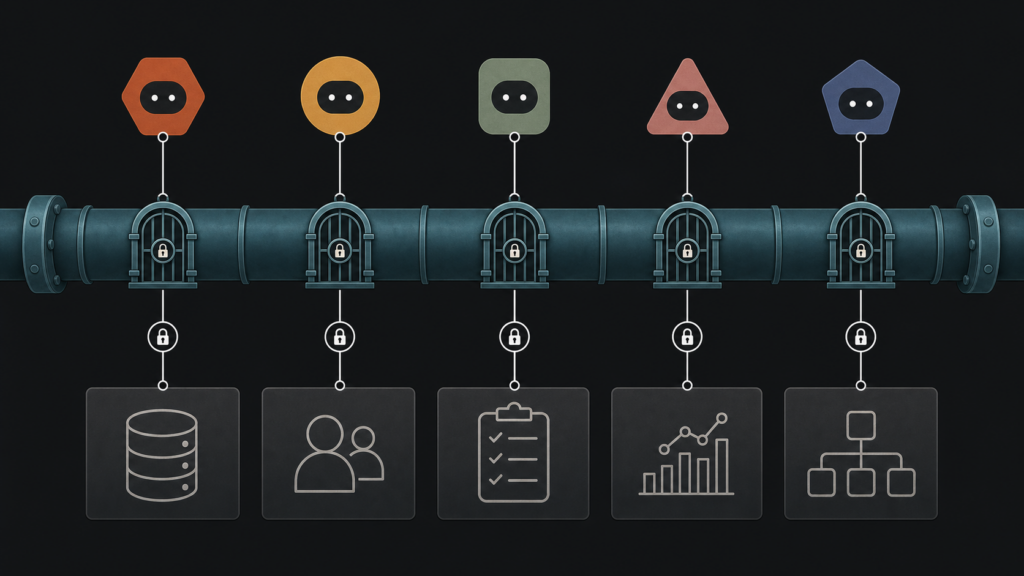
CData Connect AI adds MCP-based connectivity, context, and governance to AI agents built in Microsoft Copilot Studio and Agent 365, enabling secure access to live enterprise data at scale.
Retail AI Hits NRF 2026: SAP, Microsoft, Workday Turn Agentic Platforms into New Operating System for Stores and Commerce
Retail tech giants SAP, Microsoft, and Workday are leveraging AI to transform commerce operations into integrated, agent-driven systems at the NRF 2026 event, showcasing a shift from isolated applications to comprehensive retail infrastructure.
The Enterprise AI Revolution Is Boring, and That Is What Makes It Work
The article advocates for 'boring AI,' which emphasizes embedding AI into back-end processes and workflows to deliver real operational value, as opposed to flashy, superficial applications that often fail to provide measurable returns.
CloudPaths NetSuite ARM
How a Healthcare Giant Unlocked Revenue Agility with NetSuite ARM & CloudPaths
The transition to subscription-based models in healthcare requires a comprehensive reimagining of balance sheets and revenue recognition processes, as illustrated by CloudPaths' partnership with a global leader in healthcare information services to implement NetSuite ARM.
Engineering the Future of Tax with OCI and Vertex
Black & Veatch modernized its tax infrastructure by migrating to Oracle Cloud ERP and Vertex solutions to enhance global compliance, reduce operational risks, and streamline processes, demonstrating the importance of integrated cloud-native tax services for supporting complex multi-jurisdictional operations.
Shedding Data Baggage for a Leaner SAP Cloud
Migrating to SAP Cloud ERP Private promises streamlined processes and agility, but organizations must first conduct a thorough assessment of their data to avoid complicating the transition with unnecessary legacy information, which can drive up costs and hinder performance.
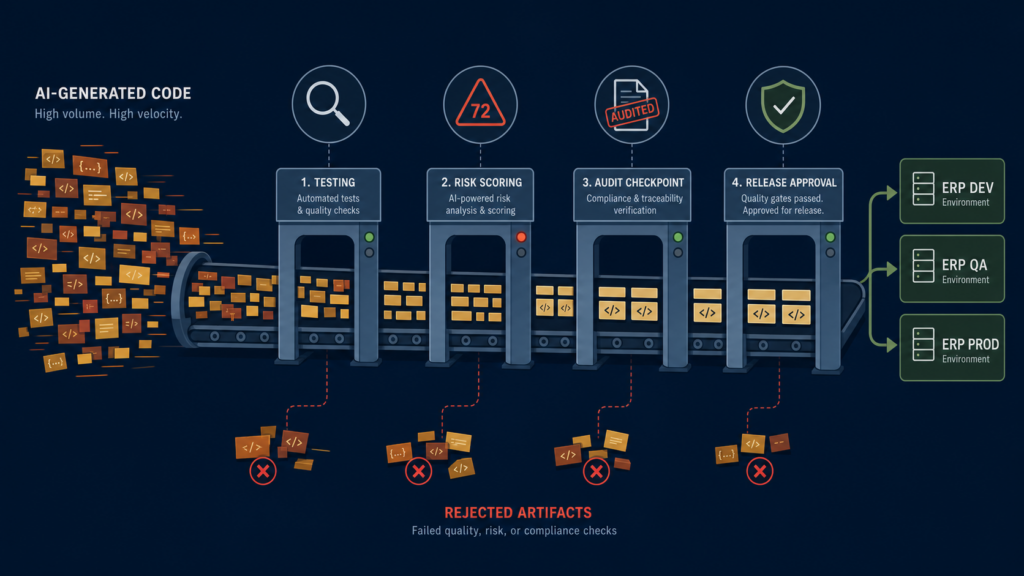
The Cloud Velocity Trap for Testing
CIOs face significant challenges during ERP migrations due to inadequate testing strategies and a rush towards AI solutions, highlighting the necessity for continuous testing and thorough documentation to ensure successful system integration.
Oracle AI World’s IBM Sessions: What Enterprises Must Build Before AI Can Deliver
At Oracle AI World, IBM emphasized that successful AI adoption in enterprises relies not on flashy models but on robust foundational preparations, governance, and aligned business processes, showcasing that scalable AI implementations require clean data and integrated workflows.
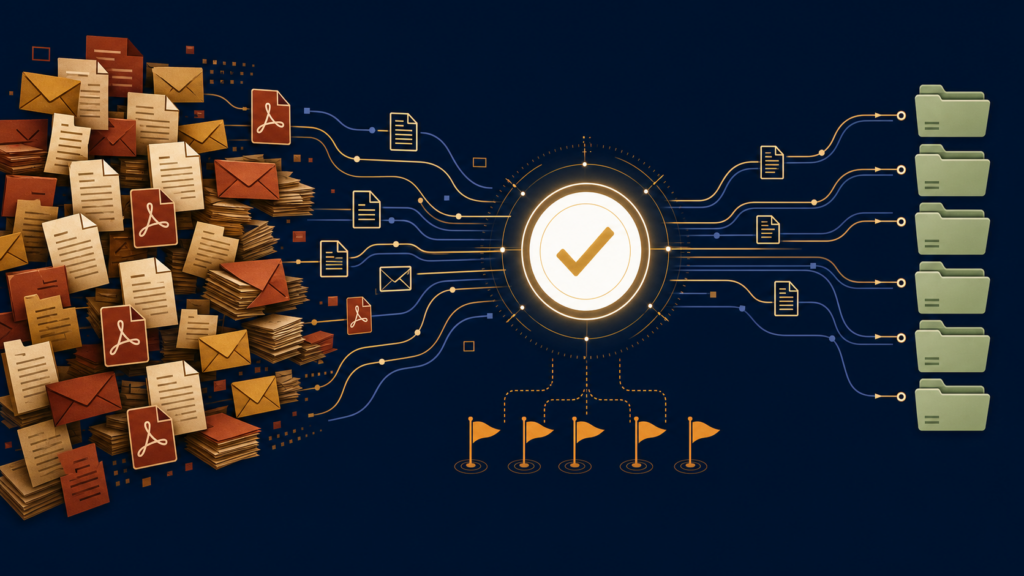
Data Integrity is the New ERP Mandate
Data integrity is crucial for ERP success, as reliable information underpins automation and insights; organizations must modernize data handling without full system overhauls, confront legacy issues, and embrace governance to enhance efficiency and decision-making.
How the digital sovereignty agenda in the EU reshapes cybersecurity
The EU's push for digital sovereignty is transforming cybersecurity into a critical, integrated discipline, prompting businesses to adopt stringent regulations, lifecycle-embedded practices, and proactive risk management.
Creating Supply Chain Value Through Analytics and AI
AI and analytics are transforming supply chain management by automating repetitive tasks, redefining planner roles into strategic storytellers, and providing decision intelligence to navigate disruptions.
Year in Review: Testing, Transformation, and the Race to AI-Ready ERP in 2025
In 2025, the conversation around cloud migration shifted from why to how. According to SAPinsider’s 2025 research report on SAP S/4HANA deployment, for instance, 31% of the organizations who responded to the survey have transitioned to SAP S/4HANA, while another 27% are in implementation. Additionally, 54% of respondents said they plan to incorporate AI or...
Year in Review: ERP AI Integration Went from Promise to Performance in 2025
End users in 2025 stopped seeing AI as a futuristic buzzword for enterprise planning. What had long been pitched as a future differentiator finally began delivering measurable operational benefit this year. According to ERP Today’s reporting on the manufacturing sector, 82% of companies increased...