Guest Contributors

Mawared MENA: Portal for local sourcing across the MENA region for humanitairan, charity and health agencies.
ERP Transformed Organizations. Can Procurement Technology Transform Markets?
ERP systems transformed procurement execution, but market visibility remains a challenge. Mawared MENA demonstrates how shared procurement infrastructure can help organizations discover suppliers, strengthen local sourcing, improve resilience, and create healthier supplier ecosystems before a purchase order is ever issued.
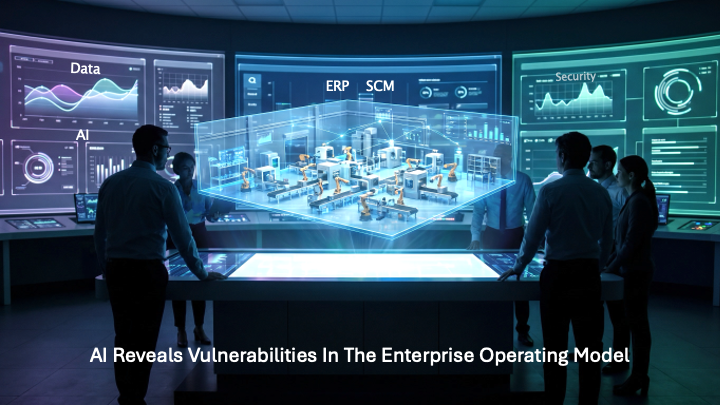
AI is doing more than making enterprise systems smarter. It is exposing weak data, disconnected processes and unclear ownership that were already there.
AI Reveals Vulnerabilities in the Enterprise Operating Model
Enterprise AI is not held back only by technology. ERP, supply chain, data, security, and people need to work together in a connected operating model that turns trusted context into controlled action.
The Mid-Flight ERP Decision: What to Do When the Platform Changes Before Go-Live
Cloud ERP vendors continuously release new capabilities, creating a challenge many organizations never anticipated when they approved their business case. This article explores how ERP leaders should respond when a platform changes before go-live and offers a practical framework for balancing customization, standardization, governance, and long-term value.
Boardroom Decision Debt
Decision Debt: The Hidden ERP Liability No Dashboard Tracks
Most ERP programs measure budgets, milestones, testing progress, and deployment readiness. Few measure the hidden liability created by unresolved business decisions. As AI compresses implementation timelines, decision debt may become one of the most expensive risks in enterprise transformation.
SAP agentic AI manufacturing Hannover Messe 2026
Q&A: Tirumala Rao Chimpiri on Why ERP Modernization Fails After Go-Live
Organizations often struggle with ERP modernization post-go-live due to inadequate focus on operational discipline, governance, and continuous improvement, where successful implementation doesn’t guarantee that workflows and processes have meaningfully changed or improved.
Organizations Must Confront the AI-ERP Reality Gap
The enterprise landscape is facing disruption as AI agents automate tasks and support decisions, but many organizations struggle to implement AI effectively due to outdated and fragmented ERP systems, necessitating a transformation that integrates AI and ERP capabilities.
The Impact of the Sovereignty Gap in Enterprise Architecture
Recent power outages and data center disruptions have challenged the assumption that cloud infrastructure is resilient, highlighting the necessity for enterprises to develop data sovereignty.
‘The Real ERP Gap Isn’t Data or AI—It’s Decision Flow’: Tirumala Rao Chimpiri
Tirumala Rao Chimpiri, a senior ERP professional and Chair of the IEEE Computer Society Long Island Section, discusses in his article the persistent intelligence-to-action gap in ERP systems, arguing that structural issues—rather than lacking data or analytics—hinder organizations from effectively translating insights into coordinated actions.
Fixing Construction’s Margin Visibility Problem With ERP
The construction sector is grappling with economic challenges and operational inefficiencies, driven by material costs and supply chain issues, necessitating the adoption of construction-specific ERP platforms to enhance visibility and control over project costs.
Why Late Change Management Dooms ERP Transformation Projects
Despite substantial investments in ERP and transformation programs across the public sector, a significant majority are predicted to fail in achieving their original business goals due to a lack of readiness for operational change, highlighting the need for organizations to integrate behavior change and process standardization.
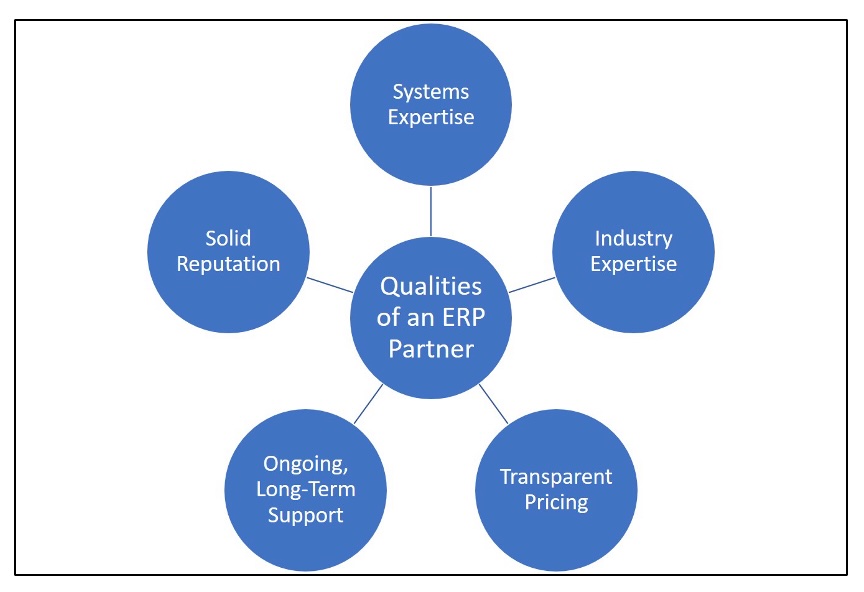
The Role of an ERP Implementation Partner

Modern ERP systems are crucial for business decision-making and fiscal success, making the selection of a capable implementation partner vital for effective planning, deployment and long-term support across the organization.
Automating SAP Batch Genealogy, Material Certificates Through EDI Integration
Manufacturing organizations face challenges in managing material certification documents and batch genealogy across multiple plants, leading to delays and errors; however, by automating these processes one global manufacturer significantly improved operational efficiency, reducing manual effort by 4,000 hours annually and enhancing compliance response times.
Earnings
Designing Finance for Scale: Why Charts of Accounts and Dimensions Matter More Than ERP Features
ERP projects often face significant challenges not during implementation but years later due to underlying financial architecture decisions—including chart of accounts and entity structures—being overlooked in favor of immediate functionality, which can hinder scalability and complicate management reporting as business complexities evolve.
Choosing the Right Integration Strategy and Framework for Manufacturers
Manufacturers face integration challenges as their systems become increasingly complex and interdependent, necessitating a strategic shift from point-to-point connections to a more cohesive approach like integration platform as a service (iPaaS) to effectively manage growth, change, and operational efficiency.
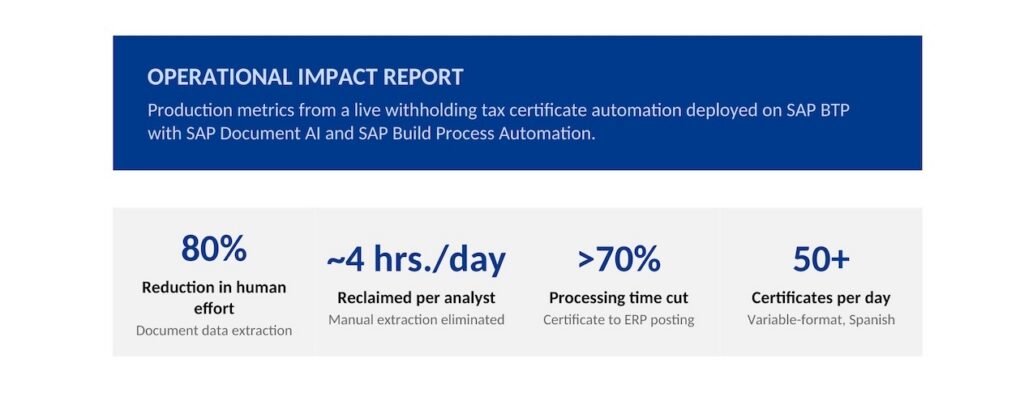
How GenAI Fixed Withholding Tax at Scale, Improved Processes
A global agribusiness faced inefficiencies in handling withholding tax certificates in Latin America, especially in Argentina, involving time-consuming manual processes; by implementing a hybrid cloud architecture with AI-driven automation, they significantly streamlined data extraction and compliance, reducing manual errors and reclaiming analyst productivity.
Manufacturers Are Rushing ERP Modernization and Paying the Price
Manufacturers' urgency to modernize their ERP systems amid rising AI demands must prioritize careful sequencing over risky big bang implementations, as organizational readiness and data maturity are critical for successful transformation amidst growing complexity.
Cultivating Twin Transformation in Manufacturing
Mid-sized manufacturers must implement Twin Transformation—simultaneously enhancing digital and sustainable practices across their operations—by leveraging SAP S/4HANA, Digital Manufacturing, and Sustainability Footprint Management while integrating principles of strategic planning, resource allocation, and organizational foundation to create cohesive value rather than fragmented initiatives.
Cell and gene therapy manufacturing vials arranged in a controlled lab tray for traceability and processing
Cell and Gene Therapy Manufacturing Exposes the Cost of Delayed Digital Infrastructure
Cell and gene therapy manufacturing is exposing the limits of manual coordination. As programs scale, digital orchestration is becoming essential to ensure traceability, reduce risk, and support operational execution.
Composable ERP: Architectural Reality or Executive Imperative?
ERP strategy is transforming from long-cycle, capital-intensive systems to a more agile, composable architecture driven by the need for adaptability in response to dynamic market conditions, highlighting the importance of intentional modular evolution, governance frameworks and AI integration.
abstract image | Finance
The CFO’s New Mandate for AI Assurance
AI is transforming finance by automating workflows and enhancing decision-making, but CFOs remain accountable for the integrity and explainability of outcomes, necessitating strong governance and reliable data to ensure compliance.
man on computer with technology graphics in the background
Why Workday Implementations Fail to Deliver ROI—and How to Fix It
Many organizations implement Workday expecting significant operational improvements, yet struggle to realize meaningful return on investment. In this article, Prashanth Paladugula explains why Workday implementations often fall short—and how stronger data governance, process transformation and standard configurations can significantly improve outcomes.
Integrating Real-Time Data with ERP Systems Yields Improvements
Advanced technology significantly enhances manufacturing by streamlining processes, improving efficiency, and reducing costs, with a strong emphasis on smart manufacturing initiatives, real-time data integration and closed-loop planning to optimize operations.
ERP cloud lifecycle management dashboard showing integration complexity and AI-driven automation
Steering Cloud ERP Migrations with Data Governance
Migrating to a modern cloud ERP system requires prioritizing high-quality data management to avoid legacy pitfalls, including early-stage data validation, strategic archiving, and creating unified golden records to ensure a successful transformation.
How Intelligent ERP Solutions are Driving Manufacturing Operational Excellence
Modern ERP systems have evolved from merely consolidating financial and operational data to providing real-time operational intelligence, enhancing decision-making for manufacturers, OEMs and system integrators by integrating workflows.
Closing the ERP Intelligence-to-Action Gap
Over 70% of ERP initiatives are projected to fail by 2027 due to the gap between insights generated and coordinated actions taken, as traditional ERP systems, despite modernizations such as AI and analytics, struggle with structural issues that prevent timely decision-making across interconnected divisions.
mid-market multi-entity ERP
ERP in 2026: What Changes When Systems Start Acting on Our Behalf
As ERP transitions from a control-centric model to one empowered by agentic AI that autonomously executes decisions, CIOs must rethink governance, accountability, and operational readiness to address new risks and ensure effective outcomes.
ERP
AI’s Last-Mile Failure: Why ERP Value Breaks Down After the Investment
Organizations investing in AI within ERP systems often fail to achieve expected results not due to technology issues, but because they neglect to redesign decision-making processes and empower employees to effectively use AI insights.
Construction ERP Evolution: How AI-Enhanced Integration Addresses North America’s Workforce Crisis
The construction ERP landscape is shifting towards AI-enhanced, best-of-breed integrations that address operational inefficiencies driven by labor shortages, regulatory complexities, and margin pressures, reflecting a trend where vertical specialists form core components of ERP ecosystems.
The Enterprise AI Revolution Is Boring, and That Is What Makes It Work
The article advocates for 'boring AI,' which emphasizes embedding AI into back-end processes and workflows to deliver real operational value, as opposed to flashy, superficial applications that often fail to provide measurable returns.
The EY Digital Marketplace Platform: A Customer-Centric Approach to Community Banking
As traditional community banking gives way to national brands and FinTech competitors, banks must rapidly adopt digital strategies to meet evolving consumer demands for personalized, seamless services while enhancing operational resilience against cyber threats and regulatory pressures.