Analytics and AI

Artificial Intelligence (AI) and analytics are indispensable in propelling digital transformation efforts, particularly influencing Enterprise Resource Planning (ERP). With the rapid progression of technology and computing power, organizations across various sectors are generating immense amounts of data daily, impacting ERP processes. The significance of this data lies in its potential to extract actionable insights, facilitate strategic planning, and drive innovation within the ERP framework. In this context, AI and analytics emerge as pivotal tools, facilitating the extraction of value from the vast amounts of data generated and collected across the enterprise, optimizing ERP functionalities. Analytics is commonly categorized into descriptive, prescriptive, diagnostic, and predictive types, enhancing the ERP landscape. AI algorithms contribute not only to predictive and prescriptive analytics but also empower companies to develop innovative ERP capabilities, exemplified by advancements such as Industry 4.0.

SAP Sapphire Madrid
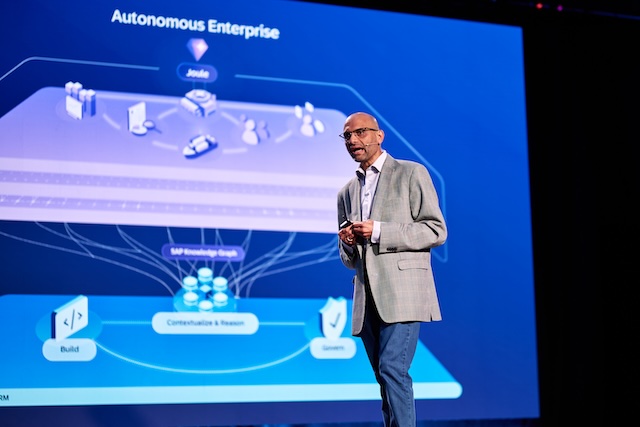
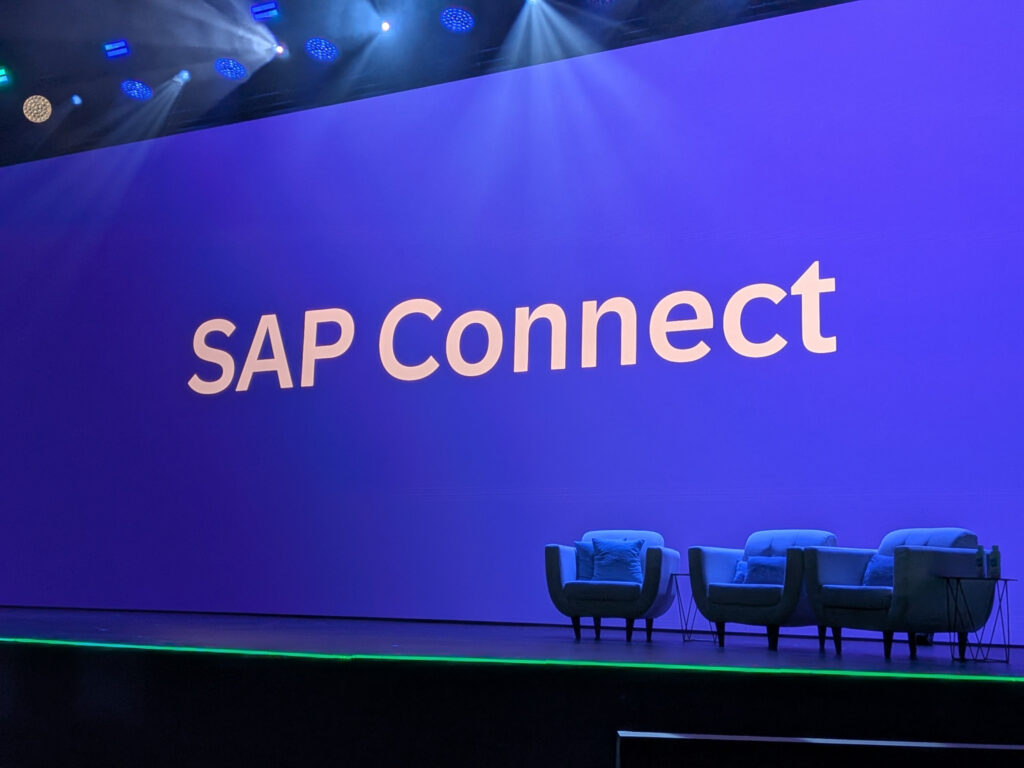
SAP Sapphire Madrid: Autonomous Enterprise Pitch Meets Europe’s AI Control Test
At SAP Sapphire Madrid, the company introduced the Autonomous Enterprise as the next evolution in ERP, focusing on AI-driven solutions tailored for European markets, emphasizing sovereignty and regulatory compliance in data handling and operational control.
San Francisco skyline under a blue sky, representing Beacon.li’s AI platform for enterprise software implementation.
Beacon.li Launches AI Platform for Enterprise Software Implementation
Beacon.li launched Implementation Studio, a UI-based AI platform that aims to execute enterprise software implementation work inside target applications, with early traction likely in repeatable configuration, testing and hypercare workflows.
SAP Claude integration
SAP and Anthropic Integrate Claude with SAP Joule Using Model Context Protocol
SAP and Anthropic announced the integration of Claude into the SAP Business AI Platform and Joule, enabling AI agents to execute tasks across SAP S/4HANA, SuccessFactors, Ariba, and third-party systems using Model Context Protocol (MCP).
SAP Joule AI
SAP Pushes Joule Toward Enterprise Execution, but Readiness Remains the Constraint
SAP is turning Joule into an enterprise execution surface, not just an AI assistant, but the layer through which ERP users interact with SAP data, agents, generated workspaces, voice, desktop tools, and cross-system workflows.
Organizations Must Confront the AI-ERP Reality Gap
The enterprise landscape is facing disruption as AI agents automate tasks and support decisions, but many organizations struggle to implement AI effectively due to outdated and fragmented ERP systems, necessitating a transformation that integrates AI and ERP capabilities.
Boomi World 2026
Boomi World 2026 Pushes Enterprise Platform Toward Agentic AI Governance
At Boomi World 2026, Boomi unveiled a comprehensive strategy to transition AI agents from pilot programs to enterprise workflows through enhanced orchestration, connectivity, context, and governance, supported by partnerships with Red Hat and Couchbase, ultimately positioning itself as an active data foundation for the emerging 'agentic enterprise'.
Cybersecurity
Sage-IDC Research Reveals SMB Cybersecurity Gaps in the AI Era
A Sage-IDC study reveals that while small and medium-sized businesses (SMBs) are significantly increasing their cybersecurity investments, a disconnect exists between spending intentions and actual implementation, exposing many to cyber threats due to a lack of governance and preparedness, particularly in the face of accelerating AI adoption.
The Impact of the Sovereignty Gap in Enterprise Architecture
Recent power outages and data center disruptions have challenged the assumption that cloud infrastructure is resilient, highlighting the necessity for enterprises to develop data sovereignty.
SAP Autonomous HCM
SAP Pushes Autonomous HCM Beyond HR Automation in SuccessFactors
SAP's Sapphire 2026 announcement highlights its Autonomous HCM capabilities in SuccessFactors, transforming HR from a static record system into an active operational layer that includes payroll, hiring, workforce planning, and learning integration through new Joule Assistants.
SAP Sapphire customer keynote
SAP Sapphire Customer Keynote Shows AI Value Depends on Readiness, Data, and Standardization
At SAP Sapphire 2026, the customer keynote made a definitive case: AI value in the enterprise depends on readiness, data standardization, and clean core ERP foundations—not experimentation. Through transformation stories from Lockheed Martin, ExxonMobil, Levi Strauss, and Aeropuertos Argentina, SAP reinforced that organizations succeeding with AI have built the operational and data infrastructure to support it on SAP S/4HANA and BTP.
EU flag displayed on the glass exterior of the European Parliament building, representing ERP governance questions around the EU AI Act delay.
What the EU AI Act Delay Means for ERP Governance
The EU AI Act delay eases some near-term compliance pressure, but ERP teams still need to build governance evidence around how AI is used across business processes.
SAP autonomous enterprise strategy
How SAP Is Using Anthropic, NVIDIA and Palantir to Shape Its Autonomous Enterprise Stack
At Sapphire 2026, SAP expanded its partner ecosystem by collaborating with Anthropic, NVIDIA, and Palantir to enhance its Autonomous Enterprise strategy, integrating AI capabilities for workflow optimization, secured agent execution, and streamlined data migration to SAP Cloud ERP.
SAP Autonomous Enterprise
Sapphire’s Post-Keynote Q&A Unpacks The Hard Part of the Autonomous Enterprise: Delivery, Governance, Trust
The post-keynote Q&A at SAP Sapphire 2026 put SAP's Autonomous Enterprise strategy under the closest scrutiny yet, with executives pressed on what's actually ready for production, how hybrid and on-premise customers participate, and why enterprises should trust AI agents inside live business processes. This ERP Today analysis unpacks SAP's answers on AI governance, the Knowledge Graph differentiator, cloud migration strategy, and API compliance controls.
SAP Business AI Platform governance
SAP Sapphire 2026: SAP Business AI Platform Consolidates SAP BTP Stack to Solve Enterprise AI Fragmentation
At SAP Sapphire 2026, SAP introduced the Business AI Platform, unifying its AI, data, and application ecosystems into a three-layer architecture focused on governance and business context, aiming to position itself as the control plane for enterprise AI amidst growing interest in compliance and auditability from enterprise buyers.
SAP Sapphire 2026 Keynote
‘Will SAP Be a Software Company in the Future?’ Sapphire 2026 Keynote Maps SAP’s New ERP Stack
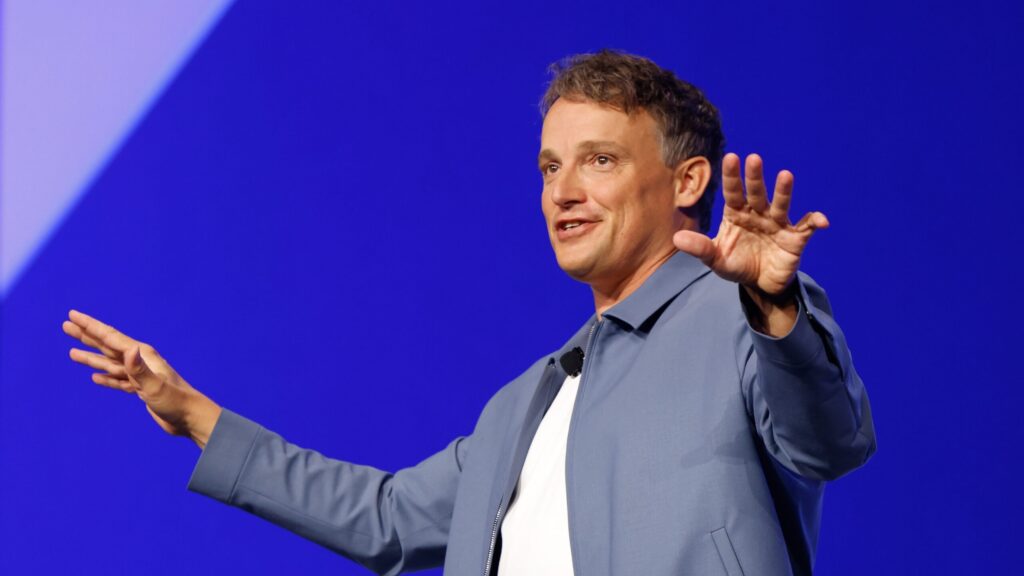
At SAP Sapphire 2026, CEO Christian Klein declared that SAP is becoming a business AI company, introducing the Autonomous Suite, Joule Studio 2.0, a company memory layer, and centralized agent governance as the pillars of SAP's reimagined ERP stack.
Celonis Context Model, Ikigai Labs Deal Target Enterprise AI Blind Spots
Celonis addresses the operational context gap in enterprise AI by introducing the Context Model (CCM) and acquiring Ikigai Labs, enabling real-time understanding of business operations to enhance AI decision-making reliability.
Sage Future 2026 Recap: AI Transparency and Smarter ERP Decisions
At Sage Future 2026, the focus on AI in ERP shifted from capability to the necessity of trust and transparency, with a strong emphasis on glass box AI that is traceable and auditable, reflecting the need for accountability in financial workflows to enhance operational efficiency across various industries.
OpenAI Deployment Company
OpenAI Launches Deployment Company to Bring AI Into Enterprise Operations
OpenAI has launched the OpenAI Deployment Company, a new enterprise-focused initiative backed by major investors and consulting alliances. The company will use Forward Deployed Engineers, or FDEs, to help organizations integrate AI systems into operational workflows at scale.
Breaking the AP Automation Ceiling with AI Agents
Despite over 90% of AP teams digitizing their processes, more than half remain at medium automation levels while 30% are below 25% automation.
enterprise generative AI
Without Data Foundations, Enterprise Generative AI Hits a Value Ceiling: Q&A with Fern Halper
In Q&A with ERP Today, TDWI VP of Research Fern Halper explains why AI pilots stall, what breaks when enterprise data foundations are weak, and how organizations can operationalize AI for long-term ROI.
Sage Future 2026: Julie Adams
Julie Adams, SVP of Construction at Sage, highlighting challenges and opportunities for ERP systems in the construction industry in a video interview at Sage Future 2026 in San Francisco.
Sage Future 2026: Jon Fasoli
Jon Fasoli, SVP of Sage Intacct, discusses how the cloud financial technology is helping improve operations and management for their customers in many industry in a video interview at Sage Future.
Orange County Convention Center in Orlando, where SAP Sapphire may clarify SAP AI access for ECC and cloud ERP customers.
Will SAP Open AI Access to Customers That Haven’t Moved to the Cloud?
SAP is reportedly preparing to open more AI access to some customers that have not moved fully to the cloud, including some SAP ECC users. The details could determine whether the move becomes a narrow transition offer or a broader shift in SAP’s cloud-first AI strategy.
SAP Joule Q1 2026 release ERP
SAP’s Q1 2026 Release: Four New SAP Joule Features ERP Leaders Need to Know
SAP’s Q1 2026 Joule release signals a shift from AI experiments to AI‑driven operating models in ERP.
Finance AI
EY and Rillet Partner to Embed Risk and Controls Into AI-Native Finance Transformation
EY US and Rillet are partnering to embed risk and controls directly into AI-native finance workflows, signaling a shift in how enterprise finance transformation programs are designed and delivered.
End invoice chaos in Coupa with Rossum’s AI-powered AP automation
Process every invoice format in any language from any channel, all within the familiar Coupa environment. Rossum’s proprietary, template-free AI understands any document layout and learns continuously from user feedback. Learn more here.
AI-native document automation for SAP. Global scale. Zero IT drag.
As an official SAP partner, uses AI agents to automate AP, order management, and logistics. Turning complex documents into structured SAP data in seconds with high automation and minimal IT effort. Read more here
Master AP complexity with AI agents
As an official Coupa Partner, Rossum is natively integrated within Coupa to automate your paperwork lifecycle end-to-end: from processing invoices and e-invoices to statement reconciliation. Accelerate data extraction, coding, matching, exception resolution, and more.
Workday office building | Workday and Groundswell take US federal agency to the cloud
Workday’s Moat Is Real—But AI Is Testing Its Limits
Two analysts offer diverging views on Workday's long-term viability, with Joe Schmidt suggesting that AI may erode the structural switching costs that currently protect it, while Josh Bersin argues that Workday's established frameworks position it favorably as AI evolves, highlighting a critical market shift towards architectural effectiveness in ERP and HCM systems.
Future ERP systems will likely undergo a significant transformation, from static and reactive to dynamic, event-driven platforms powered by agentic AI, enabling them to execute workflows and interact autonomously across business processes. Image from Adobe.
Event-Driven Agentic AI: What Happens When ERP Becomes the Operator
The ERP landscape is undergoing a transformative shift towards event-driven architecture and agentic AI, moving from static systems reliant on manual input to autonomous, adaptive platforms that can proactively respond to business events, enhancing operational agility and decision-making while necessitating careful governance and data quality management.