Security

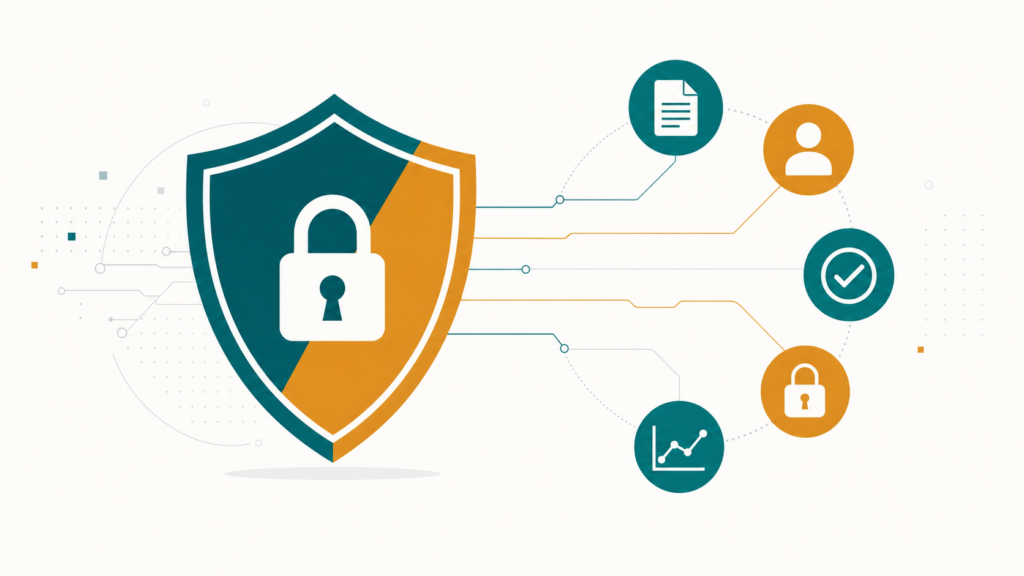
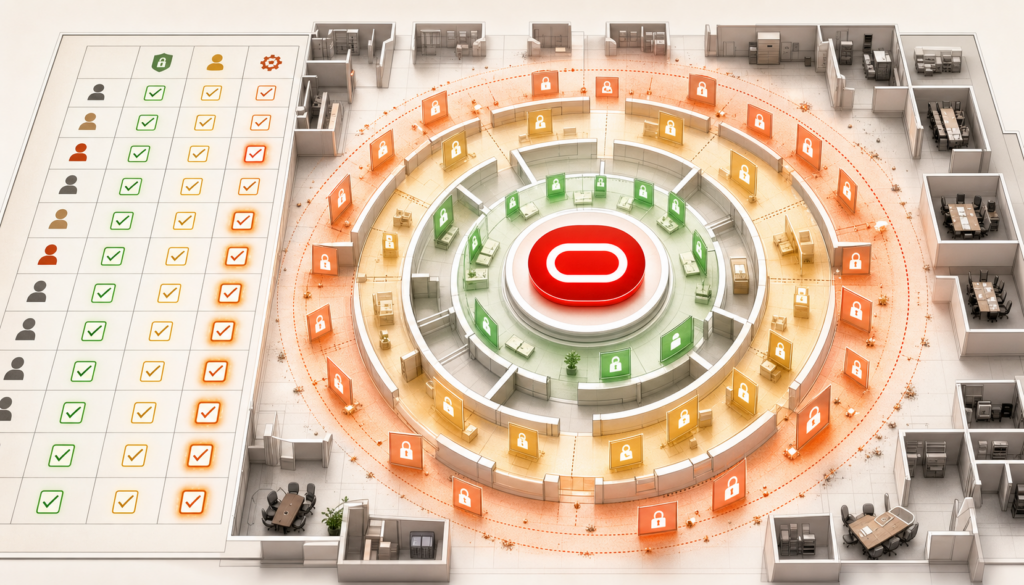
Enterprise Resource Planning (ERP) significantly bolsters IT security by providing a centralized and integrated approach to safeguarding critical information. ERP systems incorporate robust security features, such as user access controls, encryption, and authentication protocols, ensuring the confidentiality and integrity of sensitive data. Through continuous monitoring and audit trails, ERP enhances visibility into system activities, aiding in the early detection of potential security threats. ERP’s role extends to compliance management, assisting organizations in adhering to regulatory requirements and industry standards. By consolidating data across various business processes, ERP strengthens security measures, minimizing vulnerabilities and offering a comprehensive defense against cyber threats. This integrated approach to IT security fortifies organizations, promoting resilience and protecting against evolving cyber risks.

Anthropic Project Glasswing expansion
Anthropic Expands Project Glasswing into Critical Infrastructure
Anthropic has expanded Project Glasswing to 150 additional organizations across more than 15 countries, bringing its AI-powered cyberdefense program into power, water, healthcare, communications, and other critical infrastructure sectors.
Smartphone displaying a security lock, illustrating Microsoft SMS sign-in changes and ERP identity readiness.
Microsoft Is Killing SMS Sign-in Codes. ERP Teams Should Pay Attention
Microsoft’s move away from SMS sign-in codes is limited to personal accounts, but ERP teams should still pay attention. Developer subscriptions, sandbox tenants, contractor accounts, shared credentials, and break-glass workflows can sit outside formal Entra ID governance, creating hidden exposure as authentication models shift.
ServiceNow Knowledge 2026
ServiceNow Repositioned Around AI Security and Governance at Knowledge 2026
ServiceNow positions itself as a governance and action layer for enterprise AI, launching Autonomous Security and Risk, enhancing the AI Control Tower for comprehensive governance, and making its Action Fabric available to external agents, amidst a backdrop of growing financial momentum and challenges in broad adoption.
Cybersecurity
Sage-IDC Research Reveals SMB Cybersecurity Gaps in the AI Era
A Sage-IDC study reveals that while small and medium-sized businesses (SMBs) are significantly increasing their cybersecurity investments, a disconnect exists between spending intentions and actual implementation, exposing many to cyber threats due to a lack of governance and preparedness, particularly in the face of accelerating AI adoption.
Software developers working at laptops, representing SAP Security Patch Day May 2026 risks across developer tooling and software supply chains.
SAP Security Patch Day May 2026 Shows Risk Beyond Core Applications
SAP’s May 2026 Security Patch Day shows why SAP teams need to look beyond severity scores. Critical vulnerabilities affected S/4HANA and Commerce Cloud, while Mini Shai-Hulud brought developer tooling, credentials, and supply-chain exposure into the SAP security conversation.
Sign at the National Institute of Standards and Technology (NIST) campus, highlighting the agency behind CVE and NVD vulnerability standards.
What NIST’s CVE Shift Means for ERP Security Teams
NIST is changing how CVEs are enriched in the National Vulnerability Database, reducing the consistency of risk signals used to prioritize vulnerabilities. For ERP security teams, the shift increases reliance on vendor guidance and system-specific context to assess exposure.
Stanford University campus buildings under blue sky representing Stanford AI Index 2026 research on enterprise AI readiness.
AI Is Expanding, but ERP Systems May Not Be Ready—Stanford AI Index 2026
AI adoption is expanding across enterprises, but ERP systems may not be ready. The Stanford AI Index 2026 highlights gaps in governance, trust, infrastructure, and talent that affect how AI supports business decisions.
U.S. Department of the Treasury building in Washington, D.C., before regulators met to discuss AI cyber risk in financial systems.
Claude Mythos Preview Shows How AI Collapses the Distance Between Discovery and Exploitation in Financial Systems
Claude Mythos Preview is prompting regulators and banks to reassess cyber risk as AI accelerates vulnerability discovery and exploitation across interconnected financial systems.
Enterprise IT monitoring environment with multiple screens displaying system data, representing SAP security patching and authorization risk management.
SAP Security Patch Day April 2026: Critical Vulnerabilities, CVSS 9.9 SQL Injection, and Authorization Risks
SAP Security Patch Day April 2026 introduces a critical SQL injection vulnerability and high-severity authorization flaws across SAP BPC, BW, ERP, and S/4HANA. This analysis explains how these vulnerabilities affect enterprise risk and where exposure concentrates across SAP environments.
Internal Revenue Service building exterior illustrating IRS impersonation scams and tax season fraud risks in 2026.
Tax Season Scams 2026: How IRS Phishing, Fake Tax Messages, and AI Fraud Threaten Businesses
Tax season scams in 2026 are expanding beyond individual taxpayers into broader business risk. IRS impersonation, fake tax messages, QR codes, and AI-enabled fraud are targeting tax professionals, payroll teams, and organizations handling sensitive financial and employee data.
Modern office building representing SAP GRC for SAP HANA architecture and enterprise risk management systems
SAP GRC for SAP HANA Update Signals Real-Time Processing Shift and 2027 Transition Timeline
The SAP GRC update for SAP HANA focuses on execution, introducing Fiori-based workflows, real-time processing, and tighter S/4HANA alignment. The shift also signals a broader transition as GRC 12.0 approaches its 2027 maintenance deadline.
Photo of a glass wing butterfly_Anthropic Project Glasswing
Anthropic Enlists Hyperscalers, Security Giants to Secure Critical Software Infrastructure With AI
Anthropic has launched Project Glasswing, enlisting hyperscalers and security giants to use AI to detect and fix vulnerabilities across critical software infrastructure.
Abstract digital grid representing SAP security architecture, benchmarking, and layered control environments.
SAP Security Investment Still Misses Where Risk Is Highest, Benchmark Data Shows
CRIS benchmark data reveals SAP security maturity is moderate overall but uneven, with persistent gaps in access, data, and governance controls where business risk is concentrated.
Zuora and Workday
AI-Powered Finance at Accenture Sets ERP Benchmark
Accenture's finance transformation using SAP Business AI demonstrates how embedded generative AI can unlock significant cash flow and efficiency improvements for ERP organizations, providing a clear roadmap for AI-driven finance strategies amidst evolving challenges.
SAPinsider benchmark report March 2026 cover showing digital data flows representing ERP and AI priorities under cost pressure.
Cost Pressures Reshape ERP and AI Priorities in 2026, SAPinsider Benchmark Finds
Cost pressure is redefining how organizations approach ERP and AI in 2026. SAPinsider’s latest benchmark shows S/4HANA transformation, platform investment, and operational efficiency shaping technology decisions. The findings highlight a shift toward execution across overlapping priorities.
‘The “SaaSpocalypse” Narrative is Conflating Disruption With Complete Elimination:’ Rick Rider
Infor's Rick Rider argues that rather than the "SaaSpocalypse" narrative suggesting autonomous AI will replace traditional SaaS, vertical industry-specific SaaS will actually enhance AI's reliability and precision.
SAP Security Has the Board’s Attention—Now What?
SAP security has gained visibility at the executive level but often fails to drive decisions due to a lack of effective translation of cyber risks into clear business impacts, as highlighted by Asha Vartak, emphasizing that awareness alone is insufficient for action in a landscape increasingly influenced by AI and regulatory pressures.
SAPinsider Las Vegas 2026 at Bellagio hotel highlighting SAP security and zero-day risk discussion
Zero-Day Risk Reshapes SAP Security as Attacks Grow Faster and More Complex
Zero-day vulnerabilities are becoming expected in SAP environments. As attacks grow more frequent and sophisticated, patching alone is no longer sufficient to manage enterprise risk.
CIOs attend SAPinsider Las Vegas 2026 session on AI adoption and SAP strategy
SAP CIOs Say AI Adoption Remains Early Despite Growing Attention
CIOs report that AI execution in ERP environments remains limited, with organizations prioritizing efficiency, cost control, and data readiness over large-scale AI deployment.
Emerging AI Laws in Asia Are Raising New Questions for ERP Systems
AI regulation across Asia is evolving from voluntary guidance to binding rules, creating a fragmented compliance landscape that influences ERP design and implementation of AI, particularly concerning AI-generated content, high-impact decision-making, and the need for documentation and explainability.
Rise with SAP Security Risk Is Increasingly Shaped by Timing, Data, Assurance
As organizations accelerate their migration to SAP S/4HANA Cloud Private Edition, security risks intensify, prompting a shift in focus towards proactive security measures, data-centric access control, and a structured assurance model to ensure effective protection and compliance in increasingly complex cloud environments.
IT professionals working at computer monitors in an office, representative of enterprise system security monitoring.
SAP Security Patch Day March 2026 Highlights FS-QUO and Enterprise Portal Risks
SAP’s March 2026 Security Patch Day delivered 15 new Security Notes, including critical vulnerabilities affecting SAP Quotation Management Insurance and SAP NetWeaver Enterprise Portal. Vendor analysis highlights how trusted platform services and system integrations can amplify exposure across SAP landscapes.
Zurich Switzerland street scene representing Microsoft Azure cloud infrastructure region supporting sovereign data and AI deployments.
SAP Business Data Cloud Expands to Azure Switzerland with EU Access Controls
SAP is preparing to launch its Business Data Cloud platform on Microsoft Azure infrastructure in Switzerland in the coming weeks, introducing a deployment designed to meet European data residency and governance requirements. The rollout includes “EU Access” availability, meaning data...
US Air Force Awards Oracle $88M to Expand Cloud One Modernization with OCI, AI Database
The US Department of the Air Force has awarded Oracle an $88 million task order to provide Oracle Cloud Infrastructure services, enhancing cloud modernization efforts and expanding access to AI-enabled database capabilities in classified environments.
Pathlock logo representing SAP threat detection integration with Microsoft Sentinel SIEM architecture.
Pathlock Extends SAP Threat Detection into Microsoft Sentinel’s SIEM Architecture
Pathlock has extended its SAP Threat Detection capability into Microsoft Sentinel’s SIEM architecture, bringing enriched SAP security telemetry into centralized SOC workflows across hybrid SAP environments.
Nvidia logo displayed against stock market chart background symbolizing AI infrastructure growth and earnings performance.
Nvidia Earnings Signal Expanding AI Infrastructure—and New ERP Risk Dependencies
Nvidia’s FY26 earnings confirm accelerating AI infrastructure investment. For ERP leaders, the real story lies in emerging dependencies across hyperscaler leverage, security posture, and enterprise data governance.
European Union flag in front of modern glass office buildings symbolizing cloud sovereignty and digital regulation in Europe.
Why Inetum Sees Control—Not Infrastructure—as the Real Sovereignty Challenge
ERP modernization in Europe now unfolds under sovereignty expectations. Data control, hybrid architecture, and governance-by-design increasingly determine whether AI-enabled systems can withstand regulatory scrutiny and scale with confidence.
Security analyst monitoring code and identity access controls across multiple screens following accelerated AI-driven breach activity
AI Compressing Breach Timelines as Identity Weaknesses Drive 90% of Incidents
Unit 42’s 2026 Global Incident Response Report finds attackers reaching data exfiltration in as little as 72 minutes, with identity weaknesses involved in nearly 90% of incidents. The findings highlight AI-driven acceleration, over-permissioned identities and multi-surface exposure across modern enterprise environments.
New Relic’s Innovations Simplify OpenTelemetry Enterprise Adoption
New Relic is transforming OpenTelemetry from a challenging migration into a gradual operational shift, enabling organizations to standardize on OTel without replacing existing systems, thereby alleviating vendor lock-in, enhancing observability management and controlling operational costs.
Cybersecurity
Bell Cyber and Radware Expand AI-driven, Cloud-Delivered Security Services
Bell Cyber and Radware are launching a unified, AI-driven managed security service to enhance protection against sophisticated cyberattacks for enterprises.