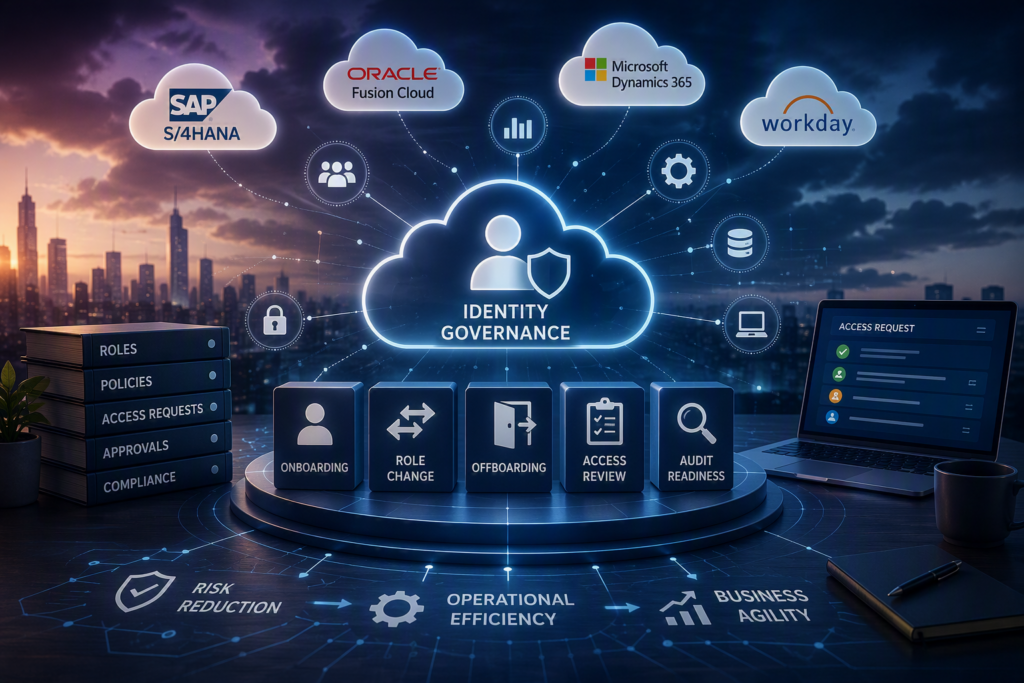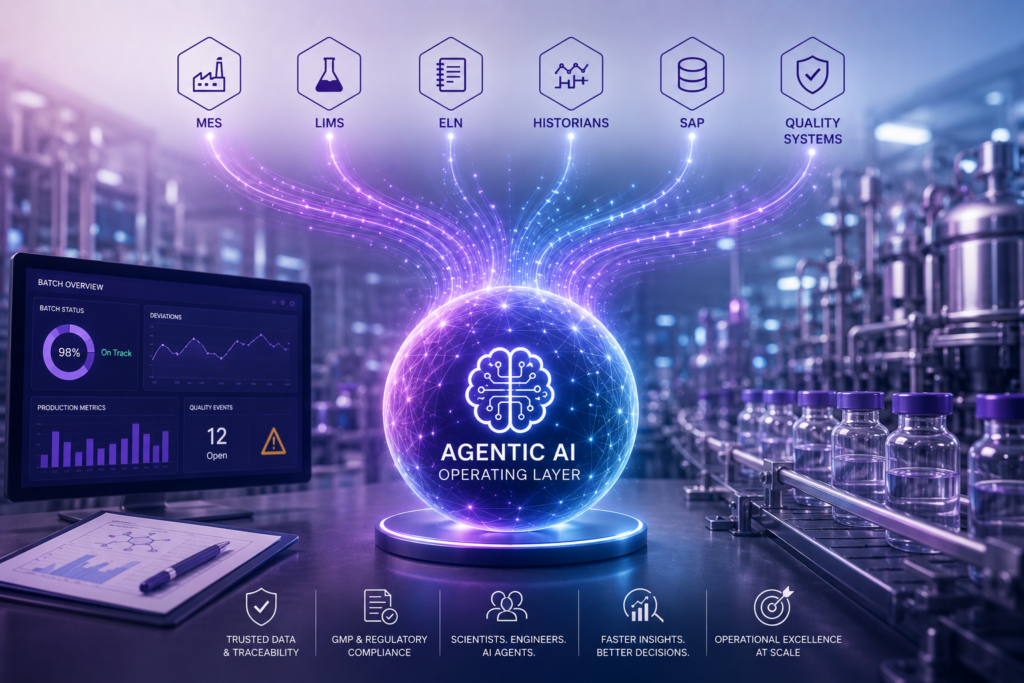
Governance, Risk, and Compliance

Enterprise Resource Planning (ERP) serves as a cornerstone in ensuring effective Governance, Risk, and Compliance (GRC) within organizations. By integrating GRC modules, ERP systems provide a centralized platform to manage and monitor governance practices, identify and mitigate risks, and ensure compliance with regulatory requirements. This  approach enhances transparency and accountability across various business processes. ERP’s real-time reporting and analytics capabilities enable organizations to proactively identify potential risks and address compliance issues promptly. The integration of GRC within ERP streamlines workflows, promoting a culture of risk-aware decision-making. This synergy empowers organizations to navigate complex regulatory landscapes, mitigate risks efficiently, and uphold the highest standards of governance, ensuring a resilient and compliant operational environment.

Cargo ship at port in Chattogram, Bangladesh representing global apparel exports and supply chain logistics.
Bangladesh’s Digital Tax Push Reshapes Compliance for RMG Supply Chains
Bangladesh’s move to digital tax systems is reshaping compliance across RMG supply chains, increasing reliance on supplier data accuracy, ERP execution, and integrated financial processes.
RxERP Hub Targets Pharma’s Serialization Blind Spots
RxERP has launched its upgraded Hub, transforming its serialized platform into a comprehensive infrastructure for the pharmaceutical supply chain, enhancing compliance management through unit-level audit capabilities and standardized logging, fostering greater operational confidence and efficiency.
Oracle Fusion Agentic Apps Target Everyday Enterprise Friction
Oracle's new Fusion Agentic Applications aim to enhance ERP efficiency by utilizing AI-driven agents to automate processes across finance, HR, supply chain and customer experience, promoting real-time decision-making and reducing manual tasks.
Data center facility in Coleraine showing physical infrastructure and energy systems in a real-world environment.
How Data Center Location, ESG Regulations, and AI Infrastructure Are Reshaping Risk
Data center location is becoming a governance decision. As AI demand grows and ESG regulation expands, energy, water, and climate constraints are shaping ERP risk, cost, and performance in ways enterprises can no longer ignore.
Abu Dhabi skyline with modern high-rise buildings along the waterfront
UAE Approves SAP for e-Invoicing, Expanding ERP’s Role in Compliance Architecture
The UAE has pre-approved SAP as an e-invoicing service provider, becoming the first ERP vendor in the framework. The decision places ERP systems within compliance architecture ahead of the 2027 mandate.
Abstract digital grid representing SAP security architecture, benchmarking, and layered control environments.
SAP Security Investment Still Misses Where Risk Is Highest, Benchmark Data Shows
CRIS benchmark data reveals SAP security maturity is moderate overall but uneven, with persistent gaps in access, data, and governance controls where business risk is concentrated.
Kyndryl Betting Big On Agentic Service Operations
Kyndryl's Agentic Service Management framework transforms IT operations into secure, autonomous workflows, offering CIOs a structured path to scale AI-native service management while embedding governance and security protocols essential for enterprise environments.
IFS Rewrites Industrial AI Pricing Around Assets
IFS is revolutionizing Industrial AI adoption by shifting pricing from named users to the operational assets managed by customers, aiming to simplify funding and scalability for CIOs and COOs while encouraging broader deployment across industries.
Manufacturers Are Rushing ERP Modernization and Paying the Price
Manufacturers' urgency to modernize their ERP systems amid rising AI demands must prioritize careful sequencing over risky big bang implementations, as organizational readiness and data maturity are critical for successful transformation amidst growing complexity.
SAPinsider benchmark report March 2026 cover showing digital data flows representing ERP and AI priorities under cost pressure.
Cost Pressures Reshape ERP and AI Priorities in 2026, SAPinsider Benchmark Finds
Cost pressure is redefining how organizations approach ERP and AI in 2026. SAPinsider’s latest benchmark shows S/4HANA transformation, platform investment, and operational efficiency shaping technology decisions. The findings highlight a shift toward execution across overlapping priorities.
Deltek Expands AI-Driven ERP and PSA Positioning with IDC MarketScape Recognition
Deltek is establishing itself as a specialized AI platform for project-based industries, focusing on lifecycle orchestration rather than standalone ERP functionalities, as validated by IDC MarketScape, which underscores its strength in integrating AI across project workflows to enhance efficiency and compliance.
SAP Security Has the Board’s Attention—Now What?
SAP security has gained visibility at the executive level but often fails to drive decisions due to a lack of effective translation of cyber risks into clear business impacts, as highlighted by Asha Vartak, emphasizing that awareness alone is insufficient for action in a landscape increasingly influenced by AI and regulatory pressures.
Cell and gene therapy manufacturing vials arranged in a controlled lab tray for traceability and processing
Cell and Gene Therapy Manufacturing Exposes the Cost of Delayed Digital Infrastructure
Cell and gene therapy manufacturing is exposing the limits of manual coordination. As programs scale, digital orchestration is becoming essential to ensure traceability, reduce risk, and support operational execution.
‘The Critical Gap Isn’t Technical — It’s Architectural Judgment:’ Sanjay Vijay Mhaskey
Composable ERP, often discussed yet rarely implemented strategically, requires organizations to demonstrate architectural discipline and governance readiness through established standards, intentional modernization practices and proactive management.
SAPinsider Las Vegas 2026 at Bellagio hotel highlighting SAP security and zero-day risk discussion
Zero-Day Risk Reshapes SAP Security as Attacks Grow Faster and More Complex
Zero-day vulnerabilities are becoming expected in SAP environments. As attacks grow more frequent and sophisticated, patching alone is no longer sufficient to manage enterprise risk.
Composable ERP: Architectural Reality or Executive Imperative?
ERP strategy is transforming from long-cycle, capital-intensive systems to a more agile, composable architecture driven by the need for adaptability in response to dynamic market conditions, highlighting the importance of intentional modular evolution, governance frameworks and AI integration.
Bellagio Hotel in Las Vegas, host location of SAPinsider Las Vegas 2026 CIO transformation discussions
CIOs Shift SAP Transformation Focus to Long-Term Value at SAPinsider Las Vegas 2026
CIOs at SAPinsider Las Vegas 2026 discuss how SAP transformation decisions are shifting toward long-term value, with a focus on migration versus modernization, cost pressures, and post-go-live accountability.
UiPath, Deloitte Launch Agentic ERP Platform
UiPath and Deloitte are enhancing their partnership to launch the Agentic ERP offering, which integrates autonomous AI agents and robotic process automation to provide a strategic approach for automating complex enterprise workflows across ERP systems.
CIO forum discussion at SAPinsider Las Vegas 2026 at the Bellagio conference venue.
CIO Forum at SAPinsider Las Vegas 2026 Opens With Focus on Cost, Alignment, and Execution
CIOs at SAPinsider Las Vegas 2026 emphasized cost pressure, AI adoption, and business alignment as key forces shaping SAP strategy and enterprise technology decisions.
Emerging AI Laws in Asia Are Raising New Questions for ERP Systems
AI regulation across Asia is evolving from voluntary guidance to binding rules, creating a fragmented compliance landscape that influences ERP design and implementation of AI, particularly concerning AI-generated content, high-impact decision-making, and the need for documentation and explainability.
Real-Time Requirements for Accurate Tax Calculations
E-invoicing is often misidentified as the sole challenge of indirect tax compliance, whereas it is merely a symptom of a broader need for enterprises to develop resilient tax architectures capable of adapting to emerging regulatory demands and continuous transaction controls.
Rise with SAP Security Risk Is Increasingly Shaped by Timing, Data, Assurance
As organizations accelerate their migration to SAP S/4HANA Cloud Private Edition, security risks intensify, prompting a shift in focus towards proactive security measures, data-centric access control, and a structured assurance model to ensure effective protection and compliance in increasingly complex cloud environments.
Framework or Platform? How Sovos Is Turning Tax Compliance into an ERP Strategy Decision
The article discusses the urgent need for ERP programs to integrate tax compliance as a core architectural element rather than a secondary concern, emphasizing that organizations must choose between ERP-native frameworks or specialized third-party solutions to address rapidly evolving regulatory requirements, with the choice impacting operational flexibility, risk management, and overall compliance efficiency.
IT professionals working at computer monitors in an office, representative of enterprise system security monitoring.
SAP Security Patch Day March 2026 Highlights FS-QUO and Enterprise Portal Risks
SAP’s March 2026 Security Patch Day delivered 15 new Security Notes, including critical vulnerabilities affecting SAP Quotation Management Insurance and SAP NetWeaver Enterprise Portal. Vendor analysis highlights how trusted platform services and system integrations can amplify exposure across SAP landscapes.
Abu Dhabi skyline representing the UAE as the country prepares to implement its national e-invoicing mandate for businesses by 2027.
UAE E-Invoicing Mandate: What ERP and Finance Teams Need to Know Before 2027
The UAE e-invoicing mandate will require businesses to generate structured invoice data and report transactions through accredited service providers by 2027. The shift moves invoice compliance into ERP systems, where billing data, validation workflows, and compliance architectures determine whether invoices pass regulatory checks.
European Economic and Social Committee building in Brussels representing EU cloud sovereignty and data governance policy.
‘Sovereignty Washing’: Why Cloud Sovereignty Claims Don’t Always Match Reality
As concerns about data sovereignty grow across Europe, many cloud providers now promote “sovereign cloud” solutions. But legal jurisdiction, technology dependencies, and supply-chain relationships can complicate these claims. This article explores the emerging phenomenon of sovereignty washing and explains how organizations can evaluate whether cloud services truly meet sovereignty requirements.
Zurich Switzerland street scene representing Microsoft Azure cloud infrastructure region supporting sovereign data and AI deployments.
SAP Business Data Cloud Expands to Azure Switzerland with EU Access Controls
SAP is preparing to launch its Business Data Cloud platform on Microsoft Azure infrastructure in Switzerland in the coming weeks, introducing a deployment designed to meet European data residency and governance requirements. The rollout includes “EU Access” availability, meaning data...