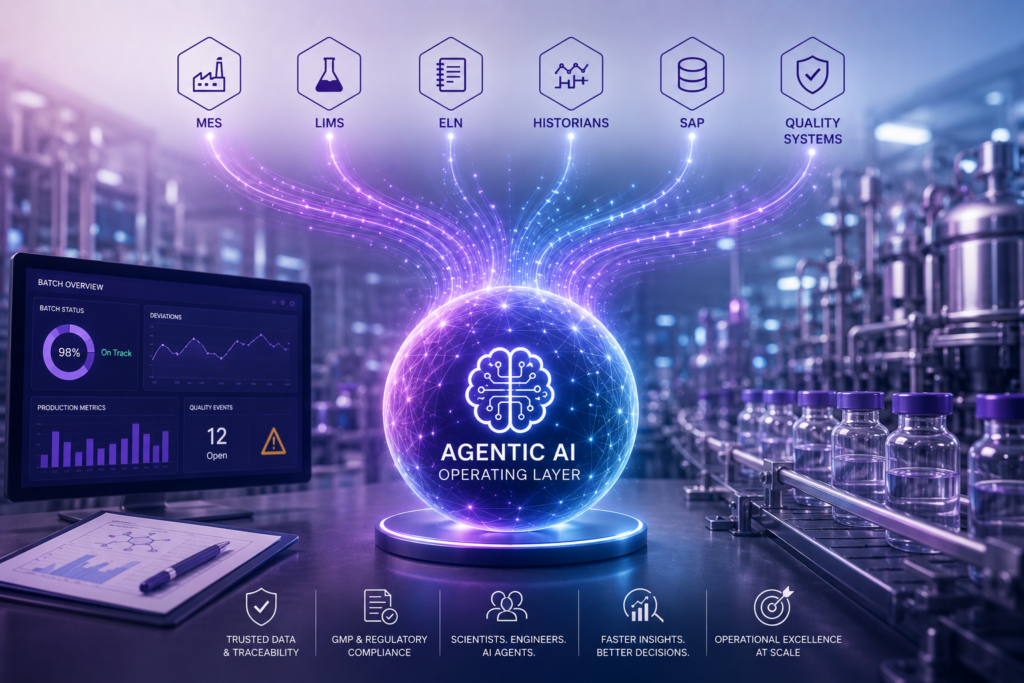

The conversation around AI in manufacturing is decisively shifting from theoretical pilot programs to real-time shop floor execution. Leading this transition is QAD | Redzone, which showcased its agentic, AI-powered manufacturing platform designed to connect the entire workforce at this year’s Hannover Messe 2026. For enterprise technology professionals navigating complex ERP ecosystems such as SAP, this announcement signals an evolution from passive systems of record to autonomous systems of action.
Solving the Execution Problem
“Manufacturers don’t have a data problem, they have an execution problem,” stated Sanjay Brahmawar, CEO of QAD | Redzone. This observation strikes at the heart of modern enterprise software challenges. While traditional ERP architectures excel at logging historical transactions and generating complex dashboards, they frequently leave frontline workers drowning in data without clear, automated paths to resolution.
To bridge this gap, QAD | Redzone is leveraging its ChampionAI intelligence layer, built on Amazon Bedrock AgentCore and Amazon SageMaker. By using these AWS tools, the platform bypasses the traditional friction of AI implementation, enabling mid-market manufacturers to deploy agentic AI directly on the shop floor without costly production shutdowns.
Analysis
What This Means for ERP Insiders
Transition from insight to action. Manufacturers should stop settling for ERP dashboards that only report what went wrong yesterday. They should evaluate their current software stack based on its ability to trigger automated, real-time corrective actions on the shop floor.
The Agentic Shift in Composable Architectures
The integration of agentic AI systems designed to operate autonomously, adapt to new data, and make decisions on behalf of human operators marks a key moment for manufacturing technology. As recently explored by ERP Today, manufacturing IT leaders are witnessing the most significant architectural shift in ERP since the adoption of cloud computing. We are seeing monolithic backends rapidly transform into composable, autonomous decision engines.
Rather than manually cutting purchase orders or reacting to supply chain bottlenecks after the fact, procurement managers are transitioning into supervisory roles. They now audit decisions made by AI agents that autonomously identify supply delays, contact vendors for updated estimates, and dynamically adjust production schedules. Moreover, agentic AI’s ability to learn from past operational data allows it to perform these complex workflows without constant human oversight.
Analysis
What This Means for ERP Insiders
Embrace composable AI integrations. The era of waiting years for monolithic vendor upgrades is over. Organizations must look for ERP platforms and AI layers that utilize pre-built connectors and standard APIs to rapidly deploy specific, high-impact intelligent agents without destabilizing their core financial systems.
Elevating the Human Element on the Shop Floor
The human factor remains central to this technological leap despite the emphasis on autonomous operations. European and North American manufacturers are grappling with a modernization imperative defined by aging infrastructure, volatile supply chains, and significant workforce transitions. The strategic goal of QAD | Redzone’s frontline empowerment layer is not to replace human operators but to elevate their daily impact.
When an AI agent detects a machine anomaly or production deviation, it does not merely flag the error on an executive dashboard. Instead, it proactively stages necessary maintenance parts, recommends corrective actions directly to the operator’s mobile device, and schedules interventions during low-impact operational windows. This transforms the operator’s role from a reactive firefighter into a strategic orchestrator of digital agents.
Analysis
What This Means for ERP Insiders
Redefine user personas. As agentic AI automates routine supply chain coordination and maintenance scheduling, ERP leaders must proactively redefine the roles of procurement managers and plant operators. They must train the workforce to supervise and audit AI agents rather than manually executing transactions.