Cross Industry

How a Mid-Market Manufacturing ERP Cut Benchmade’s Year-End Processing Time by 75%
The article emphasizes that for mid-market manufacturers evaluating ERP systems, a solution like Syspro must not only showcase impressive features but also demonstrate resilience in real-world operations, as evidenced by Benchmade Knife Company's significant reductions in year-end processing time and enhanced operational efficiency through shared live data.
What Makes an ERP AI-Ready for Manufacturers?
Manufacturers seeking AI-ready ERP must prioritize a solid foundation of clean, integrated data and governance to ensure successful AI implementation, as using unreliable data only exacerbates errors and hampers decision-making.
A person interacting with an artificial intelligence interface on a transparent digital screen, showing data visualizations.
SAP’s CX Keynote Puts B2B Selling in Focus
SAP Connect 2026 put ERP integration at the center of SAP's Customer Experience AI strategy. New B2B commerce capabilities, quoting assistants and marketing agents aim to connect customer-facing work with operational data, while Ericsson's quoting project shows how companies are beginning to put that approach into practice.
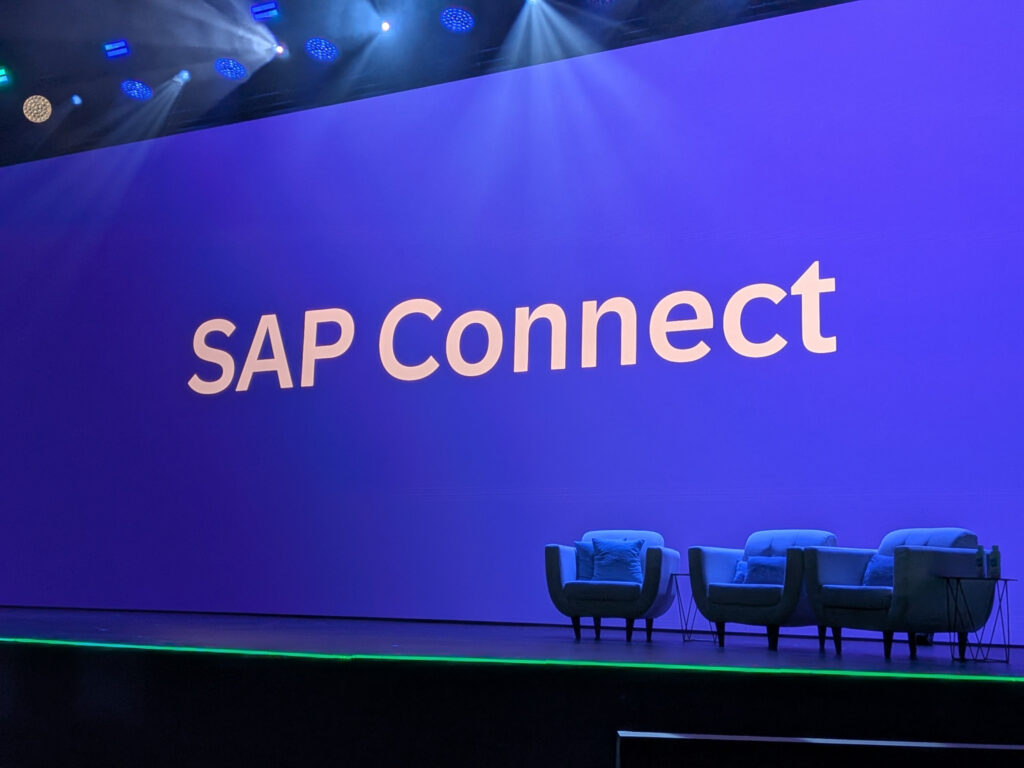
SAP Connect Stage
SAP Says Supply Chain AI Should Start With the Decision
At SAP Connect 2026, SAP's new supply chain product chief urged teams to define the business decision and its metric before choosing an AI use case. Bosch, Döhler, and Microsoft described how they apply that approach to supply chain agents.
Real-Time Visibility for Manufacturing Operations: The Foundation of Lean Growth
Real-time visibility in manufacturing operations enables companies to effectively track and manage production processes, improving decision-making, cost control, delivery timelines, and customer service while mitigating risks during rapid growth.
The Hidden Cost of Integration Sprawl in Manufacturing
Manufacturers often face "integration sprawl" by accumulating multiple disconnected systems with one-off integrations, which incur hidden costs, operational risks, and limit IT capacity, ultimately impacting productivity and hindering advancements like AI, thus necessitating a transition to a unified ERP platform that shares a single data model to streamline operations and reduce maintenance burdens.
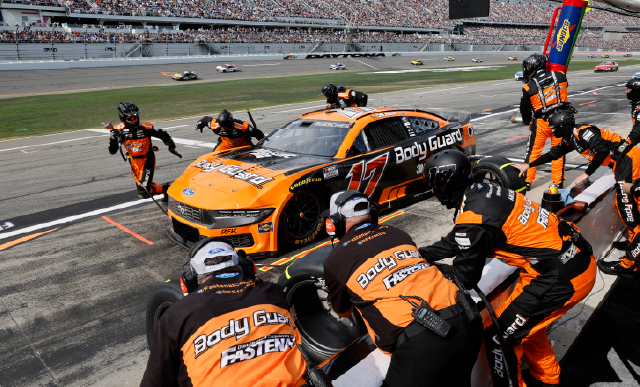
How RFK Racing Tracks 5,000 Parts at Race Pace with Syspro’s Unified Cloud Platform
RFK Racing replaced a mix of legacy modules and spreadsheets with Syspro, giving its purchasing and accounting teams shared data across about 5,000 active parts and a 38-race season.
Syspro Whitepaper: The AI-Ready ERP Checklist
The Syspro checklist gives manufacturing leaders a practical way to assess whether their current ERP can support AI-driven operations, with a scoring guide that shows where to act first.
Nucleus Report
As SMB organizations face increasing operational complexity, ERP platforms are evolving into intelligent business hubs that unite finance, supply chain, manufacturing, customer operations, and AI-driven automation in a single environment. This Nucleus Research report highlights the vendors setting the pace in 2026 and reveals how leading SMBs are using ERP investments to improve efficiency, accelerate growth, and gain real-time operational visibility.
WMS: Warehouse execution from dock to shop floor
Bin-level tracking and directed picking keep every pallet and job in view, from receiving to the shop floor, so teams handle more volume without adding headcount. Posts to Syspro ERP in real time. Click here to learn more!
Syspro ERP: One platform for the whole business
Finance, manufacturing, distribution and quality share one integrated data model, so every team works from the same real-time view. Multi-level BOMs and finite capacity scheduling come standard. Click here to learn more!
Worker facing abstract AI image
IFS Loops Moves From AI Insight to Enterprise Execution
IFS Loops brings agentic AI closer to operational execution through Digital Workers that act within enterprise workflows. As manufacturers expand AI automation, trusted data, decision rights and measurable business outcomes will determine how much authority these systems earn.
Syspro Torque: Industrial-grade AI for manufacturers
AI agents work inside the systems you already run, on Syspro or any other ERP, and show the rule and data behind every decision. You decide how much control to delegate. Click here to learn more!
Workday Moves Benefits Administration Closer to the HR System of Record
Workday Total Benefits connects benefits providers directly to Workday and adds an AI agent that answers employee benefits questions. The launch treats benefits as an integration and data problem first, with the AI layer built on top.
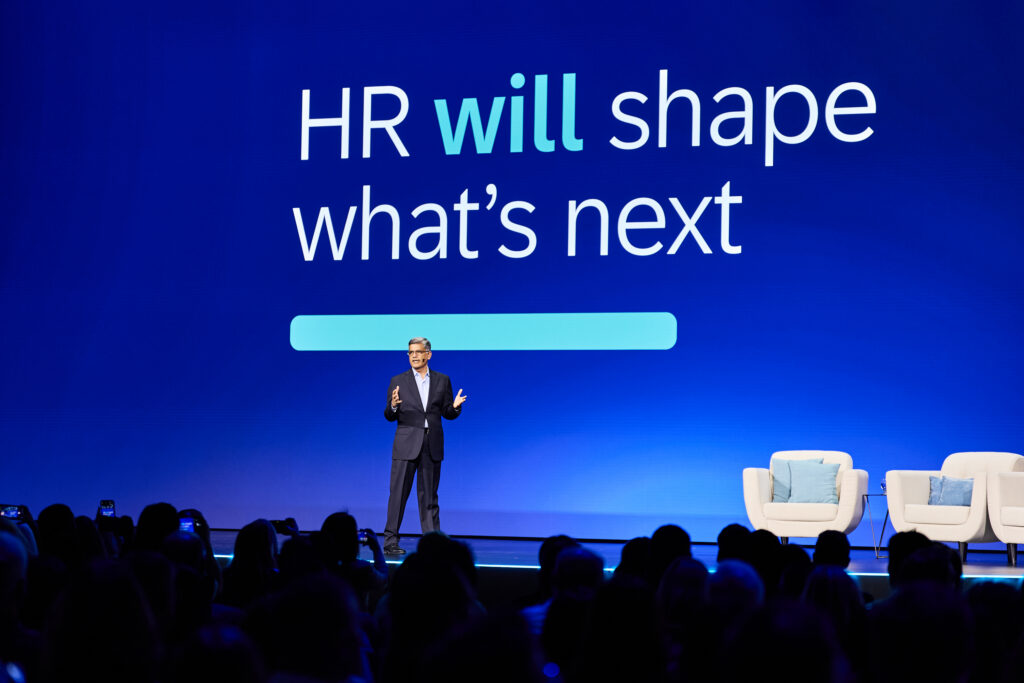
Siva Sundaresan of SAP SuccessFactors presents the Autonomous HCM keynote at SAP Connect 2026, in front of a screen reading "HR will shape what's next."
SAP Lays Out Its Autonomous HCM Plan at Connect
SAP's SuccessFactors keynote at SAP Connect laid out how connected Joule agents, a planned TechWolf acquisition, and five customer deployments fit its Autonomous HCM strategy.
Digital dashboard displaying financial analytics and SAP S/4HANA interface elements for autonomous finance.
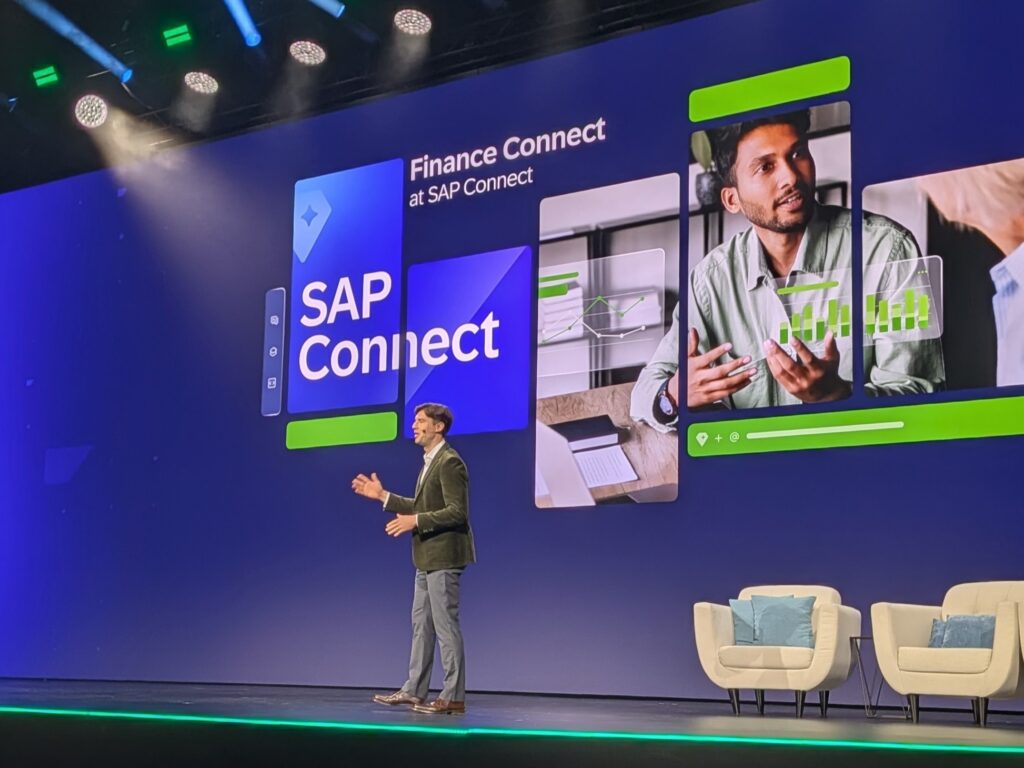
SAP Connect Finance Keynote Shows Where Autonomous Finance Stands and Where It’s Headed
SAP used its Finance keynote at SAP Connect to show how Autonomous Finance is moving from roadmap to production, with early customer results from PwC and ITOCHU alongside new developments in Joule agents, consolidation, payments, and governance.
Robot hand with glowing circuits connecting to a supply chain network graphic
SAP Connect 2026: How New Agents Will Detect and Respond to Supply Disruptions
Moody's supplier risk data in SAP Ariba and new supply chain agents, both due in Q4 2026, help SAP spot disruptions. Agents act on their own in some processes and defer to people in others.
SAP logo, a white stylized starburst shape on a dark blue background, with 'SAP' text beside it
SAP Rolls Out Joule Work and New Assistants, With Most Arriving by Early 2027
SAP presented Joule Work, new Joule Assistants, and SAP Business AI Platform at SAP Connect. Some capabilities are available now, most arrive by early 2027, and early customers tie their results to S/4HANA foundations.
TechWolf
SAP to Acquire TechWolf, Bringing AI-Powered Work Intelligence into SAP SuccessFactors Core
SAP's acquisition of TechWolf, an AI-native work intelligence platform, aims to enhance workforce management by providing deep insights into employee skills and work patterns, thereby positioning SAP SuccessFactors as a comprehensive tool for evidence-based workforce transformation.
Digital representation of interconnected business processes with network lines and data nodes flowing between systems
SAP to Sell ORO Labs’ Procurement Orchestration as an SAP Ariba Extension
SAP will sell ORO Labs' procurement orchestration platform as a solution extension called SAP Ariba Procurement Orchestration by ORO Labs. It connects diverse procurement landscapes, integrating SAP and third-party systems, and offers agentic AI with human oversight.
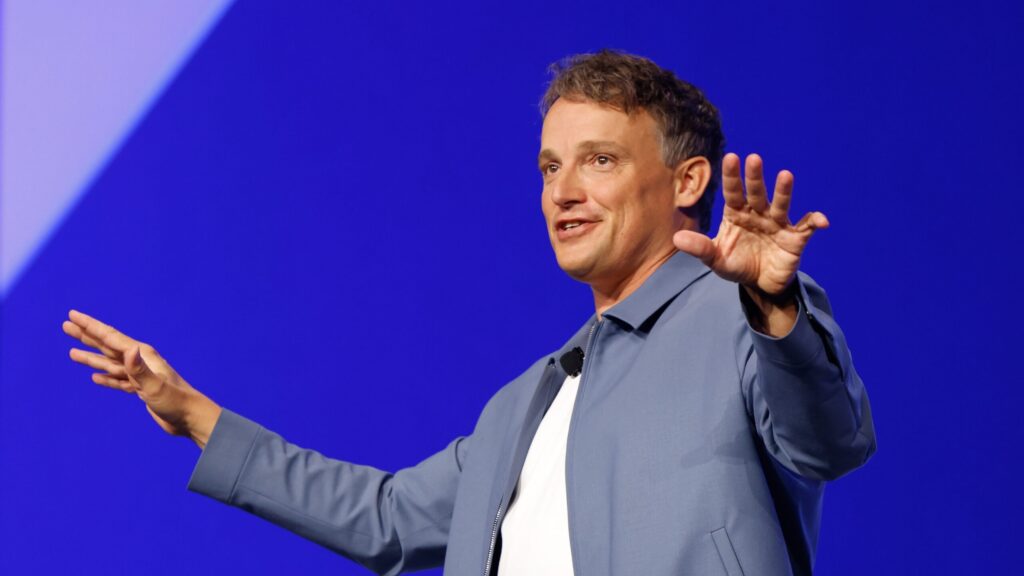
Christian Klein, CEO of SAP at Sapphire
SAP Enters Payments as Joule Assistants Expand Across Every Line of Business
SAP has launched new AI-powered Joule Assistants across various business functions as part of its Autonomous Enterprise vision, aimed at automating critical workflows and enhancing operational efficiency, with the broader goal of integrating intelligence throughout organizations, despite some assistants not being available until 2027.
Acumatica 2026 R2 Puts AI Agents and Outside AI Tools Inside ERP Controls
Acumatica 2026 R2 adds AI agents triggered by business events and MCP servers that give outside AI tools read-only access to ERP data under existing permissions. The release also makes the Modern UI the default ahead of Classic UI retirement in 2027 R1.
Modern architectural pathways and segmented structures representing data sovereignty and enterprise infrastructure boundaries.
Why Data Sovereignty Is Becoming an Enterprise Architecture Question
Data sovereignty increasingly describes who controls enterprise data, workloads, and operators, as well as where data sits. Cloud, AI, regional policy, and portability are making it an enterprise architecture question.
Fusion Claw: Oracle’s New Runtime for Autonomous, Governed Enterprise Work
Oracle has introduced Fusion Claw, a governed execution runtime that lets Fusion Agentic Applications take on larger, longer-running work. It pairs frontier-model reasoning with deterministic computation and records each run in an auditable receipt.
Microsoft Opens Work IQ Preview for Dynamics 365 and Power Platform Data
Microsoft has opened a public preview of Work IQ, which grounds Copilot and agents in a shared model of Dynamics 365 and Power Platform data built largely from existing configuration. Dynamics 365 Finance and Operations coverage is scheduled for late October.
Is the Autonomous Enterprise the Future SAP Customers Want?
In May 2026, SAP announced its Autonomous Enterprise vision, featuring new AI capabilities and agents designed to transform business operations, yet customer enthusiasm has shifted to concerns about governance, cost, and the uncertain timeline for AI integration, highlighting a disconnect between market expectations and the cautious approach adopted by organizations within the SAP ecosystem.
Abstract digital brain with interconnected nodes symbolizing specialized industry knowledge for enterprise AI.
Why Industry Context Is Becoming Critical to Enterprise AI
As AI moves from generating suggestions to executing work, industry processes, rules and data increasingly determine what it can do. This explainer covers what industry AI is, why context matters more as AI takes action and what determines whether it can scale.
Abstract digital brain with glowing circuits, representing artificial intelligence and cybersecurity.
AI and Cybersecurity: Faster Attacks, Smarter Defense, and Agent Identity Risk
AI is compressing the time attackers need to exploit known weaknesses while adding software agents that can act inside enterprise systems. This explainer examines how AI is changing threats, defense, identity and security governance in SAP environments.
Abstract digital brain with glowing connections, representing AI and process automation for enterprises.
How AI Is Changing Enterprise Process Automation
AI-driven automation extends rules-based workflows into processes that involve changing context, exceptions, and judgment. Enterprises must align agent autonomy with governed data, permissions, human oversight, and process-level performance measures.
Abstract illustration depicting interconnected nodes and data streams, symbolizing enterprise AI adoption and scalability challenges
AI Adoption Is Widespread, but Scaling It Is Not
Enterprise AI use is growing faster than the operating models needed to turn it into measurable value. Scaling requires workflow redesign, shared ownership, selective use-case investment, and outcome-based measurement.