
AI-powered purchase order and invoice automation is emerging as one of the fastest ways for CFOs and operations leaders to claw back time, cut costs, and clean up data quality in the finance back office, and SageX is leaning hard into that opportunity. By targeting the unstructured data that clogs email inboxes and AP queues, the company is positioning its platform as a foundational layer for enterprise AI, not just another point solution.
What This Means for ERP Insiders
AI-first financial workflows will redefine ERP value. Finance automation layers like SageX show that the next wave of ERP differentiation hinges on how effectively vendors and partners embed unstructured data intelligence on top of existing ledgers to unlock faster closes, cleaner data, and more strategic cash-flow decision-making.
From Manual Bottlenecks to AI-First Workflows
The SageX solution starts with a problem every finance executive knows well: invoices and purchase orders arrive via email, PDFs, and scanned images, often in inconsistent formats that require staff to rekey information into ERP systems. Manual processing can take roughly 14 days per invoice on average, with some industries waiting up to 25 days and shouldering error rates between 12 and 15%.
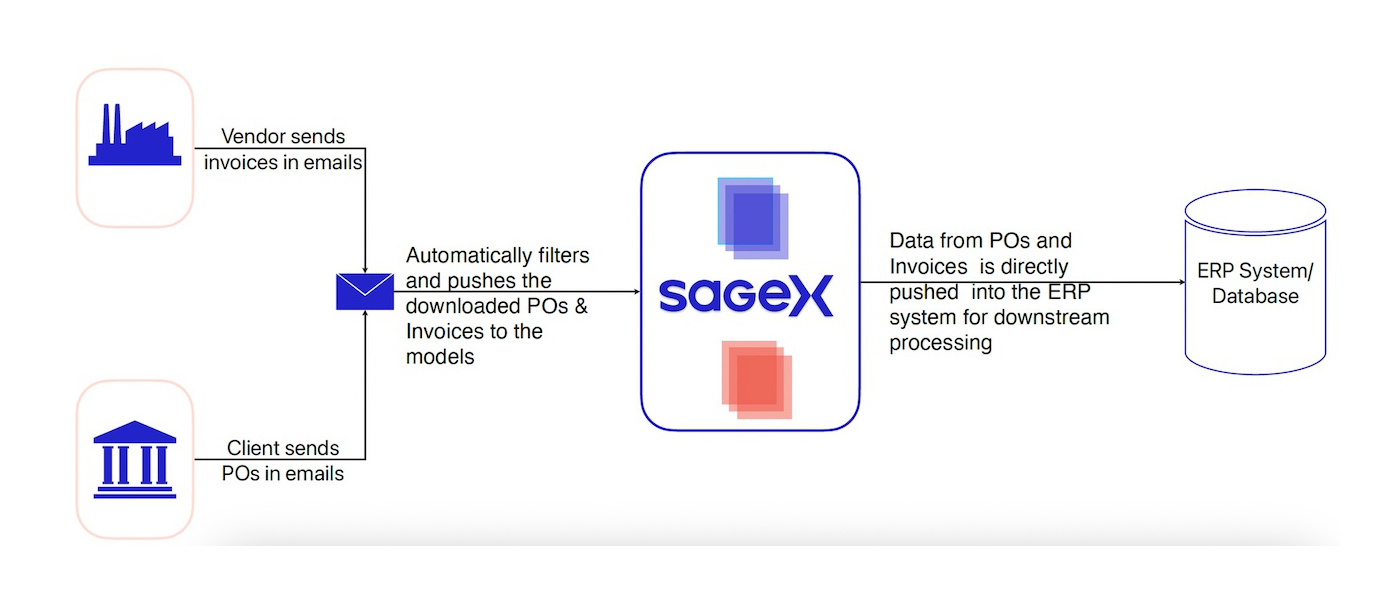
SageX AI automates that lifecycle from inbox to ERP by extracting key fields, validating them against existing records, flagging discrepancies, and posting clean data into the system of record. In a representative midmarket manufacturing deployment, the company reports that processing time per purchase order dropped from 45 minutes to under one minute, boosting efficiency by more than 90% and cutting per-document processing costs by up to 80%.
For technology leaders, that shift translates into fewer touchpoints for AP clerks, fewer late-payment penalties, and more predictable cash flow as invoices move through the system in hours instead of weeks. Just as importantly, the platform creates structured, trusted data that can be reused for downstream automation such as dynamic discounting, supplier risk analytics, and forecasting rather than stopping at basic capture.
SageX emphasizes that its AI layer connects via Databridge to emails and integrates with existing ERP platforms rather than replacing them, allowing organizations to modernize their financial operations incrementally without a core system rip-and-replace. That design will resonate with CIOs and enterprise architects wary of disrupting stable ERP estates while still under pressure to show AI-driven productivity gains in 2026.
What This Means for ERP Insiders
Data transformation layers become mandatory architecture. By positioning an AI-powered translation layer between messy external content and core ERP systems, SageX signals that enterprises will increasingly require standardized, reusable data pipelines that can simultaneously feed multiple AI workloads, shrinking integration debt and accelerating time to production.
Building a Cleaner Data Foundation for Enterprise AI
At a macro level, the company argues that automating PO and invoice flows is one of the most underutilized AI opportunities in manufacturing and other document-heavy industries, even as budgets shift toward predictive maintenance, robotics, and analytics. Without accurate, timely, and structured transaction data, those higher-order AI initiatives often fail to scale beyond pilots.
SageX’s platform operates as a continuous unstructured data translation layer, converting messy content from emails, images, and documents into governed, traceable records that align with enterprise semantics. For day-to-day operations, that means finance and operations teams gain real-time visibility into invoice status, spend patterns, and approval bottlenecks through analytics fed by the same AI workflows that are reducing manual labor.
Evaluation criteria for buyers in this space now extend beyond OCR accuracy to include how well a solution handles multimodal documents, enforces data lineage, integrates with multiple ERPs, and scales across plants and business units. Early adopters are also prioritizing vendors that can demonstrate concrete time and cost savings, short implementation cycles, and a roadmap that links AP automation with broader operational use cases such as production reporting and supply chain risk management.