
The ERP implementation model has resisted change for decades: a large capital commitment, a long approval cycle, and progress reported through periodic status calls and slide decks. NEO3, an Ohio-based Oracle NetSuite Solution Provider Partner with more than 400 implementations delivered since 1999, is now challenging all three conventions at once. With Cadence now generally available, the firm has packaged AI-assisted implementation as a monthly subscription, targeting 90-day go-lives on qualified NetSuite projects and giving clients a live window into their own deployment.
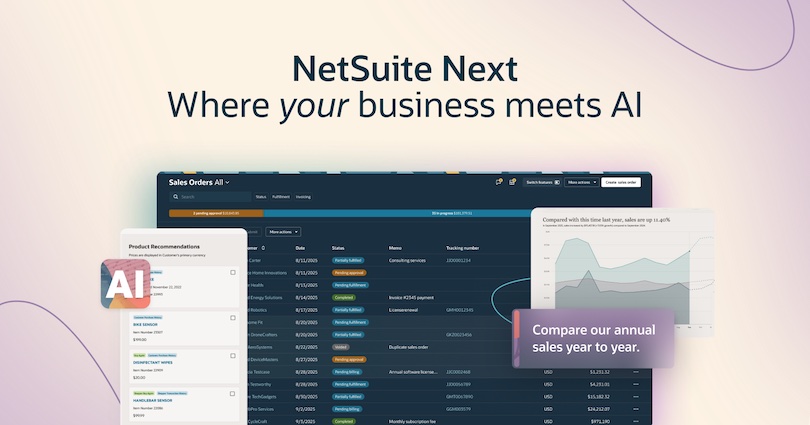
The timing is deliberate. Oracle NetSuite is in the middle of its most consequential platform transition since 1998, with the North America rollout of NetSuite Next putting Ask Oracle and agentic workflows at the center of the ERP experience. As the platform itself becomes more intelligent, the implementation layer surrounding it has remained stubbornly analog. Cadence aims to close that gap.
Watching the Implementation, Not Waiting for It
Cadence’s most visible departure from convention is transparency. Clients see their implementation’s current stage, percent complete, finished work, upcoming tasks, and a single named next action. Each of nine stages opens as a card showing documents submitted, questions outstanding, and decisions recorded, replacing the status call entirely.
Behind the interface, the AI does the heavy documentation lifting. First-pass requirements, scope, and configuration documents are generated automatically, cutting manual documentation roughly in half and redirecting about twice as much consultant time toward client teams.
Jim Rosenberg, President and CEO of NEO3, is emphatic that this is not generic AI wearing a consulting badge. “We did not put our logo on a general-purpose chatbot,” he said. “Cadence’s AI is trained on our own implementations, four hundred-plus real projects, what worked and what broke. Every recommendation cites the finding behind it, and no output reaches a client without one of our consultants reviewing it. AI does the volume. Our people do the judgment.”
That human-in-the-loop posture mirrors the governance conversation happening across the NetSuite ecosystem, where trust, traceability, and permission-aware AI are becoming the deciding factors in adoption.
Attacking the Schedule Killer: Data Conversion
NEO3 has structured Cadence around the place implementations most often lose their schedule: data conversion. The platform handles it across three of the nine stages, covering setup data, core data, and go-live data, each with its own approval gate. AI cleanses, maps, and validates records while flagging exceptions for consultant review, and conversion is included in the subscription rather than billed separately.
The subscription model itself may prove the more disruptive element. “ERP has always been a capital decision, a big number and a long approval cycle before anything can start,” Rosenberg said. “A predictable monthly payment changes who can get started, and because we stay engaged for as long as a client runs on the system, our incentives point the same direction as theirs.”
That alignment matters in a market where consolidation economics are increasingly proven. Therabody, for example, cut technology costs by 45% after unifying global operations on NetSuite, with AI capabilities layered onto core workflows through the AI Connector Service. The value case for NetSuite is strengthening; the friction is getting lower.
What This Means for ERP Insiders
The implementation business model is now in play. Subscription-based delivery changes who can afford to start an ERP project and realigns partner incentives toward long-term system health. CFOs and ERP program managers evaluating NetSuite should ask prospective partners how their commercial model shapes their behavior after go-live.
Specialized AI beats generic AI in delivery, too. Just as NetSuite embeds AI into specific workflows like reconciliation and variance analysis rather than broad interfaces, Cadence trains its AI on 400+ real projects with cited findings and mandatory consultant review. Buyers should demand the same traceability from any AI-assisted implementation.
Data conversion deserves contract-level attention. NEO3’s decision to gate conversion across three stages and include it in the subscription acknowledges where schedules break. Enterprise architects should scrutinize how any implementation proposal scopes, prices, and governs data conversion before signing.