DeepFabric, a provider of AI agents for supply chain, announced on July 8 the general availability of its AI agent platform for supply chain execution, targeting the manual coordination work that continues to sit between ERP, transportation, warehouse, finance, and customer-facing systems.
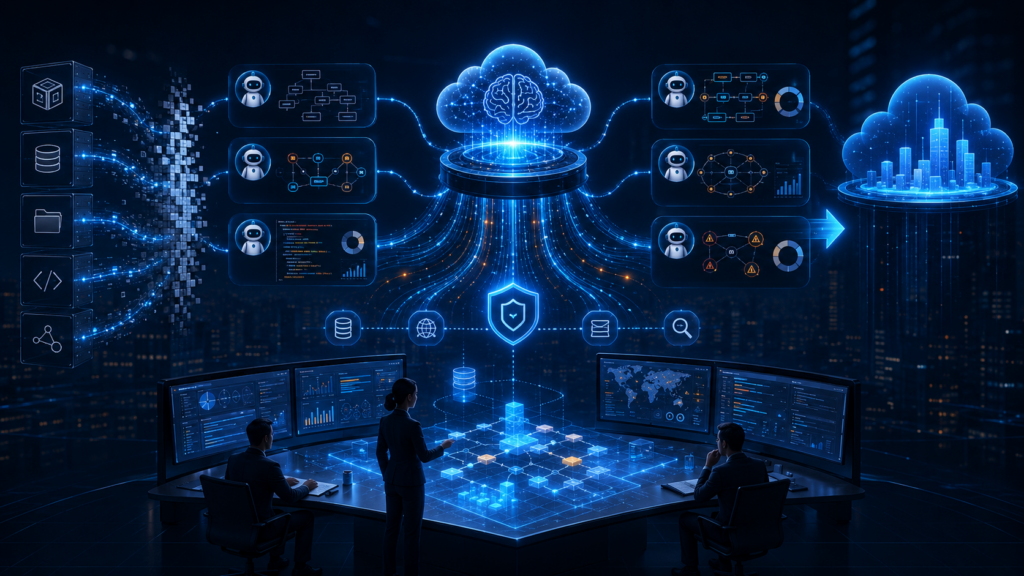
The platform is reportedly designed to deploy specialized AI agents directly into operational workflows. DeepFabric said that the platform includes more than 50 agents across operations, financial control, assurance, and growth, with commonly deployed agents including Freight Auditor, Proposal Manager, and Inventory Manager.
The launch is backed by named production customers including HelloFresh, Kenco, NFI, TwinMed, Merchants Fleet, and Weber. DeepFabric said early customers have seen up to 10x ROI on freight audit, 45% reductions in audit spend, and RFP response times cut by up to 30%. Those are vendor-reported outcomes and should be treated as proof points for buyers to validate in their own environments.
The broader pitch is straightforward: Many supply-chain teams have already invested heavily in ERP, TMS, WMS, and other systems, but still rely on people to read documents, reconcile exceptions, route approvals, respond to customer requests, and coordinate work across internal and external parties.
Packaged Agents Enter Supply Chain Execution
DeepFabric’s product strategy reflects a more focused direction for enterprise AI. Instead of offering a general-purpose assistant, the platform provides packaged agents tied to specific supply-chain tasks, including freight audit, proposal management, inventory work, financial control, and operational assurance.
The company said that the agents can read documents, flag exceptions, route work to human review, and show the evidence behind each output so teams can stay in control. DeepFabric also said new agents can be live within a day without internal technical resources or data cleanup, though customers will still need to validate integration depth, data quality, controls, and auditability against their own operating model.
SiliconANGLE reported that DeepFabric’s platform is already running in production across logistics, consumer goods, medical supply, fleet management, manufacturing, and retail customers. The publication also noted that the platform’s strongest use cases are aimed at manual, error-prone tasks supply-chain teams handle every day.
Execution Layer Becomes the AI Target
The market signal is not only that supply-chain AI is moving into production. It is that AI vendors are moving closer to the operational execution layer where teams make decisions, process exceptions, and coordinate work across fragmented systems.
That shift matters because supply-chain pain often sits between systems rather than inside one application. A transportation system may hold shipment data, a warehouse system may hold inventory activity, an ERP may hold financial and order data, and external partners may send documents, updates, and exceptions through email or portals. The manual work lives in the handoffs.
DeepFabric is positioning its agents around those handoffs. If the model works, the value would come from reducing coordination effort while preserving human review and visible proof behind the agent’s recommendations.
Get Our Free Weekly Newsletter
What This Means for ERP Insiders
Supply chain AI must prove value in the work between systems. Most organizations already run multiple platforms across planning, execution, transportation, warehousing, finance, and customer service, but operational drag often remains in the handoffs between them. For CIOs, supply-chain leaders, and systems integrators, the next opportunity is to reduce coordination work without rebuilding the entire application landscape.
Packaged agents will compete on workflow depth, not agent count. Buyers will care less about how many agents a platform offers and more about whether those agents understand documents, exceptions, approvals, ownership rules, and operational context well enough to support real decisions. For logistics operators, manufacturers, and retailers, evaluation should focus on evidence trails, escalation paths, integration quality, and measurable process outcomes.
Human oversight will define production-grade agentic AI. Supply-chain teams operate in environments where missed exceptions, weak approvals, or inaccurate handoffs can affect cost, service, compliance, and customer trust. For enterprise AI vendors and operations teams, the practical challenge is building agent workflows that accelerate execution while keeping accountability, review, and auditability visible from the start.