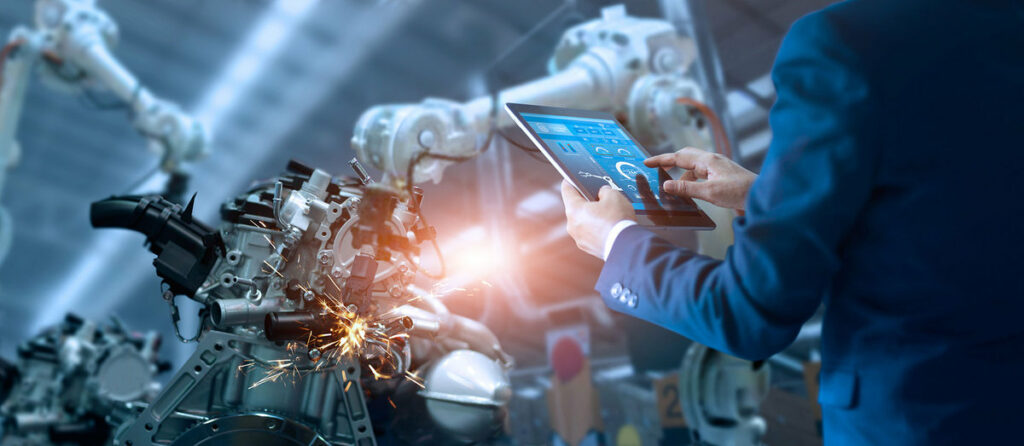

Manufacturers enter 2026 under pressure to do more with less, but the path from firefighting to flow is becoming clearer as ERP and adjacent technologies mature. For technology leaders, the real change is not another dashboard, it is a shift toward predictable, stable operations built on connected, data-driven processes.
From reactive chaos to predictable flow for ERPs
In many plants, “daily management” still means chasing spreadsheets, reconciling conflicting reports and manually triaging production issues. ERP platforms designed for manufacturing are cutting into the chaos, with recent analyses showing operational cost reductions in the 5 to 25% range and measurable gains in employee productivity when manufacturers modernize their ERP core. This translates into fewer surprises on the shop floor and more time for engineering, supply chain and IT leaders to focus on continuous improvement instead of ad hoc crisis response.
Case studies from manufacturers using modern ERP show how quickly the workday changes when processes are instrumented end to end. One shipbuilding organization that shifted from mostly manual to fully integrated ERP reduced manual intervention to about 5% of processes and anticipates the equivalent of millions in annual savings from better purchasing controls and process discipline.
A ventilator producer that reconfigured its operations on a configurable ERP platform scaled throughput roughly 80 times in a matter of months to meet a federal order, demonstrating how a stable, data-rich backbone can support extreme agility without melting down operations.
Stability also means less clerical work for knowledge workers. In one distribution example, automating stock transfers and inventory planning on a manufacturing-focused ERP cut a process that once consumed more than 65 work hours and 50 people down to a single person working under an hour, with expected working-capital savings in the six-figure range within months. For technology teams, this level of automation changes priorities, as effort shifts from reconciling data and chasing approvals to designing better workflows and integration patterns that keep material, capacity and demand in sync.
What to prioritize in 2026 ERP roadmaps
The manufacturing ERP market is projected to reach roughly $23 billion in 2025, growing around 8% annually as manufacturers invest in Industry 4.0, IoT integration and supply chain optimization. Within the broader ERP market, which is forecast to exceed $80 billion in 2026, manufacturers remain the largest vertical and a primary driver of cloud and hybrid adoption. For CIOs and CTOs, this means ongoing pressure to rationalize overlapping systems and move toward platforms that can handle real-time data and increasingly complex compliance requirements.
When evaluating providers, technology executives are emphasizing several capabilities. Deep, industry-specific process coverage and strong inventory, production and quality management remain table stakes, but extensibility through APIs, event frameworks and low-code tools now matters as much as core functionality. Integration is another critical lens, as platforms that expose robust REST and SOAP interfaces and offer proven patterns for connecting to CRM, MES, e-commerce and financial systems reduce the integration tax and lower long-term risk.
Adoption challenges are shifting from pure technology questions to organizational readiness. High implementation and maintenance costs, along with skills shortages, still constrain smaller manufacturers, even as cloud options lower infrastructure barriers. Successful adopters tend to follow a staged roadmap, codifying business objectives, mapping data across legacy and new systems, and tightly governing integration scope so new capabilities do not reintroduce the very instability they were meant to remove.
What This Means for ERP Insiders
Architectural discipline will separate winners from reactive implementers. Technology leaders who treat ERP as an operational backbone rather than a transactional database will push vendors toward open, event-driven architectures that can absorb IoT, AI and edge workloads without sacrificing stability or maintainability.
Operational ROI narratives will become more granular and timebound. Vendors and system integrators that quantify labor hours removed, capital released and cycle times shortened, down to specific workflows and timeframes, will gain credibility with CFOs and plant leaders, reshaping buying decisions and influencing product roadmaps toward measurable, modular value delivery.
Integration strategy will become a core governance domain. Enterprise architects will formalize patterns, standards and ownership for ERP-centric integration, forcing closer alignment between ERP vendors, iPaaS providers and SIs and elevating data modeling, API management and change control as primary levers of operational stability.