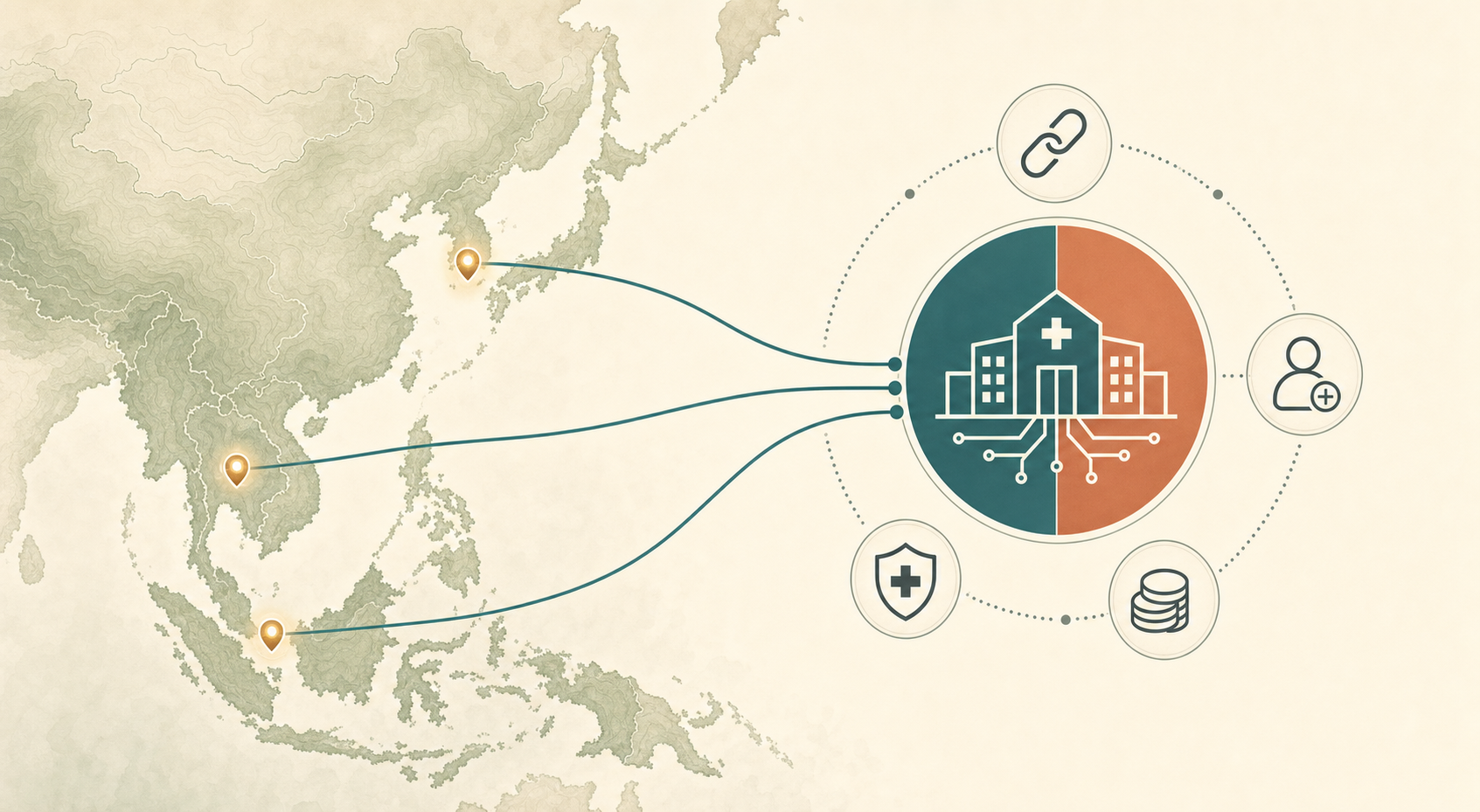
IHH Healthcare announced on June 11 it has selected Infosys for a multi-year, enterprise-wide ERP transformation program designed to standardize business processes across its markets, beginning with Hong Kong, Malaysia, and Singapore. The program will use Infosys Topaz, the company’s AI-first offering powered by generative and agentic AI technologies, to embed intelligence into IHH’s core business workflows.
IHH is one of the world’s largest private healthcare providers, with operations across 10 countries and brands including Acibadem, Gleneagles, Fortis, Island, Mount Elizabeth, Pantai, Parkway, and Prince Court. The group has 76,000 employees and 190 healthcare facilities, including 89 hospitals.
That scale makes the project more than a technology refresh. IHH is trying to create a more unified operating model across a complex healthcare network where finance, procurement, supply chain, HR, and performance management need to support growth, regulatory compliance, and patient-care operations across different markets.
ERP Standardization Gets the Healthcare Test
Infosys will help consolidate IHH’s legacy, siloed ERP landscape by integrating finance, procurement, supply chain, human capital management, and enterprise performance management.
The goal is to give IHH better real-time data visibility and decision intelligence while simplifying cross-market operations. Infosys said the transformation is intended to streamline operations, improve agility and scalability, optimize costs, and strengthen regulatory compliance.
For healthcare providers, those goals are tightly connected. Procurement affects clinical supply availability. Workforce planning affects care delivery. Finance and performance management affect expansion, cost control, and investment decisions. When those functions run on fragmented systems, leaders often struggle to get a consistent view of operations across markets.
“As we continue to optimize and future-proof our operations across markets, this ERP collaboration with Infosys will drive greater cost efficiency while empowering our teams to focus on what matters most—caring for patients,” said Dilip Kadambi, IHH’s Group Chief Financial Officer.
AI Needs a Common Operating Foundation
Infosys is positioning Topaz as the intelligence layer that will help IHH embed AI into core workflows and unlock AI-powered business value at scale. Venky Ananth, EVP and Global Head of Healthcare at Infosys, said the collaboration will consolidate fragmented systems into a unified, cloud-based platform that enables real-time decision-making and simplifies cross-market operations.
That is the practical sequence. AI can improve decision support only when business processes and data are consistent enough to use. In a multi-country healthcare environment, the challenge is not simply deploying generative or agentic AI. It is aligning data definitions, workflows, approvals, controls, and reporting across markets with different operating practices and regulatory requirements.
The program starts in Hong Kong, Malaysia, and Singapore, giving IHH a regional foundation before broader standardization. That phased approach matters because healthcare ERP transformation touches sensitive processes, including procurement, workforce operations, finance, compliance, and enterprise performance management.
Healthcare ERP Modernization Is About Scale and Control
The IHH program reflects a broader reality for large healthcare groups. Growth through multiple markets, facilities, and brands can leave organizations with systems that work locally but limit enterprise visibility. That creates friction when leaders need to manage costs, compare performance, standardize procurement, respond to regulatory requirements, or make faster investment decisions.
For IHH, a centralized digital enterprise foundation could help the group act more consistently while still operating across different national markets. The test will be whether standardization improves visibility and efficiency without flattening the local workflows healthcare providers need to run safely and effectively.
For Infosys, the engagement is a healthcare-sector proof point for AI-led ERP transformation at scale. The company is not only implementing systems; it is trying to show how AI, cloud ERP, process harmonization, and decision intelligence can operate together in a regulated, multi-country healthcare enterprise.
What This Means for ERP Insiders
Multi-country ERP programs win or fail on process discipline. IHH’s transformation shows how large healthcare organizations need common workflows, data definitions, and reporting structures before AI can improve decision-making at scale. ERP leaders should treat harmonization as the core work, not as a byproduct of platform consolidation.
AI raises the stakes for clean operational data. Infosys Topaz may bring generative and agentic AI into IHH’s workflows, but those capabilities depend on trusted finance, procurement, supply chain, HCM, and performance data. Organizations should build AI readiness into the ERP program from the start by fixing data ownership, controls, and integration gaps early.
Healthcare ERP modernization must balance standardization with local realities. IHH’s rollout begins across Hong Kong, Malaysia, and Singapore, where business processes, regulations, and operating models may differ. Transformation teams should define which processes need global consistency and which require local flexibility before scaling ERP changes across markets.