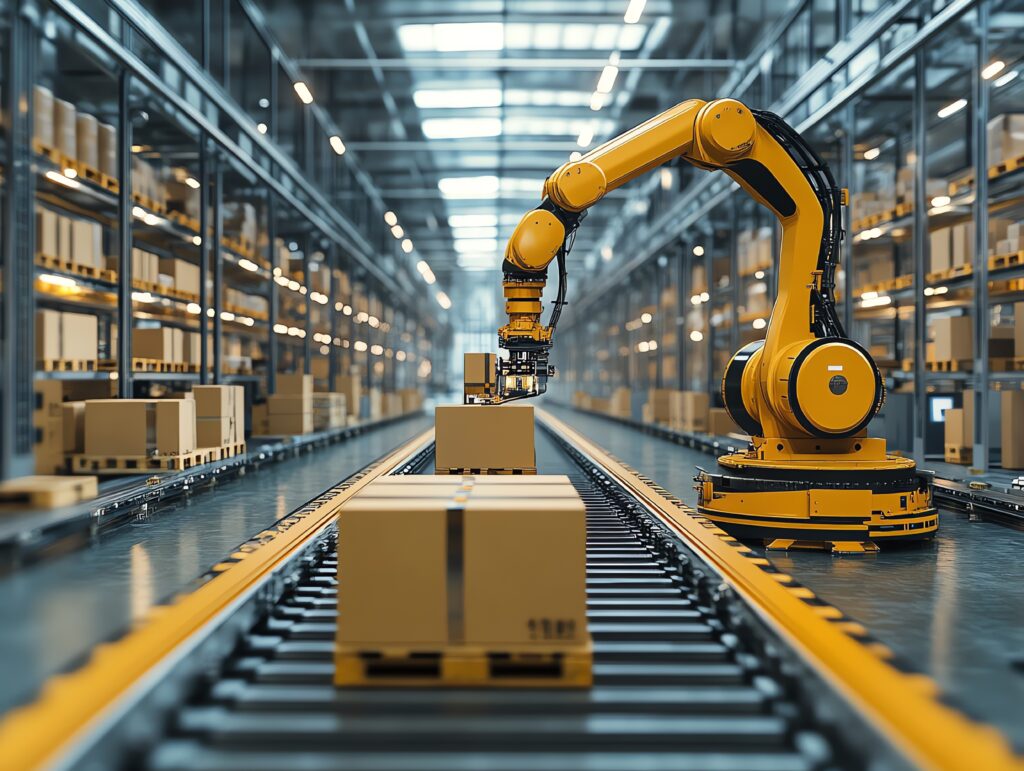

Manufacturers are rapidly advancing from isolated automation cells to AI-enabled robotic ecosystems that interact with ERP and MES systems in near real time. As shown during the session “The Next Frontier: AI Executing in the Physical World” at IFS’ Industrial X Unleashed event, which featuring Linamar and other manufacturers, the wave of physical AI offers substantial gains in productivity, quality assurance, and production continuity for robots.
Over the last several years, production lines have evolved from operator-heavy processes to blended environments where cobots, AI-enabled pick-and-place robots, and autonomous inspection systems now work in tandem. A typical example: one Linamar plant replaced manual part orientation and visual verification with AI-vision robots and cobots capable of safe human interaction. This reduced final assembly inspection time, increased throughput per square foot, and decreased rework incidents because robots caught defects earlier in the process.
AI-Enhanced Robotics Strengthen Quality and Throughput
Manufacturers adopting these models report several ROI indicators. One automotive components producer achieved 20% cycle-time reduction after replacing manual bin-picking with AI-guided robotic cells. Another industrial firm reduced safety stoppages by 15% after introducing cobots with built-in proximity and collision sensors, enabling technicians to perform maintenance without shutting down entire production lines.
Spot’s autonomous inspection capabilities complement these changes. With thermal, acoustic, gas detection, and HD imaging sensors, Spot can identify misalignments, leaks, and abnormal heating long before traditional inspections would catch them. This contributes to higher first-pass yield rates and reduces unexpected line downtime, which are top priorities for plant managers managing tight production windows.
Integrating Robotics Into ERP-Driven Production
For ERP executives, the key development is that robots are now treated as addressable enterprise assets. Within platforms like IFS Cloud, robots are defined with availability calendars, skill profiles, maintenance tasks, and dispatch rules. When a production issue occurs such as an overheated motor, ERP workflows can trigger a robotic inspection before escalating to human maintenance teams.
Manufacturers evaluating robotics providers should assess interoperability with MES/ERP orchestrations, sensor modularity, tolerance to environmental conditions and ease of reprogramming through AI-driven skill generation. The organizations that succeed are those that integrate robotics into continuous-improvement cycles rather than deploying them as standalone automation islands.
What This Means for ERP Insiders
ERP can provide higher production throughput for robotics. Robotics integrated with ERP workflows helps plants maintain consistent output even with fluctuating labor availability. ERP teams benefit from more predictable production performance and fewer urgent maintenance interventions. This results in fewer disruptions and downtime.
ERP can help provide greater quality assurance for robotics. Robots generate richer, more consistent inspection data that feeds ERP quality modules and supports automated nonconformance handling. Manufacturers gain earlier detection of defects and reduced scrap, which reduces downtime.
Physical AI can provide streamlined maintenance planning. Physical AI enables earlier detection of equipment degradation, improving asset scheduling accuracy. ERP-based maintenance plans become more proactive and less disruptive to production cycles, leading to greater overall efficiency and throughput.