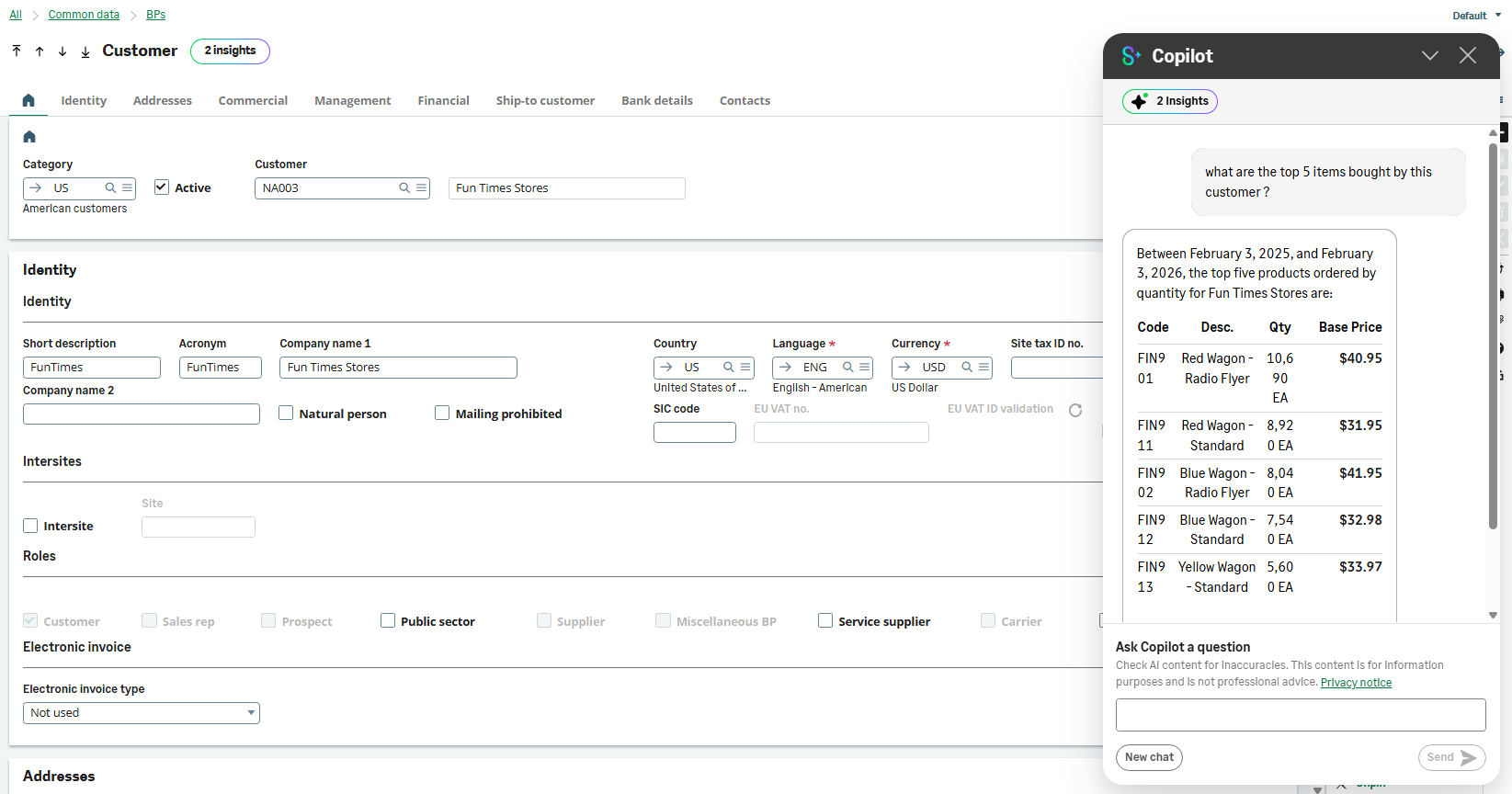
Sage has introduced AI-powered capabilities by embedding Sage Copilot into Sage X3 and Sage Operations to deliver predictive insights, autonomous workflow management and real-time intelligence for mid-market manufacturing and distribution businesses. This is part of Sage’s transition from reactive reporting systems to agentic AI architectures that autonomously handle multi-step tasks including inter-company reconciliation, invoice processing, compliance checks and operational risk detection.
Sage Copilot surfaces insights directly within existing operational contexts, enabling staff to identify supply chain bottlenecks, delivery delays and customer service risks before they escalate into revenue-impacting disruptions.
Autonomous Operations and Real-Time Decision Intelligence
Sage X3’s capabilities include Sales Insights that uncover revenue opportunities through pattern analysis and a Copilot Chat experience allowing users to query systems conversationally within workflows. The Finance Intelligence AI Agent automates transactional tasks that historically consumed senior staff time, freeing finance teams to focus on strategic analysis rather than data entry and reconciliation.
The technology shift enables predictive rather than retrospective decision-making. AI engines analyze operational data sets in real time to forecast cash flow constraints, inventory shortages and compliance risks, allowing organizations to implement mitigation strategies before problems materialize. Manufacturing and distribution teams using Sage Operations gain unified visibility across multiple warehouses, locations and companies, with AI surfacing fulfillment exceptions and procurement delays that require intervention.
Integration Architecture and Adoption Considerations
Organizations evaluating AI-enhanced ERP platforms should prioritize solutions delivering insights within native workflows rather than separate analytics tools requiring context switching. The Sage platform provides connected data foundations and AI services enabling agentic operations, where systems proactively recommend actions based on emerging patterns rather than waiting for user queries.
Successful AI adoption in mid-market environments requires clean, unified data architectures. Organizations with siloed systems across finance, operations and supply chain struggle to implement predictive capabilities because AI models cannot reconcile inconsistent data definitions and conflicting master records. Companies preparing for AI deployment should audit data quality, standardize process definitions and establish governance frameworks before activating autonomous agents with decision-making authority.
The Sage X3 architecture shifts infrastructure management to fully managed cloud services, eliminating IT burdens associated with patching, upgrades and availability management. This cloud foundation enables continuous AI capability updates without disruptive version upgrades, allowing organizations to access autonomous agents as Sage releases them across industry-specific workflows.
What This Means for ERP Insiders
Agentic AI is forcing mid-market ERP to autonomous operations platforms. Sage’s introduction of Finance Intelligence AI Agents and operational risk prediction capabilities demonstrates that mid-market vendors are leapfrogging traditional business intelligence layers to deliver autonomous decision-making previously unavailable at this market tier. This architectural shift pressures enterprise ERP vendors to accelerate embedded AI roadmaps or risk competitive displacement as mid-market products offer capabilities that match or exceed traditional enterprise platforms’ analytical sophistication.
Workflow-embedded AI validates conversational interfaces. Sage Copilot’s chat-based interaction model within X3 and Operations workflows represents a fundamental departure from form-based transaction processing and dashboard-centric analytics that defined previous ERP generations. This conversational paradigm, where users query systems in natural language and receive contextual recommendations without navigating menu hierarchies, challenges enterprise architects to redesign user experience strategies around LLM-powered interfaces rather than traditional GUI modernization.
Cloud-native architecture is becoming mandatory infrastructure. Sage’s positioning of next-generation X3 as fully managed cloud services directly supports its agentic AI strategy, where autonomous agents require continuous model updates and capability enhancements incompatible with annual on-premise release cycles. This architectural dependency on cloud delivery for AI evolution creates strategic inflection points for organizations maintaining on-premise or hybrid ERP deployments, as AI-driven competitive advantages increasingly require cloud-native foundations.