
During the company’s Q3 2026 earnings call, CFO Dominik Asam announced that the company had exceeded €10 billion in a quarter for the first time. With total revenue up 13% year over year, and equal or greater increases in every metric but that of traditional software licenses and support, it should not be a surprise that SAP had such a strong quarterly performance.
In CEO Christian Klein’s opening remarks he noted that the big factor driving this performance is AI with nine out of ten of the company’s 50 largest deals during the quarter including AI and SAP Business Data Cloud. According to Klein, there are three key reasons for AI making a difference. The first is that AI is accelerating the RISE with SAP and GROW with SAP cloud migrations. The second is that AI makes the business case for the suite more attractive. And the third is that those that are embracing the SAP Business AI Platform know that it is essential for building the data and process foundation required for high-quality enterprise-grade AI.
Underpinning this success was a strong growth in Current Cloud Backlog, up 28% to €24.144 billion, Cloud revenue, up 26% to €6.668 billion, and Cloud ERP Suite revenue, up 29% to €5.924 billion. While Current Cloud Backlog did increase significantly this quarter, Asam made more than one reference to the current political and macroeconomic uncertainty potentially impacting SAP’s fourth quarter bookings as well as the 2027 trajectory. While the company currently expects to trend towards the upper end of their cloud and software revenue outlook, Asam stated that it was important to be cognizant of all the factors that make that trajectory more challenging.
Focus on The Autonomous Enterprise
While Klein’s prepared remarks started with the successful quarter, he spent significant time discussing the Autonomous Enterprise and the impact it is having on both the SAP business and overall performance. Klein then went on to talk about Joule Work, the front end that allows users to ask questions and delegate tasks in natural language, the ability to use Joule to call on specialized agents to perform tasks that are more than just a query, and Joule Spaces which bring together data into a single, always up-to-date view so those with access to the space don’t need to build a PowerPoint or Excel spreadsheet. Klein also talked about how Joule Studio can be used for building or extending agents.
Klein spent more time talking about SAP Business AI which combines model choice, business context from SAP Business Data Cloud and the knowledge graph it contains, as well as effective governance. Klein stated that, when building custom solutions, customers can select the best model for each use case and that SAP offers access to more than 70 models including both Frontier and Open-weight models. Klein emphasized that the fact that SAP is not committing to a preferred model is a benefit for customers as it provides customers with choice and “will always make sure that they have access to the best options available.”
AI is also SAP’s own operating model with Klein stating that over 40,000 developers are working AI first. This has allowed them to complete approximately 70% more code contributions since the beginning of the year. SAP is also using AI in their go-to-market activities and to transform how the company engages with customers. Klein also indicated that Joule Work Desktop is now live for over 110,000 employees and SAP is seeing productivity gains of 20% across functions like finance, HR, and procurement.
What This Means for ERP Insiders
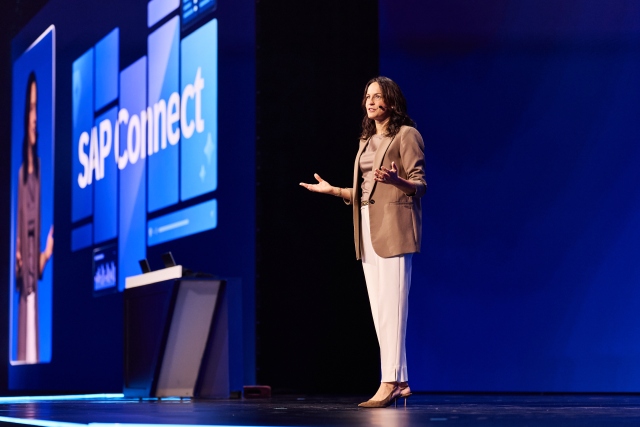
Despite the restatement of the Autonomous Enterprise messaging and the focus on the outstanding quarterly performance, there was little in the way of anything new during the quarterly earnings call. Falling two weeks after SAP Connect which focused on the different lines of business making up the Autonomous Suite and a week before SAP TechEd which will focus on more technical innovations, those events hold much of the news focus for the quarter.
What was notable was that Klein took every opportunity to reinforce the Autonomous Enterprise messaging. On multiple occasions Klein took answers to questions from the attendant financial analysts in a significantly different direction to ensure that message was highlighted. Given comments from some financial analysts over the past few months that SAP is not acting quickly enough in monetizing AI, Klein seemed to be taking every opportunity to state that AI is having a measurable impact on SAP’s overall financial performance. How this will bear out remains to be seen, but making sure their message is understood is obviously at the core of SAP’s thinking.
For ERP Insiders, there will be increasing pressure to embrace the Autonomous Enterprise vision. This will start with transformations to subscription-based cloud ERP because that is the licensing and environment needed to be able to utilize Joule Work and the Joule Assistants that are regularly being announced. Just as there was a push for even customers already running SAP S/4HANA to move to RISE with SAP, that push will continue into SAP Business Suite, the Autonomous Suite, and the Autonomous Enterprise.