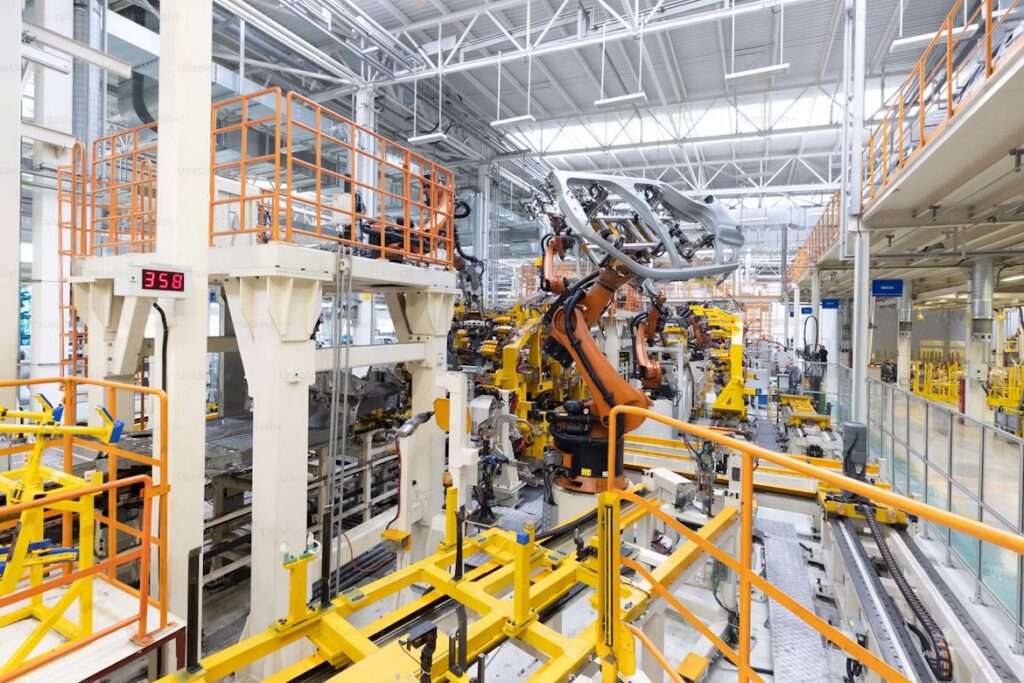

At Hannover Messe 2026, SAP used manufacturing as the headline, but the more important signal for ERP leaders is architectural: the company is embedding AI agents directly into operational workflows that connect planning, production, logistics, service, and asset management across the enterprise.
For organizations running SAP-centric ERP estates, this is less about standalone AI features and more about how intelligence gets applied inside transactional systems where constraints, approvals, and execution already live. SAP’s latest announcements suggest the next phase of enterprise automation will depend on how well customers connect manufacturing processes to SAP S/4HANA, logistics, workforce scheduling, asset performance, and business network data without losing governance or control.
SAP Expands Agentic AI for Manufacturing and Supply Chain Operations
At Hannover Messe 2026, SAP unveiled a portfolio of AI agents spanning manufacturing, field service, asset management and logistics.
Manufacturing: Production Master Data Agent; Production Planning and Operations Agent
Service and maintenance: Field Service Dispatcher Agent; Alert Processing Agent; Asset Health Agent
Logistics: Material Reservation capabilities; Outbound Task Orchestration Agent
Availability timeline: SAP said the Production Master Data Agent, Production Planning and Operations Agent, Field Service Dispatcher, Material Reservation and Outbound Task Orchestration agents are planned for general availability in Q2 2026, while the Alert Processing Agent and Asset Health Agent are expected to follow in Q3 2026, indicating a phased rollout rather than a single release.
SAP also tied these capabilities to SAP SuccessFactors Workforce Scheduling, SAP S/4HANA Cloud Public Edition, the new SAP Logistics Management solution, SAP Asset Performance Management and SAP Document AI.
Analysis
What This Means for ERP Insiders
SAP is previewing its next supply chain and ERP execution play. The staggered rollout across Q2 and Q3 2026 gives customers a roadmap clue: now is the time to assess where agentic automation fits into order management, maintenance, warehousing, and service processes already tied to SAP S/4HANA and adjacent cloud applications.
Why SAP’s Manufacturing AI Strategy Matters
The practical shift here is from AI as a reporting layer to AI as an execution layer. SAP’s argument is that dashboards and visibility are no longer enough in a manufacturing environment shaped by cost pressure, global competition, regulatory change and persistent volatility; instead, AI must operate inside transactional workflows where it can validate constraints, recommend actions and trigger workflow actions within business processes. SAP also highlighted the role of SAP Joule in enabling natural language interaction, allowing users to initiate actions such as order releases while the system validates material availability, capacity and scheduling constraints.
That framing is important for SAP customers because manufacturing transformation often stalls at the boundary between insight and action. By tying AI agents to routings, order release, technician dispatch, alert triage, material reservation and outbound fulfillment, SAP is targeting the operational handoffs where manual work, fragmented data and process latency create real business risk.
Analysis
What This Means for ERP Insiders
SAP is targeting the operational gaps where ERP programs often lose momentum, the handoffs between planning, production, dispatch, fulfillment, and maintenance. If these agents work as advertised, they could reduce the latency between exception detection and process response.
The announcement also reinforces SAP’s long-running strategy around end-to-end process integration. SAP said the new orchestration model connects internal teams with suppliers, logistics partners and service providers, using harmonized industrial, transactional and network data to support more coordinated decisions across company boundaries.
SAP Expands Digital Product Passport Support for EU Compliance
SAP also connected the Hannover Messe announcements to regulatory readiness, especially around Digital Product Passports. The company said it is expanding Digital Product Passport support in SAP Business Network to help manufacturers create records aligned with the EU Ecodesign for Sustainable Products Regulation, including data on environmental impact, material composition, repairability and recyclability.
That matters because regulatory data is becoming operational data. For manufacturers selling into Europe or operating global supply chains, compliance requirements increasingly influence how product, supplier and logistics information must be captured and shared across the enterprise and partner ecosystem.
What to Expect Next from SAP’s Industrial AI Strategy
A near-term watchpoint is how SAP expands these capabilities across its portfolio in upcoming releases. The current direction points to more domain-specific AI agents, deeper SAP Joule integration and tighter links between AI reasoning, business rules and transactional execution.
The second watchpoint is adoption friction. Customers may be interested in the productivity upside, but success will likely depend on master data quality, workflow discipline, plant-to-ERP connectivity and governance models that define when humans approve actions and when automation can proceed directly.
A third issue is whether SAP can convert these demonstrations into measurable operational outcomes at scale. SAP’s own framing emphasizes reduced downtime, lower scrap and rework, better service levels, improved inventory accuracy and higher output, so customers will be looking for reference architectures and proof points that connect those promises to production environments.
Analysis
What This Means for ERP Insiders
The next proof point is not the demo but the KPI. ERP and operations leaders should watch for evidence that SAP customers can translate these capabilities into lower downtime, better inventory accuracy, improved service levels, and higher throughput in live environments.