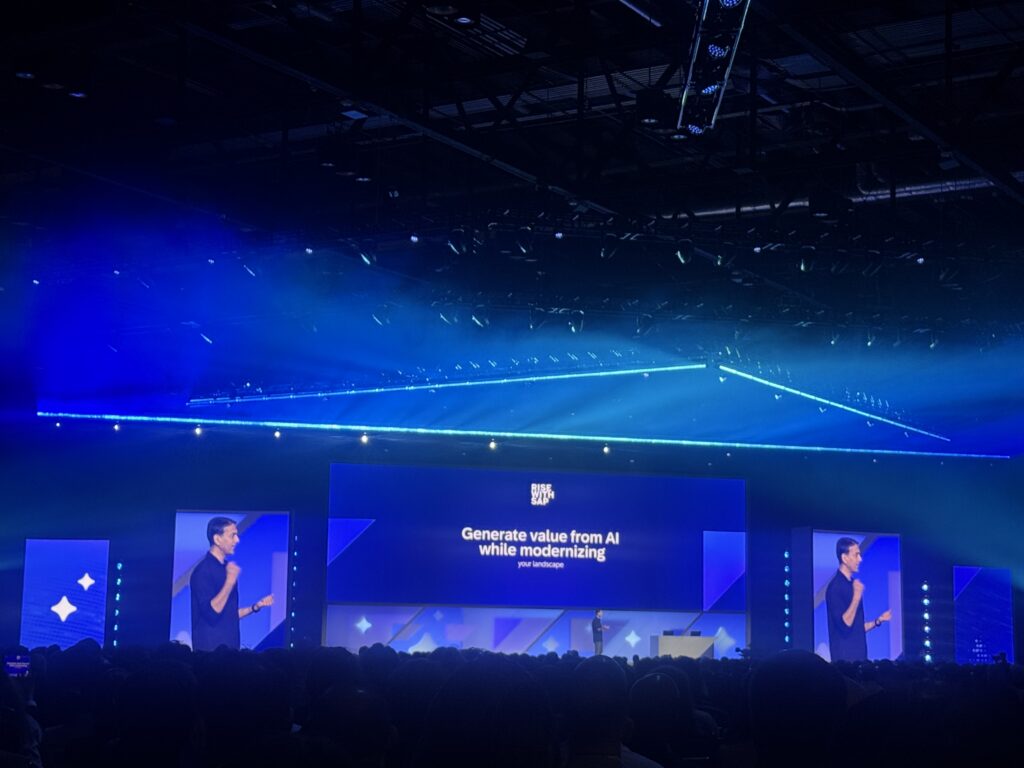

SAP’s Autonomous Enterprise strategy now has a clearer HR shape. At Sapphire 2026, SAP announced Autonomous HCM capabilities in SAP SuccessFactors that extend beyond employee self-service and HR automation into payroll execution, hiring coordination, workforce planning and organizational modeling.
With these, SAP is positioning HCM as more than a record system for people data. With new Joule Assistants and planning tools, SAP is making the case that HR systems should help coordinate work, surface decisions earlier and connect workforce planning more directly to business operations
Analysis
What This Means for ERP Insiders
HR software is moving closer to operational execution. SAP’s push of SuccessFactors beyond transactional HR and into process coordination across payroll, hiring and service delivery, indicates that HCM platforms are moving from being static employee systems of record to active operating layers.
New Joule Assistants Coming to SAP SuccessFactors
SAP introduced a new set of Joule Assistants designed to reduce manual effort across end-to-end HR processes. The Payroll Assistant is intended to help prepare payroll runs, identify issues early, and guide administrators toward faster resolution, while working alongside the Core HR Assistant and Time Assistant to improve data quality, time tracking, and payroll accuracy.
SAP also announced new Recruiting and Onboarding Assistants aimed at connecting talent acquisition and new-hire processes more tightly across SmartRecruiters for SAP SuccessFactors and the broader SAP SuccessFactors HCM suite. The HR Service Assistant is designed to resolve common HR questions more quickly, route employees to the right next step, and reduce service center volume.
What stands out is that SAP is describing these assistants as workflow orchestrators rather than simple chat interfaces. The company’s message is that HR AI should do more than answer questions — it should help move work forward across multiple steps, users, and systems.
How SAP Is Connecting Workforce Planning to Business Planning
SAP is also extending Autonomous HCM into workforce planning, aiming to help companies plan their workforce using one connected view of people, work, and business needs. By bringing together data from SAP Cloud ERP, SAP Fieldglass, and SAP SuccessFactors, SAP wants leaders to plan across both full-time employees and contingent workers, so workforce decisions are based on a fuller picture of labor demand, cost, and capacity.
At a more operational level, SAP also announced AI-enabled organizational modeling for SAP SuccessFactors Employee Central. This will help leaders test org changes before making them live. Instead of manually redesigning teams and reporting structures and then figuring out the impact afterward, HR and business leaders can now model different scenarios in advance — for example, changing roles, moving teams, or adjusting reporting lines — and see how those changes could affect the organization before they are rolled out.
Analysis
What This Means for ERP Insiders
Workforce planning is becoming a cross-functional data problem. By linking SuccessFactors with SAP Cloud ERP and SAP Fieldglass, SAP is trying to unify planning across employees and contingent labor. For enterprises, that raises the importance of clean workforce data and tighter alignment between HR, finance and operations.
How SAP Wants to Deliver Learning in the Flow of Work
The third area focuses on skills and learning. SAP introduced a Workforce Upskilling Assistant designed to deliver personalized, AI-driven learning across collaboration tools, mobile, desktop, and SAP SuccessFactors.
The idea is to move beyond scheduled training and standalone learning systems by using Joule Agents to orchestrate content creation, adaptive micro-learning, and reinforcement. SAP said this should help leaders identify skill gaps faster and deliver targeted learning in the tools employees already use, especially in areas such as AI where required skills are changing quickly.
Analysis
What This Means for ERP Insiders
The bigger play is decision support, not just automation. The broader value in Autonomous HCM is not simply that SAP launched more assistants. It is that SAP is trying to make workforce data, org design and skills signals more usable in day-to-day business decisions.
Editor’s note: A version of this story first appeared on SAPinsider.