
SAP is moving to acquire Reltio, the cloud-native master data management specialist, in a deal that sharpens the company’s push to make enterprise data more usable, governed, and AI-ready across SAP and non-SAP environments. While SAP has spent the last year expanding its Business Data Cloud and Joule AI strategy, this acquisition signals that the next phase of enterprise AI competition may hinge less on models alone and more on who can deliver trusted business context at scale.
Integrating SAP and Non-SAP Data
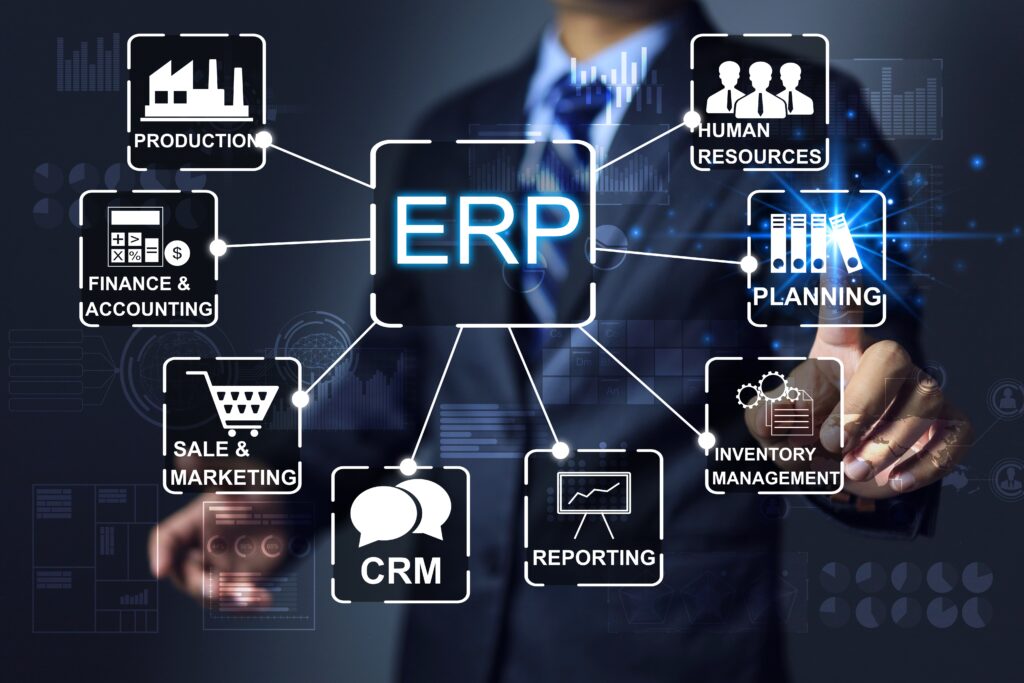
The core issue SAP is targeting is familiar to most ERP-centric organizations: data is often spread across business units, applications, and domains, making it difficult to create a consistent foundation for automation and AI. Reltio’s technology is designed to unify structured and unstructured data into a trusted golden record, using AI-powered entity resolution to connect information across customers, suppliers, products, employees, and other master data domains. In practical terms, that gives SAP a stronger way to improve the quality and context of the data that feeds its AI tools.
What This Means for ERP Insiders:
Non-SAP data is becoming a first-class citizen in SAP’s AI strategy. The Reltio deal is notable because it explicitly focuses on combining SAP and non-SAP data into a trusted business context for Joule and related AI services.
Master Data Discipline At the Core
SAP said Reltio will become a core part of SAP Business Data Cloud, strengthening the platform behind its AI-First and Suite-First strategy. The aim is to create a more interoperable enterprise data layer that supports agentic AI use cases, where AI agents can move beyond answering questions and take action across workflows. That matters because AI inside ERP is only as useful as the quality, consistency, and timeliness of the data it can access.
Muhammad Alam, member of the Executive Board of SAP SE, SAP Product & Engineering, positioned the deal as a data-context play rather than a simple portfolio add-on. “Reltio is a natural fit with SAP. Acquiring them will further improve our position as a leading business AI provider, combining SAP and non-SAP data to deliver data context that business AI requires. AI cannot reach its full potential when data is fragmented across business units, platforms, and domains without connection or context,” he said.
What This Means for ERP Insiders:
AI outcomes will increasingly depend on master data discipline. SAP’s move underscores that fragmented data remains one of the biggest barriers to making enterprise AI useful, accurate, and actionable.
Creating a Trusted AI Context
Reltio also brings low-latency data delivery, support for the Model Context Protocol, and industry-specific velocity packs that can help enterprises operationalize trusted data faster across sectors such as healthcare, life sciences, and financial services. Combined with SAP’s Joule assistant and Joule Agents, the acquisition points to a future in which business AI systems can work from a more complete and reliable picture of the enterprise.
Reltio Founder and CEO Manish Sood emphasized the importance of the acquisition. “Joining forces with SAP presents a tremendous opportunity for us to accelerate our mission. Enterprise AI needs a trusted context that is open and interoperable across the heterogeneous IT landscapes our customers run. This combination accelerates our ability to deliver Reltio as the system of context across SAP and non-SAP environments, while maintaining continuity for our customers and our partner ecosystem,” he said.
SAP also said Reltio will continue to be available both as a standalone offering and in combination with SAP products. At the same time, the transaction is expected to close in the second or third quarter of 2026, subject to customary approvals. That should reassure existing customers, but the bigger story is strategic: SAP is treating clean, connected, governed data as the essential prerequisite for enterprise AI at scale.
The acquisition is a sign that master data management is moving from a back-office discipline into the center of the AI agenda. ERP vendors have spent years talking about intelligence in business processes, but SAP is making a stronger case that intelligence depends first on resolving fragmented data across complex, hybrid landscapes.
What This Means for ERP Insiders:
Business Data Cloud is becoming the backbone of SAP’s AI architecture. With Reltio set to become a core part of that environment, SAP is building toward a model where governed data, interoperable platforms, and agentic AI are tightly connected.
Finally, SAP wants Business Data Cloud to serve as more than an SAP reporting layer. By bringing in Reltio’s cross-platform data unification capabilities, SAP is strengthening its argument that enterprise AI must work across heterogeneous environments, not only inside the SAP estate. For customers, that could make future AI initiatives more practical, especially where transformation programs still rely on a mix of SAP and third-party systems.