CFO

accounts payable workflow automation
Why AP Workflow Automation Still Leaves Finance Teams Doing Manual Work
Accounts payable automation has come a long way—yet most finance teams are still doing significant manual work. This article examines why AP workflows break down even with automation tools in place, where the ERP gaps lie, and what CFOs and finance leaders need to do to build truly touchless invoice and payment processing.
The ERP Value Gap: The Cost of Disconnected Payment Workflows
Disconnected AP workflows are quietly draining ERP value — new research on how payments and integration impact ERP performance Organizations invest in ERP systems to streamline operations, improve visibility, and connect critical business workflows. Yet when it comes to payments, 43% of organizations still manage at least some accounts payable (AP) processes outside the ERP, creating friction that limits the efficiency, scalability, and value they expect from their ERP investment. Based on new research from Priority Commerce surveying 150 AP professionals, The ERP Value Gap explores how disconnected AP workflows affect business outcomes, why payments are becoming a more important driver of platform value, and how ERP providers can better meet evolving customer expectations. For ERP providers and the enterprises that run on them, the challenge is closing the gap between the seamless AP experience users expect and what platforms actually deliver — without adding integration complexity or disrupting existing workflows. This session makes the case for treating payables as a core platform capability rather than an add-on: embedding payment capabilities directly into the ERP to improve AP efficiency, reduce workflow fragmentation, and increase value. Watch this on-demand session as Priority Commerce EVP of Operations Steve Tackett draws on 20+ years in payments technology to show finance and operations teams what to consider when connecting modern payment capabilities to their ERP environment. Why you should watch: - See the new research: What 150 AP professionals reveal about where AP workflows still live outside the ERP — and what it costs in visibility, efficiency, and scalability. - Diagnose your ERP value gap: Identify the common AP workflow challenges and integration barriers that force teams to manage payments outside the platform. - Pinpoint what to fix: Learn which payment and AP capabilities close those gaps and create a more seamless, connected ERP experience. - Understand the strategic upside: See why integrated payments strengthen platform value, customer retention, and long-term growth. - Get a CFO-ready view: Understand what role integrated payments should play in a modern ERP strategy and how they move the needle on cost, control, and ROI.

The ERP Value Gap: The Cost of Disconnected Payment Workflows
Disconnected AP workflows are quietly draining ERP value — new research on how payments and integration impact ERP performance Organizations invest in ERP systems to streamline operations, improve visibility, and connect critical business workflows. Yet when it comes to payments, 43% of organizations still manage at least some accounts payable (AP) processes outside the ERP, creating friction that limits the efficiency, scalability, and value they expect from their ERP investment. Based on new research from Priority Commerce surveying 150 AP professionals, The ERP Value Gap explores how disconnected AP workflows affect business outcomes, why payments are becoming a more important driver of platform value, and how ERP providers can better meet evolving customer expectations. For ERP providers and the enterprises that run on them, the challenge is closing the gap between the seamless AP experience users expect and what platforms actually deliver — without adding integration complexity or disrupting existing workflows. This session makes the case for treating payables as a core platform capability rather than an add-on: embedding payment capabilities directly into the ERP to improve AP efficiency, reduce workflow fragmentation, and increase value. Watch this on-demand session as Priority Commerce EVP of Operations Steve Tackett draws on 20+ years in payments technology to show finance and operations teams what to consider when connecting modern payment capabilities to their ERP environment. Why you should watch: - See the new research: What 150 AP professionals reveal about where AP workflows still live outside the ERP — and what it costs in visibility, efficiency, and scalability. - Diagnose your ERP value gap: Identify the common AP workflow challenges and integration barriers that force teams to manage payments outside the platform. - Pinpoint what to fix: Learn which payment and AP capabilities close those gaps and create a more seamless, connected ERP experience. - Understand the strategic upside: See why integrated payments strengthen platform value, customer retention, and long-term growth. - Get a CFO-ready view: Understand what role integrated payments should play in a modern ERP strategy and how they move the needle on cost, control, and ROI.

abstract image | Finance
The CFO’s New Mandate for AI Assurance
AI is transforming finance by automating workflows and enhancing decision-making, but CFOs remain accountable for the integrity and explainability of outcomes, necessitating strong governance and reliable data to ensure compliance.
Jordan Weitzen Joins Acumatica as Chief Financial Officer
Acumatica has appointed Jordan Weitzen as CFO to succeed Wayne Kimber, aiming to enhance strategic growth and partnerships while adapting a data-driven approach akin to consumer tech, signaling a shift towards a modern SaaS operational model.
Unit4 and Coda
Unit4 Appoints Tech Veteran Derek Kudsee to Lead Financials Division
Unit4 has appointed Derek Kudsee, a tech veteran with over 25 years of experience, as Managing Director of its Financials by Coda division, aiming to enhance the Coda platform with AI-driven capabilities and transform finance teams' roles while ensuring stability for existing clients.
The Snowflake ERP Integration Challenge: Why Your Data Strategy Needs a Rethink
Integrating ERP data with Snowflake is challenging due to architectural misalignment and the absence of pre-built connectors, necessitating custom solutions that complicate maintenance and delay insights, but CData offers pre-built connectors to streamline this process and enhance operational efficiency.
Finance Forecasting in Turbulent Times: Why Traditional Planning is Failing
The shift from traditional annual budgeting to agile financial planning emphasizes continuous scenario modeling and real-time data integration, allowing companies to adapt swiftly to market fluctuations and enhance forecasting accuracy, thereby transforming finance teams into strategic partners for navigating uncertainty.
Unit4 and Coda
Self-Driving Finance: Why Autonomous ERP isn’t a Buzzword Anymore
The shift towards autonomous ERP systems, driven by generative AI and automation, is transforming finance operations from transactional to strategic, urging CFOs to invest in intelligent platforms for enhanced agility, resilience, and proactive decision-making.
ERP Today Live!: The Evolving Role of AI in Finance Automation
In a conversation with ERP Today's Radhika Ojha, Walid Abu-Hadba from Sage discusses the company's innovative approach to product development, emphasizing their cloud-native strategies, AI's impact on finance automation, and customer-focused design during the Sage Future conference in Atlanta.
Sage Future High performance organization
The Evolving Playbook for a High-Performance, Tech-Driven Future
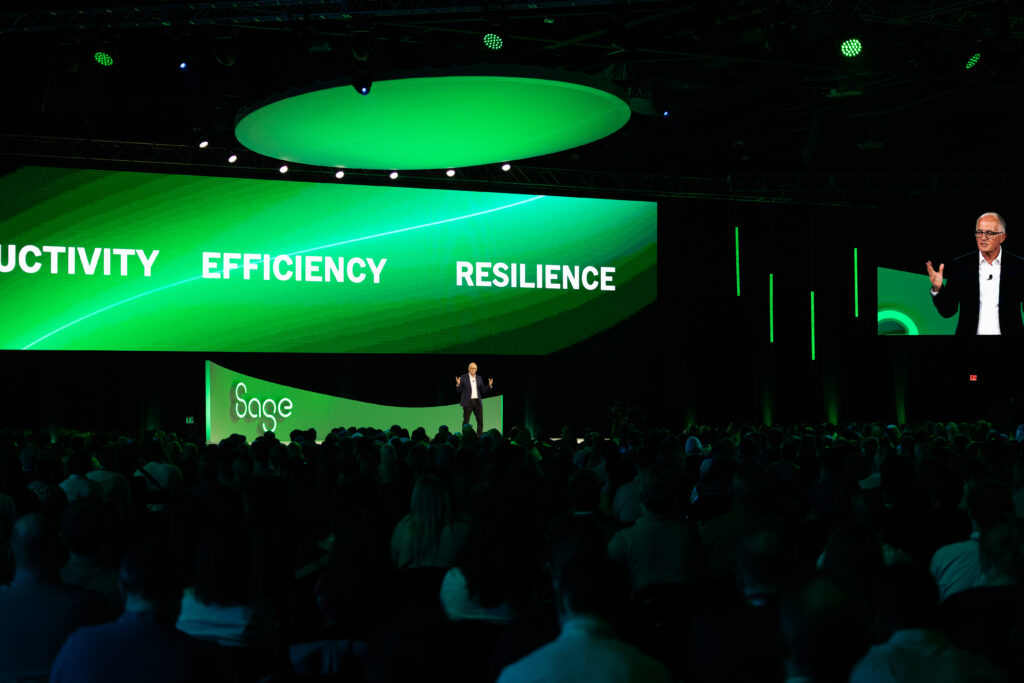
At the Sage Future event in Atlanta, leaders discussed that achieving high performance is a continuous journey focused on resilience, inspiring leadership, and effective use of technology, with a particular emphasis on AI's role in enhancing organizational effectiveness beyond mere outcomes.
Sage Future High performance Finance
Sage Unveils High-Performance Finance Software Misson at Sage Future
Modern CFOs are transforming from financial stewards to strategic leaders amidst a significant role expansion, as revealed by Sage's High-Performance Finance Software initiative aimed at equipping them with AI solutions, executive training, and collaborative networks.
SYSPRO Taps Seasoned Tech Finance Leader Mathias Høyer as New CFO
SYSPRO has appointed Mathias Høyer as Chief Financial Officer to support its expansion strategy, bringing extensive financial and transformative experience from previous leadership roles in high-growth tech firms.
Tax compliance and readiness
Lineos Brings AI-Powered Efficiency to Finance Teams
Insightsoftware's new AI-driven suite, Lineos, aims to revolutionize financial planning and analysis by automating manual data tasks, allowing finance teams to focus on strategic decision-making and enhancing productivity while ensuring secure integration with existing systems.
Workday mid-size enterprise success
Workday Brings Zuora Monetization Suite into Financial Management Solution
Zuora has partnered with Workday to enhance financial management processes for businesses by integrating their monetization suite with Workday Financial Management, thereby improving accuracy, streamlining workflows, and supporting flexible billing models to drive growth and operational efficiency.
a big office building with a green sign saying 'Sage' | Sage stands out with “high pace of innovation” amid upbeat year-end results
Sage Intacct Release 4 Features AI-driven Sage Copilot to Enhance SMB Decision-making and Efficiency
Sage has introduced Sage Copilot, an AI-driven tool designed to enhance productivity and decision-making for accounting and finance teams, currently available to early adopters in the US and UK, as part of significant updates to Sage Intacct that aim to streamline financial oversight and support small and mid-sized businesses in managing their growth.
Two laptops on a desk with a close up camera shot of two pairs of hands, each of them writing plans on a shared piece of paper | CFOs cloud
A cloud-juiced CFO can unleash a new era of financial excellence
For CFOs to stay afloat, knowledge of the latest technological developments will be necessary. Here's how cloud technology can help CFOs turboboost their respective businesses.