Cloud Platform and Technology

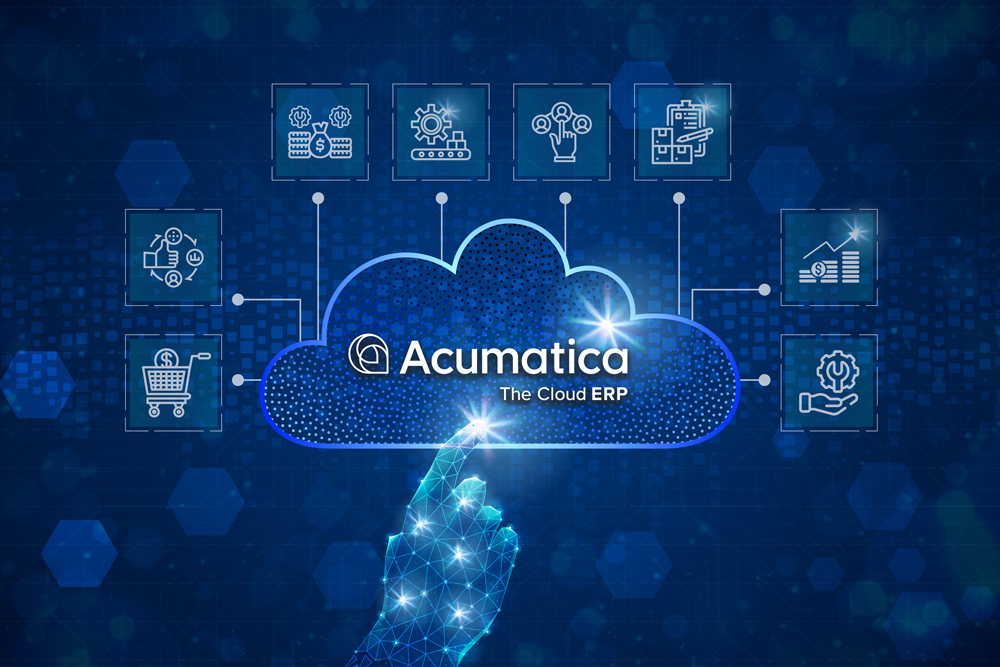
Enterprise Resource Planning (ERP) integrates smoothly with cloud platforms, representing a pragmatic evolution in technology. The collaboration between ERP and cloud technology offers practical advantages, including scalability, accessibility, and agility for businesses. This combination enables real-time collaboration, data analytics, and improved security. Embracing the cloud allows ERP systems to adapt dynamically to changing business needs. Cloud-based ERP solutions offer efficient resource utilization, cost-effectiveness, and swift deployment, contributing to operational efficiency. In the current landscape of digital transformation, the integration of ERP with cloud technology serves as a practical strategy, ensuring businesses remain adaptable, competitive, and technologically proficient.

Acumatica Names Pollock as Chief Product Officer to Lead Cloud ERP Innovation
Acumatica has appointed Jon Pollock as Chief Product Officer to lead product management and user experience, focusing on advancing the company's strategy amidst growing demand for scalable cloud ERP solutions in mid-market businesses.
Connected Construction: ERP Without the Bottlenecks
Cloud ERP is evolving into a critical operating system for construction and field service companies, enabling resilience, real-time decision-making, and lean operations, as evidenced by the experiences of Tester Construction, Tech Electronics, and Carlson LaVine Construction in their transitions to Acumatica.
Lessons from a Mid-Market Manufacturer’s Move to a Cloud-Native ERP
Boca Terry's successful ERP transition from legacy systems to a cloud-native platform illustrates how aligning software capabilities with business needs, fostering strong partner relationships, and ensuring disciplined implementation are crucial for mid-market companies seeking operational efficiency and growth.
Why Cloud ERP?
Explore the transformative power of Acumatica Cloud ERP through real customer experiences. This video reveals how businesses are leveraging its cloud-based scalability, real-time insights, and seamless integration to thrive. From supporting hybrid work to ensuring business continuity, discover how Acumatica streamlines operations, enhances decision-making, and future-proofs processes with intuitive, reliable technology.
Navigating The Cloud: An SMB’s Perspective
Acumatica ERP users share their real-world experience of implementing and using a cloud-ERP system.
Acumatica General Business Overview
Acumatica's Cloud ERP solution helps small and mid-market businesses streamline operations, improve productivity, and enhance decision-making. Key features include comprehensive financial management, integrated CRM, project accounting, and real-time reporting and business intelligence. The cloud-based platform offers scalability, cost savings, and automation of routine tasks, enabling businesses to grow without additional infrastructure. Customer testimonials highlight significant improvements in cash flow, operational efficiency, and data-driven decision-making.
Hedstrom Fitness
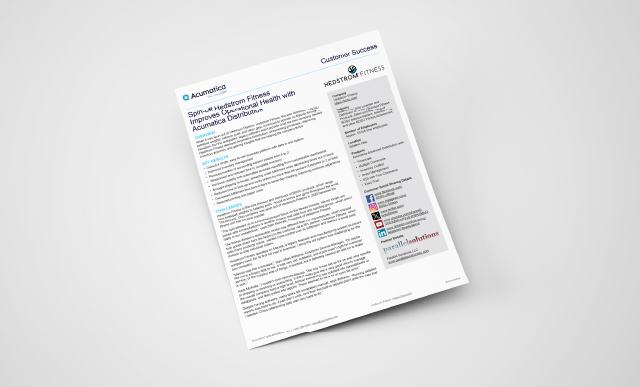
"When it was spun out of Hedstrom Plastics, Hedstrom Fitness, the sole distributor of BOSU kettlebell weights, balance pods, and other gear, continued to operate on Macola through its transition. But the antiquated, legacy software didn’t provide what the new company needed. Hedstrom Fitness deployed Acumatica Distribution, streamlining processes, improving inventory accuracy, and gaining insights that are helping the company thrive. KEY RESULTS • Gained a single, easy-to-use business platform with data in one system • Improved inventory management • Reduced number of accounting support people from 6 to 2 • Streamlined and reduced time to complete inventory • Improved visibility with automated accurate reporting from customizable dashboards • Brought shipping in-house, speeding order fulfillment while decreasing times out of stock • Reduced time to look up and verify orders by more than 66 percent (5 minutes to 2 or less) • Decreased fulfillment time from 4 days to same day shipping, improving customer experience • Reduced printing and paper costs"

Calculating ERP Software ROI
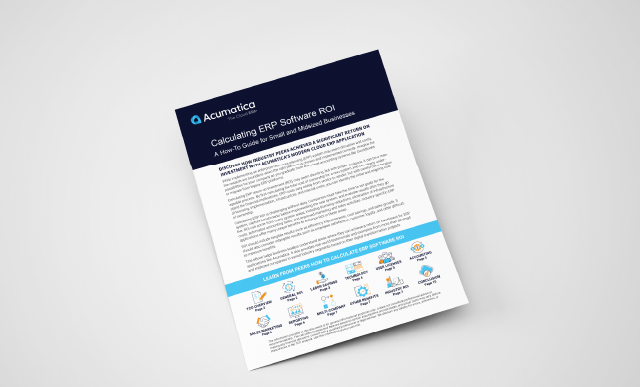
Explore how businesses can achieve significant ROI by implementing a modern cloud ERP platform. Discover the importance of transitioning from entry-level accounting systems or legacy ERP platforms to modern solutions. Understand critical components to calculating the total cost of ownership (TCO) as well as the importance of setting goals, capturing benchmarks, and evaluating results. Learn from real-world examples and testimonials from over 60 small and midsized companies across various industries, showcasing the tangible and intangible benefits of ERP systems.
Acumatica Cloud ERP – Overview
Acumatica Cloud ERP is a versatile cloud-based software that enhances business operations by providing real-time insight into financials, customer management, and overall efficiency.
What is Cloud ERP Software?
Cloud ERP provides companies with internet-based access to enterprise resource planning software, allowing for real-time integration of business data across departments and enabling remote access, customization, and automation for improved operational efficiency.
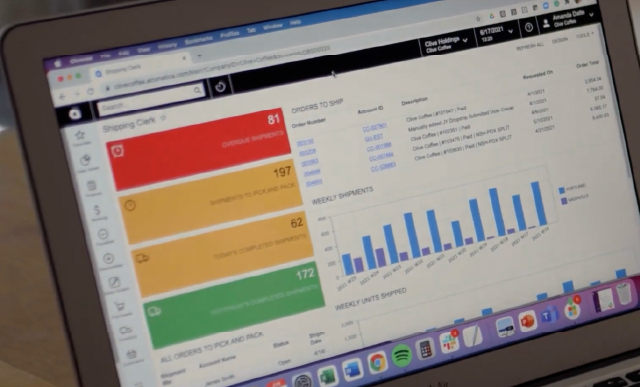
Clive Coffee
Clive Coffee enhanced its online sales and customer experience by implementing Acumatica Cloud ERP, which integrated their operations, improved financial reporting, and allowed for faster shipping, all while avoiding the need for additional staff.
NTT DATA
What’s driving the move of vertical markets to the Cloud
Acumatica has reported a significant trend of businesses transitioning from basic accounting software to its cloud-based ERP solutions, demonstrating marked improvements in operational efficiency, financial visibility, and overall growth through various case studies across different sectors.
Aptum Appoints Jaime Konzelman as Chief Revenue Officer
Acumatica expands cloud solution to include professional services sector
Acumatica has launched its Professional Services Edition to help small and mid-sized professional services providers in sectors like architecture and IT optimize resources and manage vital processes, addressing industry demands for enhanced business management technology.