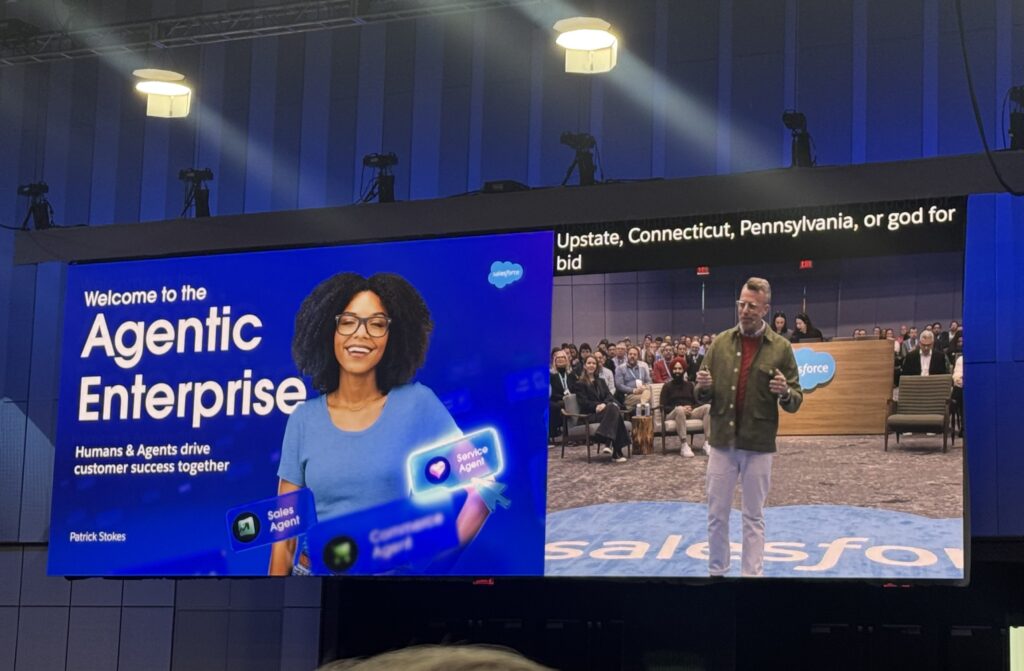

Salesforce has introduced Agentforce Manufacturing, a suite of prebuilt, role-based AI agent templates aimed at helping manufacturers scale operations without expanding headcount. The product is designed to make enterprise systems more autonomous at a time when AI is increasingly seen as essential to manufacturing competitiveness. Agentforce Manufacturing was a major focus at Salesforce’s 2026 Manufacturing Summit in Chicago on January 14, as manufacturers look to what the future holds.
According to Achyut Jajoo, Salesforce’s SVP and general manager, AI agents are arriving at a critical moment for the industry. He says manufacturers are facing “a critical breaking point at the intersection of volatile markets, fractured supply chains, and a massive labor gap,” adding that 80% of leaders now view AI as essential for growth. That urgency, he notes, is driven in part by the fact that “70% of our industry is still held back by manual data entry.” Rather than being another incremental upgrade, Jajoo says AI agents “enable manufacturers to tap digital labor to scale operations without scaling their headcount.”
Those pressures have been building for years and are now forcing many companies to pursue automation and autonomy in parallel. Jajoo says this is driving change across both front- and back-office operations.
“This means manufacturers can do things like deliver differentiated customer experiences, respond faster to market and supply chain shifts, speed up development time, and more,” he explains, adding that these outcomes can be accomplished today “in a way that simply wasn’t possible when teams were buried in administrative [work]load.”
Agentforce Manufacturing Provides Prebuilt Solutions
Jajoo describes Agentforce Manufacturing as being able to provide solutions that are prebuilt and role-based. The AI agent templates are modular in nature and can help optimize operations, support sales teams, and enhance service functions.
“Agentforce leverages industry-specific data, workflows, and policies to deliver contextually aware digital labor that assists employees and customers with everything from routine inquiries to complex operations,” Jajoo says. That way, “Human teams are free to focus on the jobs only they can do.”
In practice, those customizable AI agents can work alongside manufacturing teams to monitor demand fluctuations, streamline inventory, uncover real-time sales opportunities, optimize incentive programs, minimize asset downtime, and reduce technician administrative workloads. Jajoo says this represents an evolution beyond traditional manufacturing automation, which has long focused on bringing disparate data systems out of their silos and into a single source of truth.
From there, companies can take the data and provide information that better informs workers in their day-to-day tasks. Agentforce builds on that foundation by using accumulated operational data to drive continuous, long-term improvement.
Jajoo points to service operations as one example of how this shift plays out. “We’re moving to a world where AI agents autonomously manage the entire lifecycle by identifying issues via 24/7 monitoring of IoT data, matching the right technician to the job, and handling the logistics parts without human intervention,” he says. “This shifts service from a cost center to a profitable, data-driven growth engine that guarantees uptime for manufacturers’ customers.”
Agentic Enterprises Transform Office Operations
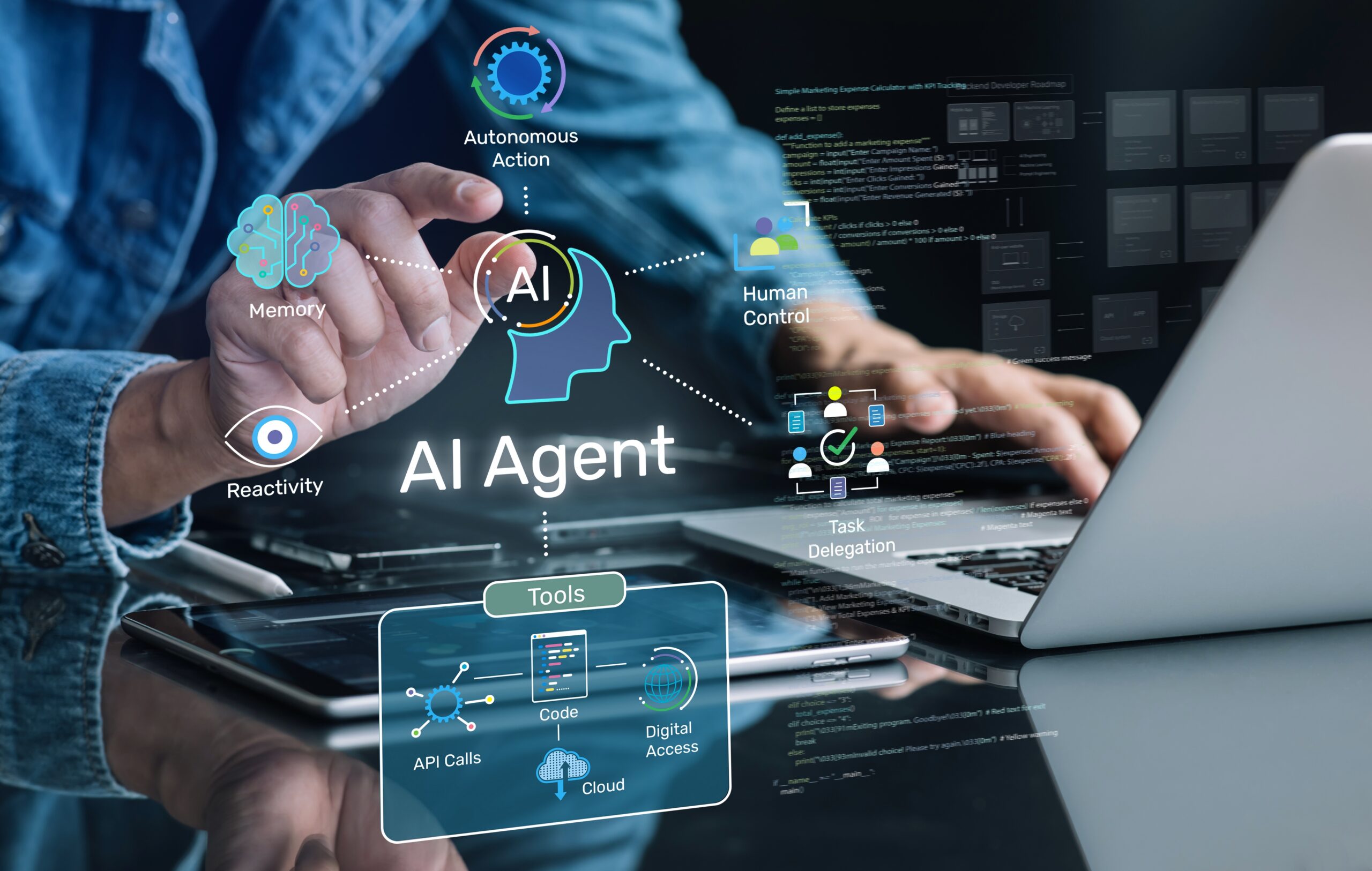
Agentforce Manufacturing deploys AI agents that can autonomously handle tasks across demand monitoring, inventory management, sales optimization, and asset maintenance.
“Generic AI isn’t enough to drive the efficiency, productivity, and ROI gains manufacturers need,” Jajoo says. “They need a true commercial operating platform that understands the specific nuances of the industry, whether they’re an industrial chemical producer or a distribution-centric OEM.”
The broader concept, he says, is the rise of the “agentic enterprise.” While still emerging as a new way to operate, this model is becoming increasingly important for manufacturers that want to move “from a reactive business model to a proactive and predictive one.” Adopting this mindset is critical for companies to thrive in this new age.
“An agentic manufacturer uses AI to monitor deviations in build plans against actual sales in real-time,” Jajoo says. “If there’s a gap, the agent doesn’t just flag it. It can automatically adjust inventory replenishment or schedule stakeholder meetings to realign production.”
Agents can also operate in predictive and preventive ways by identifying underperforming incentive programs or revenue leakages that may not be immediately visible to human teams, Jajoo adds. The shift is to go from reacting to problems after they appear to anticipating and addressing them as they emerge.
Shifting Toward a New Future
Companies adopting this approach are moving past proof-of-concept projects toward day-to-day operational impact. Jajoo cites examples where AI agents reduced manual order processing times from 24 hours to less than one hour and cut case resolution times by 40%, even as overall workload increased by 15%.
He says the pace of innovation will continue to accelerate as systems improve through real-world use cases and operational learning. Even when individual deployments appear narrow—such as automating warranty claims or searching inventory in real time during sales calls—the cumulative impact can be significant.
“Our [Agentforce Manufacturing] customers are proving that the agentic enterprise isn’t a future goal. It’s the new standard for manufacturing excellence,” Jajoo concludes.
What This Means for ERP Insiders
AI agents are shifting ERP from transactional systems to autonomous decision engines. Salesforce’s Agentforce Manufacturing demonstrates how prebuilt, role-based AI agents can eliminate the 70% manual data entry burden that constrains manufacturers, signaling that ERP vendors must now embed autonomous operational intelligence as core platform capability rather than optional add-on. This transformation requires enterprise architects and system integrators to prioritize governance frameworks, transparent decision chains and human-approval workflows as primary architectural components.
Agentic enterprise models are changing toward dynamic, self-optimizing processes. Manufacturing implementations now deploy AI agents that autonomously monitor demand deviations, adjust inventory replenishment, and schedule stakeholder meetings without human intervention. This operational shift demands that transformation leaders architect ERP platforms where collaboration occurs through automated alerts, workflow-driven approvals, and connected engineering change orders rather than email chains and manual reviews, fundamentally altering change management responsibilities and implementation methodologies.
Cloud-native AI capabilities are accelerating vendor consolidation. Salesforce’s industry-specific agent templates demonstrate how cloud platforms enable rapid AI deployment by integrating live data from ERP and IoT systems, as well as external sources. This creates strategic tension for ERP product strategy: Vendors must concentrate innovation exclusively on cloud environments to support autonomous agents, while modular architectures enable manufacturers to swap specialized services through standard interfaces, requiring partners to establish governance design.
ONLINE
See this video interview with Jajoo for additional insights.