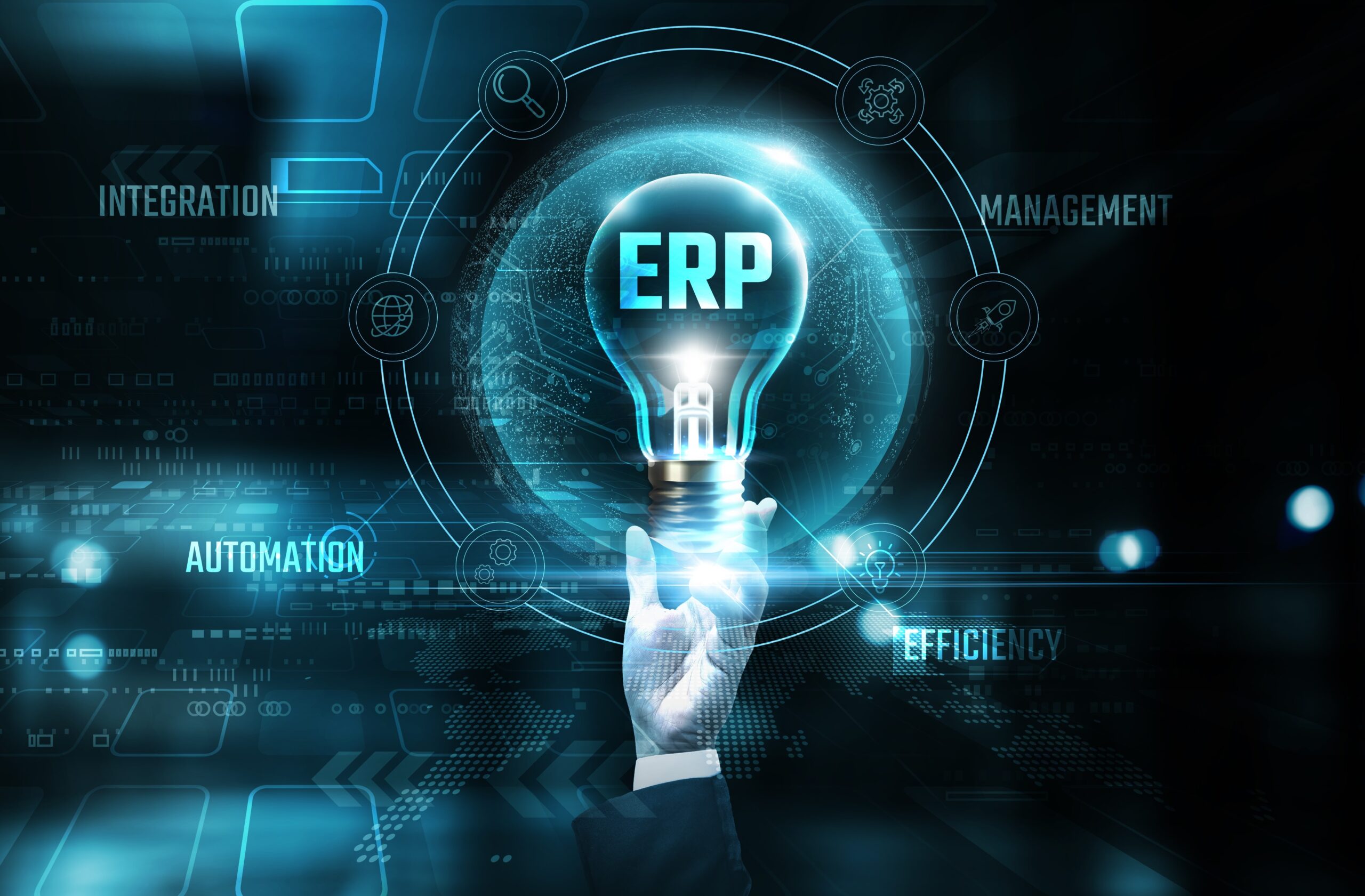
Artificial intelligence (AI) is shifting from a peripheral add-on to a core capability in enterprise resource planning (ERP). For customers in manufacturing and distribution and food and beverage, AI and ERP combined are changing how planners forecast demand, how operations teams respond to disruptions, and how executives steer performance in real time. The shift marks a broader industry pattern: ERP buyers increasingly view AI not as a future enhancement but as a requirement for day-to-day decision-making and process automation.
AI’s Expanding Footprint in ERP Operations
AI enables ERP systems to automate tasks that previously required experienced analysts. For example, food manufacturer Golden State Foods implemented predictive algorithms within its ERP environment to identify spoilage risks and shift production schedules proactively. The company reported a material reduction in product waste and stronger service-level reliability, outcomes that were difficult to achieve consistently through manual analysis.
In discrete manufacturing, midmarket producer Polaris automated demand sensing and production sequencing using AI-based forecasting models connected to its ERP backbone. The initiative shortened forecasting cycles from weekly to daily and boosted forecast accuracy by double-digit percentage points. This created direct operational benefits: reduced safety stock, fewer overtime runs, and more resilient supply commitments.
These case studies reflect a broader shift in market demand. AI-enabled ERP software is one of the fastest-growing segments in enterprise applications, fueled by cloud adoption, rising data volumes, and operational volatility across supply chains. Vendors are racing to embed AI-driven planning, anomaly detection, workflow automation and prescriptive recommendations directly into their core products. For buyers, the question is no longer whether vendors offer AI but how deeply those capabilities integrate with industry-specific workflows.
Three Ways AI Will Change Manufacturing and Distribution Executives’ Work
For CIOs, CTOs and applications leaders, AI in ERP changes the pattern of work in several ways.
- AI reduces reliance on manual intervention. Operations managers spend less time reconciling spreadsheets and more time validating system-generated recommendations. Finance teams shift from batch-driven reconciliation cycles to continuous close processes supported by automated data classification and error detection.
- AI requires more disciplined data governance. Successful ERP AI deployments depend on clean master data, consistent process execution, and cohesive integration patterns. Companies such as Smithfield Foods and The Little Potato Company have emphasized data quality programs and cross-functional governance committees as prerequisites for realizing improvement in throughput, downtime reduction, and planning efficiency.
- Executives also must rethink evaluation criteria when selecting ERP providers. Beyond functional fit, organizations should assess the transparency of AI models, industry-specific training data, accessible features, and integration accelerators for adjacent systems such as MES, TMS, WMS and e-commerce platforms.
Common challenges persist. Many firms lack internal AI expertise or underestimate the integration effort required. Companies that overcame these hurdles relied on phased rollouts, targeted pilots, and joint delivery models combining the efforts of the vendor’s technology specialists with that of internal domain experts. The most successful teams framed AI adoption not as an IT project but as a transformation of operations. Aptean are not only providing integrated AI and ERP solutions to improve traditional processes, but unified AI platforms to break down silos and create end-to-end transformation.
What This Means for ERP Insiders
AI-driven operational autonomy is becoming a design baseline for ERP. The article explains that machine learning and predictive intelligence are moving from specialized add-ons to core ERP capabilities. This shift will influence vendor roadmaps, encourage tighter integration patterns, and push partners to build industry-specific AI accelerators aligned to real operational workflows.
Data readiness is now the gating factor for AI-enabled ERP modernization. As companies lean on predictive and generative tools, governance, data quality, and master-data alignment become strategic priorities. ERP vendors and GSIs will need to deliver stronger data services, cleaner migration paths, and domain-specific ontologies that accelerate AI deployment without burdening internal teams.
AI adoption will reshape ERP operating models for years ahead. Automating planning, reconciliation and exception handling changes the talent profile, process design and system oversight mechanisms within enterprise operations. Leaders will be expected to expand AI literacy, redesign organizational roles and embed continuous improvement cycles into ERP environments.