
As organizations grow, their payment systems often lag behind, creating friction where there should be flexibility. Finance teams cobble together spreadsheets, bank portals, and manual workflows until delays, errors, and compliance gaps start to cost real money.
B2B payment automation brings order to the chaos. It unifies and automates payables across systems, vendors, and payment types, streamlining operations and enforcing financial controls at scale. The result? Greater visibility and a finance function built to support growth.
Key takeaways
- B2B payment automation digitizes payables and receivables, which helps reduce errors and boost efficiency.
- Modern platforms support a wide range of payment types, including credit card, ACH, wire transfer, and digital methods, to meet diverse business needs.
- The right solution provides real-time cash flow visibility, accelerates approvals, and ensures accurate, on-time payments that strengthen merchant relationships.
- B2B payment automation solutions with integration capabilities and built-in compliance features position your business for long-term success.
What is B2B payment automation?
B2B payment automation uses technology to manage, approve, and execute payments between businesses. Accounts payable automation solutions streamline the entire accounts payable lifecycle, from invoice capture and approval routing to fund disbursement and transaction reconciliation.
By eliminating manual tasks and minimizing human error, payment automation increases efficiency and frees finance teams to focus on more strategic, high-value work.
Top B2B payment methods
Today’s automation solutions simplify the management of diverse payment types, including ACH, checks, and virtual cards. Here’s how automation supports the most common payment methods finance teams rely on today:
Credit/debit card
Credit and debit cards are commonly used for business purchases, especially for smaller amounts or time-sensitive expenses. These payments are authorized through card networks and typically settle quickly. Automation strengthens card program management by applying role-based user permissions, encrypting stored credentials, and enforcing predefined spending limits.
Wire transfer
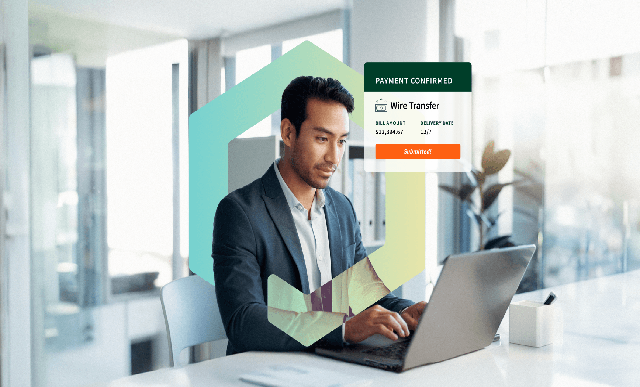
Wire transfers move funds electronically between banks, both domestically and internationally. They’re ideal for high-value or time-sensitive payments since they typically settle same-day and are difficult to reverse.
Automation reduces risk by pre-filling wire instructions, enforcing approval workflows, and maintaining detailed audit trails, which minimizes errors and supports compliance.
ACH payments
Automated Clearing House (ACH) transfers move funds between U.S. bank accounts in batches, making them well-suited for payroll and recurring vendor payments. Automation improves ACH efficiency by scheduling transfers, batching payments to lower bank fees, and validating account information to prevent errors or returns.
Digital payments
Digital payment methods like virtual cards and payment portals enable fast, secure payment processing online, often with near-instant settlement. When integrated with your payment solution, digital payments boost security through credential protection and simplify reconciliation by syncing data directly with your accounting system. They also offer suppliers greater flexibility with faster funding and digital remittance delivery.
Checks
Paper checks may be on the decline, but they still play a meaningful role in B2B payments. According to recent AFP data, roughly one-third of organizations still use checks for some of their business transactions.
Despite their prevalence, checks remain one of the most expensive and risk-prone payment methods due to printing, postage, manual handling, and increased fraud exposure.
Automation helps reduce these burdens by digitizing check issuance and tracking, enforcing approval steps, and logging transactions in a centralized system. These capabilities make paper-based processes more secure and manageable as you modernize your payment strategy.
Real-Time Payments (RTP)
Real-time payments allow businesses to transfer funds within seconds, at any time, without waiting for batch-processing windows. With no cutoff times, RTP enables instant settlement and reduces the delays that often slow down payments.
As financial institutions expand access to instant payment rails, RTP is quickly becoming a core component of modern B2B payment strategies, especially for businesses seeking greater speed and liquidity control.
Stablecoins
Stablecoins are gaining ground as an emerging B2B payment method, especially in cross-border contexts. Designed to maintain a consistent value, these digital assets move across blockchain networks with near-instant settlement and lower transaction costs than legacy systems.
While adoption is still early, more organizations are exploring stablecoins as a strategic lever to enhance liquidity, accelerate global payments, and support agile treasury operations.
9 benefits of automated B2B payments
Automating B2B payments delivers tangible gains in efficiency, accuracy, and financial control. Here are nine key advantages:
1. Increased efficiency
Automation eliminates slowdowns caused by manual tasks like invoice routing, data entry, and status tracking. Digital workflows route approvals based on predefined rules, which reduces back-and-forth and allows your team to process a higher volume of payments in less time.
2. Cost savings
Digital payments reduce costs related to paper, postage, and reconciliation. Automation also helps avoid late fees, duplicate transactions, and other costly errors, keeping more cash on your balance sheet.
3. Improved accuracy
Automated systems extract invoice data directly from documents, compare it against purchase orders, and apply business rules to validate transactions before payment. This ensures only accurate, approved payments are processed and reduces the risk of human error.
4. Financial visibility
Automated payment platforms offer real-time dashboards that track cleared payments, outstanding invoices, and available cash. With up-to-date insights into payables and cash flow, you can spot discrepancies early, avoid cash shortfalls, and plan more accurately for upcoming expenses.
5. Stronger security
Built-in security features such as user access controls, data encryption, and continuous fraud monitoring help protect sensitive financial information. Automated systems also maintain detailed audit trails and issue real-time alerts, making it easier to identify and address suspicious activity before it escalates.
6. Better vendor relationships
Automation ensures payments include full remittance details, such as invoice numbers and line-item breakdowns, reducing confusion and disputes. Faster reconciliation and consistent reliability can also help strengthen relationships with vendors.
7. Scalability
As your business grows, automation allows you to easily support higher payment volumes, additional payment types, and more complex approval chains. Standardized workflows and centralized controls allow your finance team to scale operations without increasing headcount or relying on manual workarounds.
8. Less manual work
Automation eliminates routine tasks like data entry, status tracking, and invoice matching. This reduces administrative overhead and frees your team to focus on higher-value work, such as spend analysis and process optimization.
9. Improved cash flow management
Automated solutions give you greater control over when and how payments are made, which directly supports stronger cash flow management. By scheduling disbursements strategically, you can better align outgoing payments with incoming revenue and optimize working capital.
Top payment processes to streamline with automation
Despite the clear benefits of payment automation, only 17% of businesses have fully automated their payments, according to American Express. For most organizations, that leaves significant room to improve efficiency, accuracy, and control.
For maximum return, start by automating the workflows that take the most time or cause the most errors. Focusing on these areas first helps you clear bottlenecks and build momentum as you modernize your payment operations.
Invoice capture and validation
Manual invoice handling often leads to slowdowns and missed discrepancies. Automated systems extract key details from incoming invoices and match them against purchase orders or contracts, flagging issues early and reducing manual review time.
Approval routing
Automated approval workflows ensure each invoice reaches the right person based on your organization’s predefined rules and spend thresholds. Approvers receive real-time alerts when action is needed, and systems track the status of each invoice to prevent delays and keep payments moving.
Recurring and scheduled payments
Automation handles routine expenses like rent, subscriptions, and service contracts with consistency and precision. Modern payment platforms manage due dates and trigger reminders while maintaining a complete audit trail, making it easier to verify payment history and support audit readiness.
Cross-border and multi-currency payments
Managing international payments manually is complex and error-prone. Automated systems simplify global transactions by converting currencies, validating recipient information, and applying compliance checks at the point of payment. These capabilities reduce errors and delays, making it simpler to pay global vendors and expand into new markets.
Reconciliation and reporting
Automated platforms match invoices to payments in real time, keeping financial records clean and current. By syncing directly with your accounting system, automation reduces manual reconciliation work and makes it easier to spot and resolve discrepancies before they affect closing timelines.
Fraud detection and compliance checks
Continuous transaction monitoring helps detect unusual activity early and prevent unauthorized payments. Automation also applies compliance rules in real time, strengthening internal controls and reducing the risk of fraud or regulatory missteps.
Key capabilities of modern B2B payment solutions
Not all payment automation platforms offer the same level of functionality. To maximize impact, prioritize solutions with these essential capabilities:
Integration with ERP and accounting systems
Robust platforms connect directly to your enterprise resource planning (ERP) or accounting software, ensuring seamless data flow and consistency across systems. This integration eliminates duplicate entries and maintains a single, accurate record for every transaction.
Flexible payment options
Look for platforms that support a full range of payment methods, including ACH, card, wire, and check. Broad payment support allows you to meet diverse vendor preferences and adapt as business needs or customer expectations change.
Customizable workflow rules
Without customizable workflows, even the fastest payment system can become a liability. Choose solutions that let you configure approval paths, spending thresholds, and payment triggers based on your internal policies. Custom workflows help enforce compliance and reduce the risk of out-of-policy transactions.
Built-in security and compliance standards
Leading platforms secure payments with capabilities like data encryption and role-based access controls. Access controls help prevent unauthorized activity by limiting who can view, approve, or release payments. Audit trails and automated compliance checks add another layer of protection, helping your team stay ahead of regulatory requirements.
Scalability
A scalable payment solution should grow with your business. Look for features that support high transaction volumes, multi-entity operations, and global payments, including multi-currency capabilities. Centralized controls and configurable settings help manage complexity without adding overhead.
Supplier enablement and onboarding
Integrated onboarding tools collect W-9s, banking details, and payment preferences digitally, reducing back-and-forth and manual entry. Faster supplier activation streamlines payables and improves vendor satisfaction from the start.
Choosing the right B2B payment automation partner
Choosing the right payment partner means finding a solution that integrates seamlessly with your workflows, advances your business objectives, and handles real-world complexity.
Priority’s unified payments platform integrates with your existing systems, streamlines compliance, and gives you full visibility and control across the payables process. With tailored onboarding, responsive support, and technology designed to scale with your business, Priority empowers finance teams to automate payments without sacrificing control, security, or speed.
Ready to reduce friction in your payables process? Get in touch to learn more.