
Partner Content

ERP vs Food Traceability Software: Choosing the Right Path for Food Manufacturers
Food and beverage manufacturers face increasing pressure to balance compliance and efficiency, leading to a strategic choice between standalone traceability software for immediate compliance needs and integrated ERP systems that enhance operational connectivity and long-term value.
How a Mid-Market Manufacturing ERP Cut Benchmade’s Year-End Processing Time by 75%
The article emphasizes that for mid-market manufacturers evaluating ERP systems, a solution like Syspro must not only showcase impressive features but also demonstrate resilience in real-world operations, as evidenced by Benchmade Knife Company's significant reductions in year-end processing time and enhanced operational efficiency through shared live data.
What Makes an ERP AI-Ready for Manufacturers?
Manufacturers seeking AI-ready ERP must prioritize a solid foundation of clean, integrated data and governance to ensure successful AI implementation, as using unreliable data only exacerbates errors and hampers decision-making.
Real-Time Visibility for Manufacturing Operations: The Foundation of Lean Growth
Real-time visibility in manufacturing operations enables companies to effectively track and manage production processes, improving decision-making, cost control, delivery timelines, and customer service while mitigating risks during rapid growth.
The Hidden Cost of Integration Sprawl in Manufacturing
Manufacturers often face "integration sprawl" by accumulating multiple disconnected systems with one-off integrations, which incur hidden costs, operational risks, and limit IT capacity, ultimately impacting productivity and hindering advancements like AI, thus necessitating a transition to a unified ERP platform that shares a single data model to streamline operations and reduce maintenance burdens.
Syspro Whitepaper: The AI-Ready ERP Checklist
Twenty statements across four sections, from real-time visibility to job costing, test whether your ERP can support AI-driven manufacturing. Score your platform and see which gaps to close first.
Nucleus Report
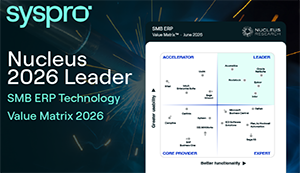
See why Nucleus Research moved Syspro from Expert to Leader in a single year, citing its manufacturing depth and AI built into everyday workflows.
WMS: Warehouse execution from dock to shop floor
Bin-level tracking and directed picking keep every pallet and job in view, from receiving to the shop floor, so teams handle more volume without adding headcount. Posts to Syspro ERP in real time. Click here to learn more!
Syspro ERP: One platform for the whole business
Finance, manufacturing, distribution and quality share one integrated data model, so every team works from the same real-time view. Multi-level BOMs and finite capacity scheduling come standard. Click here to learn more!
Syspro Torque: Industrial-grade AI for manufacturers
AI agents work inside the systems you already run, on Syspro or any other ERP, and show the rule and data behind every decision. You decide how much control to delegate. Click here to learn more!
Flexitech Drives SAP Roadmap Flexibility, Compliance and Innovation with Rimini Support™
Flexitech, a leading global supplier of brake and cooling hoses with production facilities across all major automotive regions, has shifted to Rimini Street's third-party SAP support to enhance system stability, reduce costs, and refocus resources towards strategic initiatives, compliance, and innovation in automotive technology.
Silicon Labs builds a future-ready SAP strategy
Radhika Chennakeshavula, CIO and Vice President of Silicon Labs, explains the decision to select Rimini Street as its strategic partner to maximize the value of its SAP ECC 6.0 investment. This collaboration provides the US-based semiconductor manufacturer with long-term SAP...
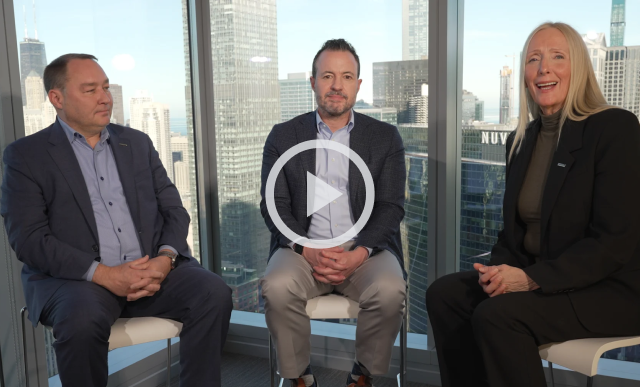
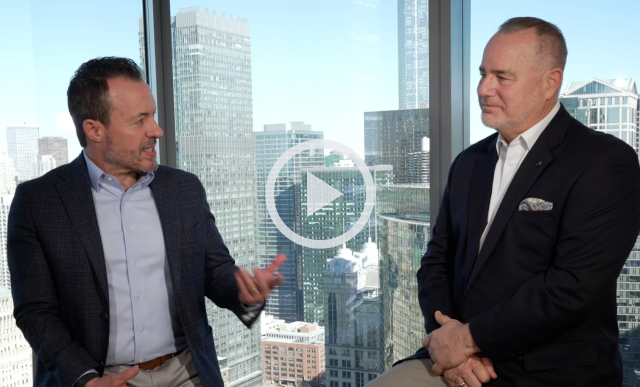
Rethinking ERP: A Conversation with Two Software Industry Futurists
Organizations are transitioning from monolithic ERP systems to flexible, best-fit solutions that extend the life of existing infrastructures while reducing migration risks and enhancing agility through multi-vendor strategies.
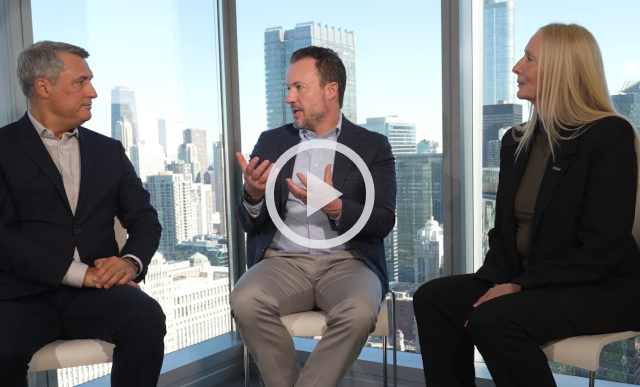
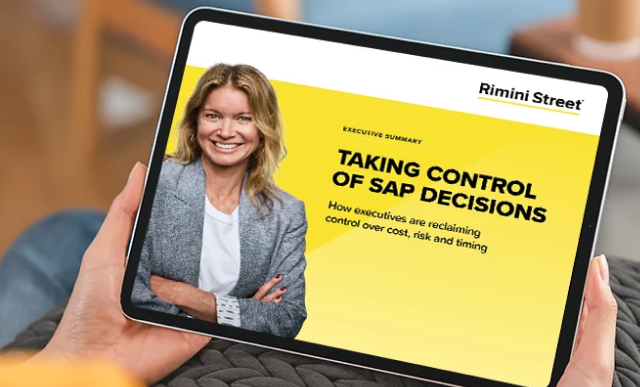
Decoding SAP Strategy: How CIOs are Taking Back Control
As SAP's cloud-first strategy compels enterprise leaders to make significant long-term decisions amid financial constraints and pressure for immediate results, CIOs are finding ways to extend existing systems, regain independence through streamlined solutions, and adopt AI and automation strategically, while prioritizing flexibility and optionality over irreversible commitments.
Sept 30th: The Date SAP Wants You To Forget
Despite SAP's push for customers to migrate to S/4HANA and cloud ERP by 2027, many organizations are hesitant to move from their stable and paid-for ECC environments, prompting speculation that nearly half may still be using ECC by 2027, making decisions about support contracts and considering third-party support crucial for future flexibility and cost savings.
Skip navigation Sign in The Reality of Third-Party Support for Enterprise Software – Fact vs Fiction
Organizations can explore alternatives to vendor-mandated support for their systems, which may lead to cost savings, increased flexibility, and better alignment with long-term strategies.
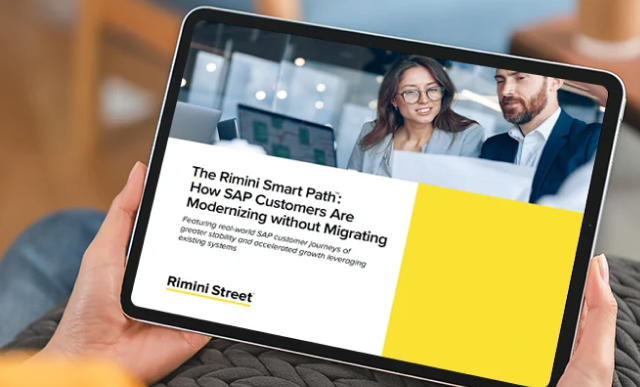
The Rimini Smart Path™: How SAP Customers Are Modernizing without Migrating
SAP customers can modernize effectively without full ERP migration by leveraging existing systems and adopting the Rimini Smart Path™ for enhanced performance, AI-driven automation, and improved budget efficiency.
SAP roadmap decisions have become business decisions
Organizations are now approaching IT roadmap discussions as critical business strategies, addressing vendor deadlines, cost control, AI access, and operational risks by enhancing cost discipline and managing their SAP roadmaps effectively.
Rimini Cloud™ for SAP Cloud Operations and Support for SAP ERP Systems
Organizations running SAP ERP systems are under pressure to reduce infrastructure and data center costs while keeping mission-critical environments stable. Many still depend on dedicated data center teams to manage infrastructure, availability, security and ongoing operations — increasing cost and...
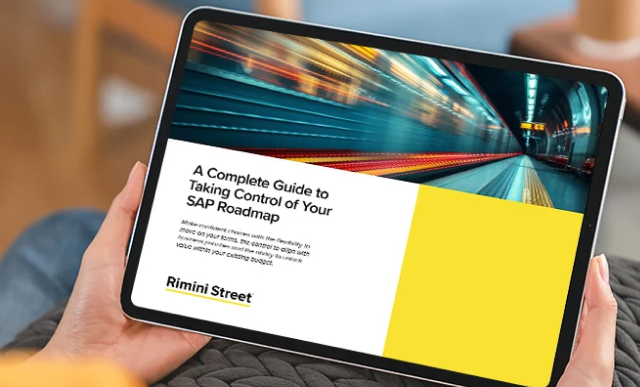
A Complete Guide to Taking Control of Your SAP Roadmap
This whitepaper outlines the challenges SAP customers face amid evolving technologies and budget constraints, highlighting strategies for CIOs to make informed decisions about system prolongation and modernization, while leveraging Rimini Street's support for confident ERP transformation.
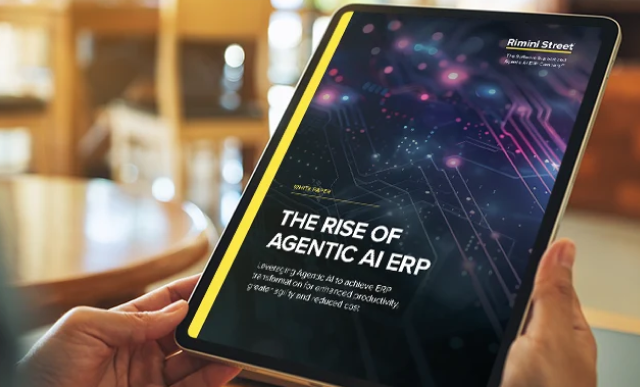
Agentic AI Services
Traditional ERP Software is reaching its limits. Discover how to leverage Agentic AI to achieve ERP transformation for enhanced productivity, greater agility and reduced cost. AI is changing everything. While existing ERP Software can continue providing great value for many...
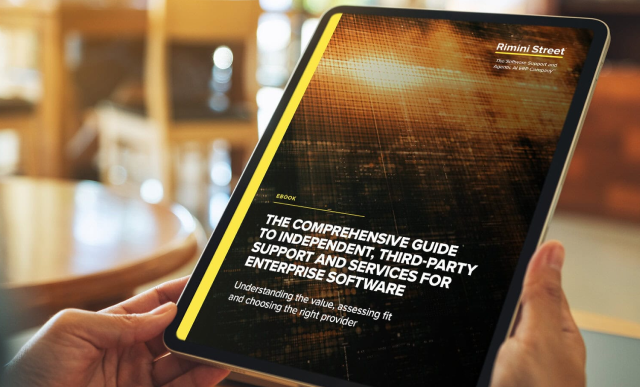
The Comprehensive Guide to Independent, Third-Party Support and Services for Enterprise Software
Enterprise software support was originally designed to ensure stability and access to expertise for mission-critical systems. And for years, organizations accepted vendor support as a necessary cost — even when the experience was less than optimal. But the traditional support model...
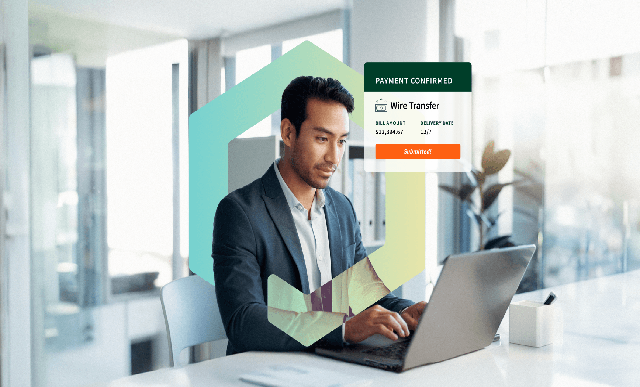
Priority Payables
Turn your cost center into a profit center with B2B AP Automation. Learn More Here!
2026 Priority Commerce Report on Closing the ERP Value Gap
A 2026 Priority Commerce report highlights that many ERP systems still rely on manual AP processes, revealing an 'ERP value gap' that can be closed through fully integrated and embedded payment solutions, which enhance visibility, scalability, and efficiency in financial workflows.
Microsoft Dynamics 365 Finance: A Complete ERP for Modern CFOs
This page presents Microsoft Dynamics 365 Finance as a complete ERP financial management solution designed to meet complex business needs, integrating processes from accounting and treasury to inventory, operations, and cash optimisation. It emphasises how Dynamics 365 Finance gives CFOs real-time visibility of company finances and project performance, supporting more informed strategic decisions and improved financial control on the Microsoft cloud.
ERP Replace: A Structured Path to Modern ERP
This solution brief presents ERP Replace as a structured way to move from legacy ERP to a modern, cloud-based platform, focusing on speed, risk reduction, and predictable outcomes. It explains how preconfigured baselines, implementation accelerators, and stage-gated governance help organisations manage data, processes, and change more effectively during ERP replacement programmes
Live Webinar: MCP and AI Agents in Dynamics 365 Finance & Supply Chain
This webinar walks through the Model Context Protocol (MCP) and shows how AI agents can securely read and act on data in Dynamics 365 Finance and Supply Chain. Attendees see live demos of MCP-driven scenarios, learn practical design tips for safe automation, and get guidance on first steps to experiment with agentic AI in ERP without compromising data quality or auditability.
AI in Finance: Professional Services Take Their First Steps
This article looks at how finance teams in professional services firms are beginning to adopt AI, moving beyond simple automation toward more autonomous, insight-driven operations. It highlights early use cases such as forecasting, reporting, billing, and productivity gains, and outlines practical steps CFOs and finance leaders can take to pilot AI safely while reshaping how their organisations work.
ERP Unlocked: De-Risking and Accelerating Transformation
This article explores how ERP leaders can rethink transformation to both de-risk delivery and accelerate time to value, rather than treating ERP as a slow, high-stakes rebuild. It outlines practical ways to use preconfigured industry baselines, data and integration accelerators, and stage-gated governance so decisions are transparent, auditable, and tied directly to business outcomes.
From Automated Finance to AI-Driven Autonomy
This piece examines the journey from traditional finance automation to AI-powered autonomous operations, outlining how technologies such as machine learning, generative AI, and intelligent agents can take on more of the end-to-end workload. It explores what “autonomous finance” means in practice, the steps needed to modernise processes and data, and how the CFO’s role evolves as finance shifts from manual control to AI-driven decision support.