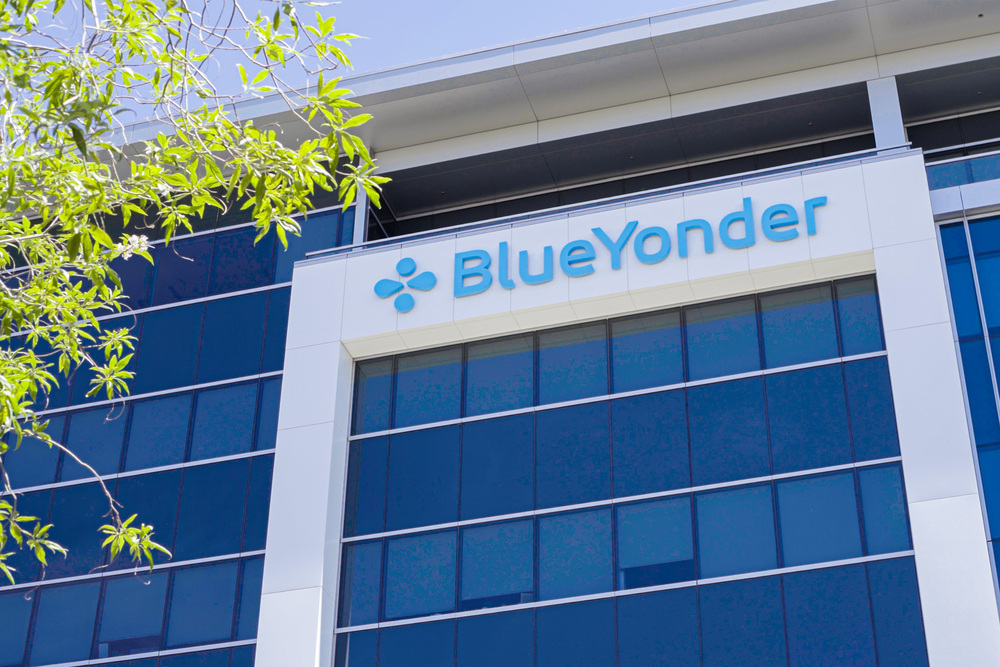
 Kelley Lear’s appointment as corporate vice president and general manager, global alliances, at software and supply chain management company Blue Yonder signals a push to scale a 300-plus partner ecosystem around AI-driven supply chain platforms built with Microsoft. Blue Yonder is positioning her role as the connective tissue between hyperscalers, global system integrators (GSIs), independent software vendors (ISVs), and regional specialists as it leans into co-innovation, agents, and end-to-end supply chain transformation.
Blue Yonder’s official announcement described Lear as being tasked with overseeing the company’s global partner strategy. Her remit spans driving innovation and market expansion, growing the ecosystem, and “enhancing and extending Blue Yonder’s customer solutions and experience,” with Lear noting in a January 5 Inside Partnering interview that alliances should function as growth engines rather than support roles.
Mandate at Blue Yonder
Lear stepped into the role after leading partnerships and alliances at Thomson Reuters, where she helped scale partner-driven revenue and expanded alliances across EMEA, APAC, and LATAM with major platforms including SAP, Oracle, AWS, Microsoft, and big consultancies. That background aligns with Blue Yonder’s push to orchestrate a multi-hyperscaler, multi-SI ecosystem around its Azure- and Snowflake-based supply chain platform.
Having inherited a roster of more than 300 partners spanning GSIs like Accenture, Deloitte, PwC, and EY; hyperscalers; technology ISVs; and specialized regional firms, Lear is reshaping that partner ecosystem. She has stressed the need for careful mapping of partners to opportunities by region, vertical, subvertical, and product expertise, supported by an industry advisory team that helps field sellers and alliance managers match the right partner to each customer scenario.
To manage this scale, Blue Yonder is exploring the use of agentic AI to internally track partner intelligence, allowing teams to query capabilities in natural language across dimensions such as accredited personnel by region and product, customer satisfaction scores, and project experience. That is a way to find the best-fit collaborators, not to rank partners against one another, and reflects Lear’s view that ecosystem intelligence must be as data-driven as the supply chains Blue Yonder serves.
AI-Powered Supply Chain, Microsoft Co-innovation
Under Lear’s leadership, alliances are being anchored to Blue Yonder’s AI-powered, end-to-end supply chain platform, which runs on Microsoft Azure and integrates with Snowflake. Blue Yonder was named Microsoft’s Global ISV Partner of the Year 2025, and Lear has highlighted collaborations with Azure AI Foundry and the Microsoft AI Co‑Innovation Labs to advance supply chain AI agents and co-develop new solutions for precision planning and fast execution.
Lear has framed the Microsoft relationship as more than a logo exchange, emphasizing deep co-innovation, product integration, co-marketing, and field co-sell motions that articulate a “better together” story around scalability, time-to-value, and security. The aim is to position Blue Yonder and Microsoft as tightly aligned platforms for intelligent, resilient supply chains that can anticipate and respond to disruption in real time.
What This Means for ERP Insiders
Alliance leadership is key for AI supply chain platforms. Lear’s appointment with an explicit mandate to drive global partner strategy, innovation, and ecosystem growth shows how alliances can be a primary mechanism for platform expansion and customer value, not a secondary sales channel. For ERP and supply chain vendors, this highlights the competitive importance of putting senior, commercially seasoned leaders over partner ecosystems to orchestrate multi-cloud, multi-SI plays.
Co-innovation with hyperscalers is central to next-generation supply chain architectures. Blue Yonder’s Microsoft Global ISV Partner of the Year recognition among other collaborations show how critical supply chain capabilities—agents, planning intelligence, resilient execution—are now being co-built with cloud providers. For enterprise architects, this reinforces a pattern where supply chain platforms, ERP, and hyperscaler-native services are increasingly inseparable.
AI-driven ecosystem intelligence is becoming a differentiator in its own right. Blue Yonder’s agentic AI activity signals that leading platforms will increasingly use AI to understand, curate, and activate their partner networks as precisely as they model supply chains. For GSIs, ISVs, and regional specialists around major ERP and supply chain stacks, that raises the stakes on measurable expertise, certifications, and customer outcomes.