Media Awareness Program

The Hidden Cost of AI: Why Data Debt is Actually a Human Problem
Explore how leaders at DMI’s Digital Lounge @ Davos are tackling transformation fatigue and data debt to liberate SAP teams for S/4HANA innovation.
Data Sovereignty, Latency, Trust: Why ERP AI Cannot Live in the Public Cloud Alone
As AI integrates into ERP workflows, the need for robust governance, data residency, and operational control is rising, leading organizations to seek infrastructure strategies that ensure consistency and reliability in the face of regulatory demands.
Digital Lounge @ Davos with DMI
Beyond the Hype: 3 Structural Shifts Every SAP Leader Must Make In 2026
At this year's Digital Lounge @ Davos, over 200 leaders acknowledged the industry's shift from the allure of AI capabilities to focusing on data sovereignty, accountability, and governance as critical components for ensuring responsible AI implementation, underscoring the importance of addressing legacy data management and integrating AI within a broader risk landscape.
Liquidity as a Real-Time Operating System: Kyriba on the Future of Treasury
As CFOs face escalating challenges from interest rate fluctuations and FX shocks, they urgently need connected treasury systems that provide real-time liquidity insights by integrating multi-bank and multi-ERP data, enabling strategic decision-making through AI-driven recommendations.
Why AI-Ready ERP Depends on Industrial-Scale Cloud Infrastructure
As enterprise software enters a new AI era, the focus shifts from the efficacy of AI models to the reliability and scalability of ERP infrastructure, with companies like Oracle emphasizing the importance of robust, unified data foundations to ensure consistent performance in business operations.
Business user interacting with AI-powered analytics on a laptop, illustrating enterprise AI and real-time data intelligence.
The New ERP Backbone: Databricks, Inetum, and the Shift to AI-Native ERP Architectures
ERP systems are entering an AI-augmented era, but many data foundations are not ready. This analysis examines why AI-native ERP architectures are emerging, how Databricks is becoming the intelligence layer, and how Inetum helps enterprises operationalize AI with trust, governance, and scale.
Achieving Manufacturing Operational Excellence in the Marketplace
The partnership between Syspro and SugarCRM introduces Sugar for Syspro, designed to enhance sales navigation and operational efficiency in complex manufacturing environments by eliminating manual data entry errors and fostering collaboration through integrated ERP-CRM visibility.
Microsoft Dynamics 365 Business Central
Microsoft’s Agentic e-Commerce Strategy and What It Signals for Retail ERP
At NRF 2026, Microsoft unveiled its vision for agentic AI as a foundational layer for retail e-commerce, emphasizing a shift towards protocol-driven, cooperative AI architectures that integrate seamlessly with ERP and commerce systems to orchestrate holistic retail experiences.
NetSuite 2025.2 Enhances Supply Chain Agility Amid Growing Operational Pressures
NetSuite’s 2025.2 release enhances supply chain management with improved planning and fulfillment capabilities, allowing organizations to better handle production schedules, inventory allocation, and order prioritization amidst ongoing global disruptions.
ERP cloud lifecycle management dashboard showing integration complexity and AI-driven automation
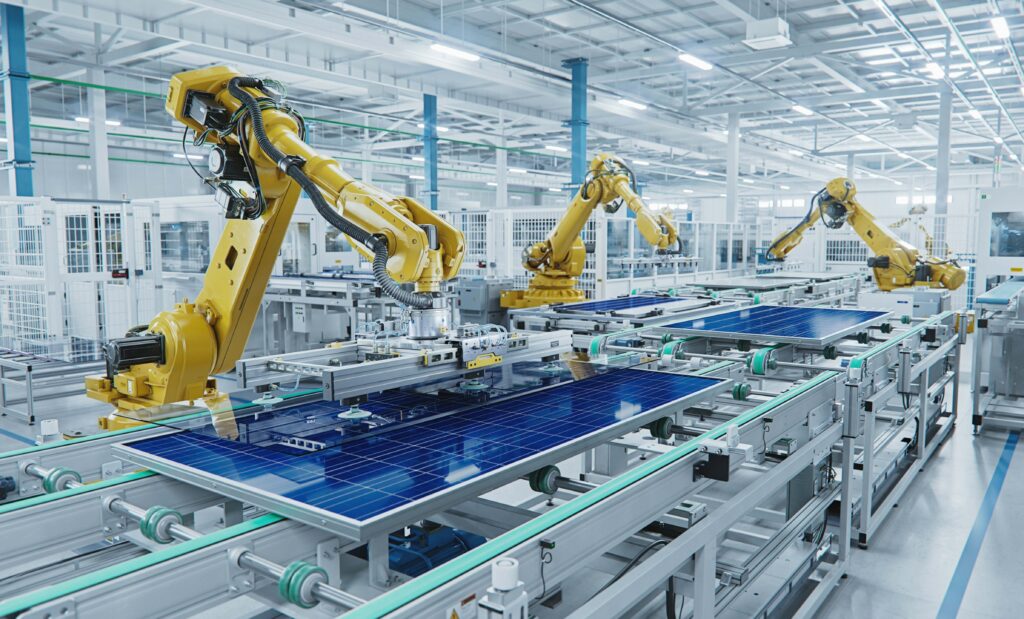
How Cloud ERP Helps Manufacturers Improve Productivity and Logistics
Cloud-based ERP platforms are transforming manufacturing operations to foster predictable workflows and improve efficiency, with the market expected to reach $23 billion by 2025, as companies shift from manual processes to automated, data-driven systems that enhance supply chain visibility and stability.
SAP agentic AI manufacturing Hannover Messe 2026
Transforming Manufacturing Through Seamless, Strategic Integration
Syspro's partnership with SugarCRM aims to enhance manufacturing and distribution by providing precision selling capabilities through integrated ERP and CRM systems.
Microsoft Dynamics 365 Business Central Raises the ERP Bar for the Mid-Market
Business Central is Microsoft's cloud ERP solution for small and mid-market organizations, featuring integrated finance, sales, and AI capabilities, while leveraging a partner-first approach to enhance vertical solutions, positioning it as a competitive force against other mid-market ERPs.
How ERP Vendors Can Turn AI From Weakness into Strength
ERP vendors are pressured to demonstrate the tangible operational benefits of their AI capabilities, with industry-specific implementations like those at Golden State Foods and Polaris showcasing measurable gains as the market continues to expand.
Understanding AI’s Growing Role in ERP, Enterprise Software
Rootstock's acquisition of Praxis Solutions highlights the need for manufacturers to prioritize business processes and outcomes in AI integration for ERP systems, as many companies struggle with digital transformation challenges.
Finance professional working on keyboard, with data graphs filter.
Scaling Finance in SaaS: How Zuora Enables Flexible Billing and Revenue Automation
Billing complexity often overwhelms core ERP systems. This article explains why SaaS companies use Zuora to manage automated billing and revenue recognition without constraining growth.
Image of finger touching an AI agent in digital space.
CData, Databricks, and the Expanding MCP Ecosystem
CData has been named a Featured Launch Partner for the Model Context Protocol in the Databricks Marketplace. The launch makes CData Connect AI available inside Databricks, positioning it as infrastructure for building AI agents that need governed access to live enterprise systems.
Microsoft Sharpens Dynamics 365 ERP for Asset-as-a-Service Rental Models
Microsoft is evolving ERP through Dynamics 365 to actively manage rental operations and address fragmentation in asset utilization by introducing rental-specific capabilities that enhance workflows, financial clarity, and customer experiences in a cloud-based, AI-extended ecosystem.
DMI and Data Migration
New Year, New Core: Why 2026 Is the Year to Finally Let Go of SAP Legacy Data
As SAP organizations approach 2026, the imperative to eliminate legacy data and systems is heightened by the need for a Clean Core strategy. The JiVS Information Management Platform offers a solution to effectively decouple historical data and streamline data migration to SAP S/4HANA.
ERP cloud lifecycle management dashboard showing integration complexity and AI-driven automation
How ERP, AI Can Improve Logistics and Operations Efficiency
Artificial intelligence is transforming logistics by enabling continuous optimization through integrated ERP systems, facilitating improved decision-making, reducing operational costs, and enhancing delivery performance.
Why Small Plants Need Enterprise-Level Capabilities Without Enterprise Overhead
Small plants are increasingly adopting cloud ERP solutions to gain visibility and control without the need for extensive IT resources, shifting from fragmented systems to integrated operations that enhance efficiency.
Businessperson hold an image of an AI agent in hand.
What CData Connect AI Does for Microsoft Copilot Studio and Microsoft Agent 365
CData Connect AI adds MCP-based connectivity, context, and governance to AI agents built in Microsoft Copilot Studio and Agent 365, enabling secure access to live enterprise data at scale.
Businessperson hold an image of an AI agent in hand.
Microsoft Pitches Agentic ERP, CRM as Operating System for AI-First Enterprises
Microsoft's shift to AI-first autonomous enterprises involves agents across Dynamics 365 that interpret data, collaborate, and enhance operations by automating tasks within finance, supply chain, and CRM, emphasizing the integration of systems and intelligence for adaptive, measurable outcomes.
AI Moves to the Core of ERP: What Technology Leaders Should Expect 
Artificial intelligence is evolving from a supplementary feature to an essential element of ERP, enhancing demand forecasting, operational responses, and executive decision-making.
ERP AI
How Manufacturers Can Achieve Operational Stability in 2026
As manufacturers head into 2026, they face pressure to enhance efficiency and stability through modern ERP technologies, moving from reactive chaos to predictable operations.
CloudPaths NetSuite ARM
How a Healthcare Giant Unlocked Revenue Agility with NetSuite ARM & CloudPaths
The transition to subscription-based models in healthcare requires a comprehensive reimagining of balance sheets and revenue recognition processes, as illustrated by CloudPaths' partnership with a global leader in healthcare information services to implement NetSuite ARM.
Data processing over infrastructure construction site
Six Data Pivots That Decide Whether Your AI Strategy Scales in 2026
AI is forcing businesses to modernize data architectures. CData’s e-book outlines six pivots to scale AI-driven products.
Microsoft Dynamics 365 Business Central
How Microsoft Is Rewiring ERP with Composable Dynamics 365
Microsoft's ERP strategy focuses on a composable approach using Dynamics 365 as a modular backbone for industry-specific solutions, emphasizing scenario-driven capabilities, AI integration, and partner specialization to create tailored solutions on a shared cloud platform.
ERP AI
Overcoming AI Adoption Challenges in Manufacturing and Supply Chain
AI is rapidly becoming essential in manufacturing and supply chain management, but uneven deployment due to barriers like data quality and user adoption persists, while vendors are focusing on domain-specific AI to integrate predictive insights directly into core processes.
Microsoft Research Maps 2026 AI Agenda: From Lab Assistants to Trusted Agents
Microsoft Research forecasts 2026 as a pivotal year where AI evolves into collaborative 'digital coworkers' across sectors, emphasizing security, agentic systems, and quantum advancements that align with human-centered goals and redefine enterprise resource planning.
kyano
Why Industry-Built ERP Will Lead the Next Wave of Manufacturing Modernization
Manufacturing executives are increasingly favoring vertical ERP systems over generic platforms due to the former's ability to provide tailored, out-of-the-box solutions that align with industry-specific workflows.