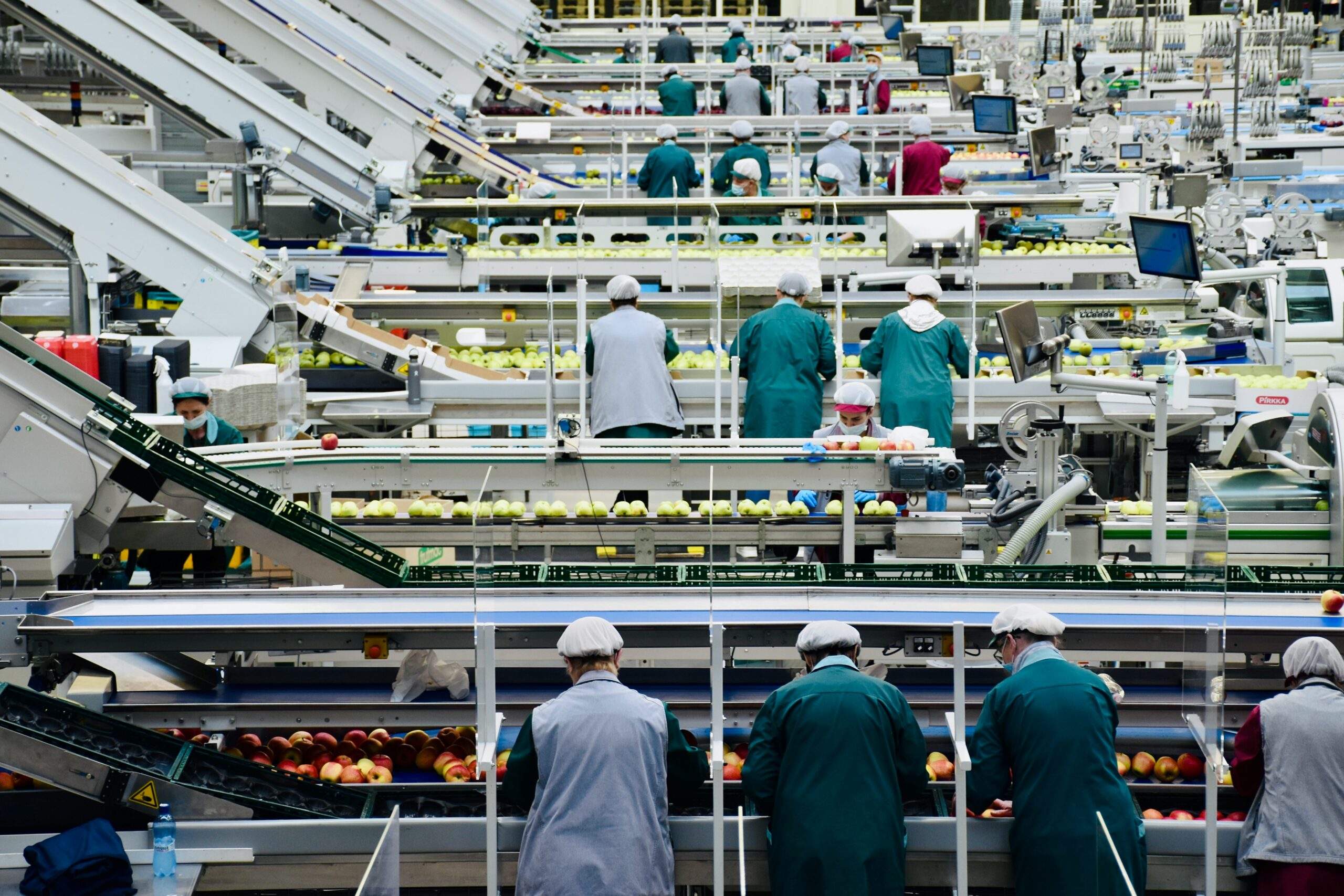
A food manufacturer that supplies supermarkets runs on a chain of handoffs. Retailer orders feed production. Recipes feed labels. Finished meals move through the warehouse to dispatch. Each handoff depends on data moving cleanly between systems, and when it doesn’t, IT teams end up fixing problems when they could be building something new.
Charlie Bigham’s, the UK maker of premium prepared meals, knows that chain well. The company employs more than 600 people across two kitchens, makes more than 50 dishes and has annual sales above £130 million. Its integrations ran on legacy middleware that was hard to manage and inflexible. High-priority support issues, often involving how data moved between systems, took up a disproportionate share of the IT team’s time.
An End-of-Life Deadline Turns into a Wider Rebuild
Bigham’s had run Syspro ERP for more than a decade, and by the time version 7 neared end of life, the problems had piled up. According to HIT Technology, the company’s implementation partner, legacy systems had been layered on top of other legacy systems. Each new integration or feature request was met with another quick fix, and that approach had become unsustainable.
The company treated the upgrade to Syspro 8 as a chance to replace the legacy tools around the ERP as well. Working with Syspro and HIT Technology, it launched an effort it called Project Integr8. Syspro 8 now runs in the cloud, alongside cloud-based electronic data interchange (EDI) for orders and invoices and a cloud labeling application. At the center of the project was the integration layer, where Bigham’s replaced its legacy middleware with Codeless Platforms’ BPA Platform. That platform now moves data between Syspro and the company’s key business systems.
Syspro says retailer orders, recipe management, labeling, and warehousing are now handled faster and more accurately, with measurable gains in performance and operational resilience.
The new integration layer also made a separate project possible: Indigo’s warehouse management system (WMS), which covers goods-in, finished-goods handling and dispatch. Warehouse staff now receive instructions on handheld scanners that tell them what to pick, in what quantity and where to find it. The system now reduces errors, improves efficiency, and saves money.
Rolling Out Change Around a 24-Hour Operation
Because Bigham’s operations run around the clock, the rollout had to avoid interrupting production for the 50 employees who use Syspro. The company formed a team of super-users from departments across the business, and together with HIT Technology and an in-house change manager, they mapped processes and assessed whether the business was ready for the switch.
The guiding rule was to change as little as possible for users. Interfaces stayed familiar, and existing workflows were kept unless there was a strong case for changing them. As a result, most users saw little difference in their daily work, even though the technology underneath had been replaced.
The old infrastructure also blocked a security goal. Bigham’s could not achieve Cyber Essentials Plus certification. After moving to Syspro 8 in the cloud, the company earned the certification and secured appropriate cyber insurance.
Next Up: A Companywide Data Program
With its core systems rebuilt, Bigham’s has started a companywide data programme called Information Revolution. The goal is to collect, structure and analyze data from every part of the business. The company is using Microsoft Fabric to bring transactional data and unstructured data into one shared environment, with Power BI Copilot on top for real-time analysis and reporting.
The first output is a set of dashboards for the sales and marketing team. More data will be added in priority order, and with that data in a structured form, the business plans to explore advanced reporting, forecasting and AI-assisted decision-making.
What This Means for ERP Insiders
Fix the integration layer before buying AI. At Bigham’s, high-priority IT support issues often came down to how data moved between systems. Any AI tool that reads or acts on orders, inventory or labels depends on those same connections. Before evaluating AI, ERP teams should map where data moves between systems and where it fails or needs manual correction.
Plan the rollout around the people using the system. Bigham’s runs around the clock, so it built its upgrade around super-users from each department and kept interfaces and workflows the same unless there was a strong reason to change them. ERP teams facing a similar upgrade should decide early which changes users actually need and hold the rest back, so the technology can change without disrupting daily work.
Use the end-of-life deadline to fix what surrounds the ERP. Bigham’s could have upgraded from Syspro 7 to Syspro 8 and stopped there. Instead, it used the deadline to replace its middleware, move EDI and labeling to the cloud and add a new WMS. ERP teams facing a forced upgrade should list the tools and integrations around the core system and decide which ones to replace in the same project, since the business is already budgeting time and disruption for the change.