Denso is taking a decisive step toward AI centric supply chain execution by standardizing on Oracle Fusion Cloud Applications for its global planning, procurement, manufacturing and logistics operations. The automotive technology giant, which generated $32.6 billion in revenue last year, is expanding an existing Oracle partnership that already covers finance and HR to create a single, AI powered core system for its supply chain.
Analysis
What This Means for ERP Insiders
AI-centric supply chains become a strategic imperative. Denso’s decision to run global supply chain operations on Fusion with embedded AI sets a benchmark that will pressure other manufacturers to treat AI driven execution as a core ERP requirement, not an optional add on.
Building A Unified, AI-Ready Core System
Denso’s supply chain has grown more complex as vehicles incorporate more electronics, software and regionalized components, while geopolitical risk and decarbonization pressures add volatility. The company concluded that fragmented systems could not provide the speed and quality of decision making it needs, so it chose to connect supply chain processes and data with its existing Oracle Fusion ERP and HCM applications and standardize on the Fusion suite.
In practical terms, that means replacing multiple legacy supply chain tools with Oracle Fusion Cloud Supply Chain and Manufacturing modules for planning, procurement, production and logistics. For day to day teams, planners will be able to see demand, supply and capacity in one environment, while procurement and logistics staff will work from a shared data foundation that spans orders, inventory and shipments instead of reconciling reports from different systems.
Denso’s leadership describes the program as a core system transformation rather than a simple efficiency upgrade. The aim is to enhance data accuracy and timeliness and embed AI into business operations to build a more resilient supply chain, with faster identification of procurement and supply risks and quicker formulation of response strategies.
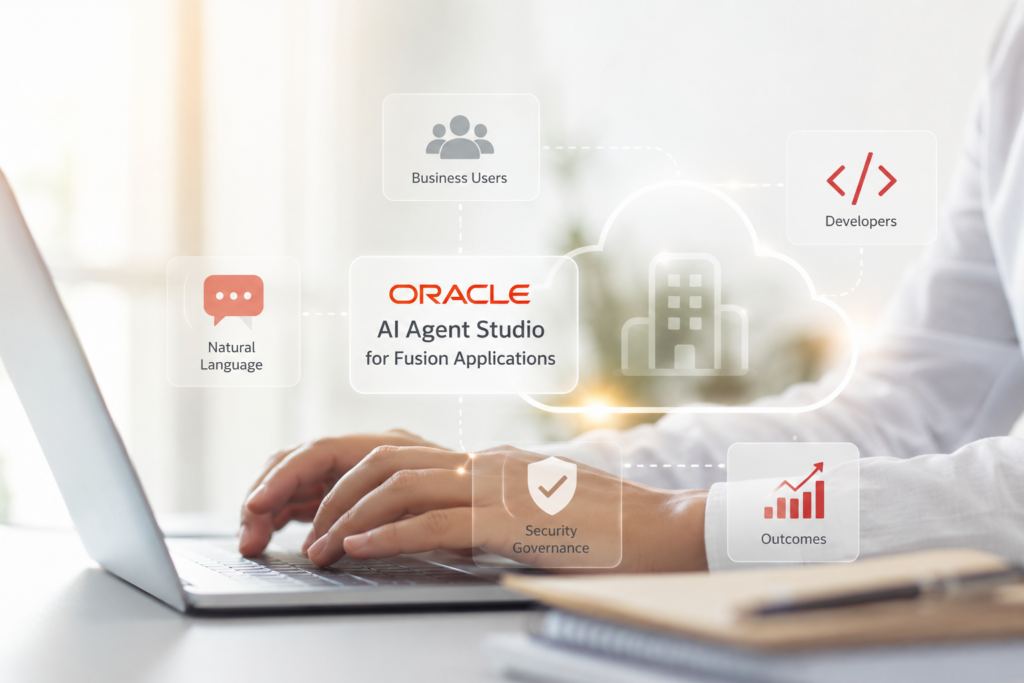
Denso and Oracle will establish an AI Center of Excellence to collect and share expertise in applying AI across Fusion Applications and to keep executive stakeholders aligned as the program evolves. Denso also plans to adopt Oracle’s AI agents and Fusion Agentic Applications, which are designed to automate end to end workflows in areas such as planning, sourcing and logistics rather than just recommend actions.
Analysis
What This Means for ERP Insiders
Unified data foundations enable agentic applications. The move to centrally manage data across planning, procurement, production, delivery and accounting shows that clean, shared models are prerequisites for effective AI agents and real time risk simulation in ERP landscapes.
Developing a Gameplan For the Future
For CIOs and chief supply chain officers, the Denso program offers a blueprint for large scale modernization. The companies began work in April and are targeting a pilot deployment at overseas sites in about two years, followed by a phased global rollout. That timeline underscores how important it is to treat AI powered ERP and supply chain projects as multi year journeys with clear milestones and governance.
Operationally, Denso expects to move from visibility focused dashboards to a model where AI agents help plan, decide and execute across planning, procurement, manufacturing and logistics. Supply chain managers will spend more time supervising agent driven workflows, managing exceptions and tuning policies and less time manually consolidating spreadsheets or chasing status updates across regions.
For technology executives evaluating similar moves, the Denso Oracle partnership highlights several evaluation criteria. Buyers should look for suites that offer a unified data model across finance, HR and supply chain, embedded AI agents that can operate within governance rules and a clear plan for building internal AI skills through structures such as a center of excellence.
There are also lessons in change management. Denso is using the program to standardize processes across planning, procurement, production, delivery and accounting while centrally managing data so the entire supply chain can be viewed in real time. That approach reduces customization debt and creates the clean core needed for agentic applications and real time simulation of scenarios such as supplier disruption or demand spikes.
Analysis
What This Means for ERP Insiders
Centers of excellence will orchestrate ERP AI adoption. By creating a joint AI Center of Excellence, Denso and Oracle highlight the need for formal structures that align executives, collect best practices and govern how AI agents enter critical ERP linked workflows.