
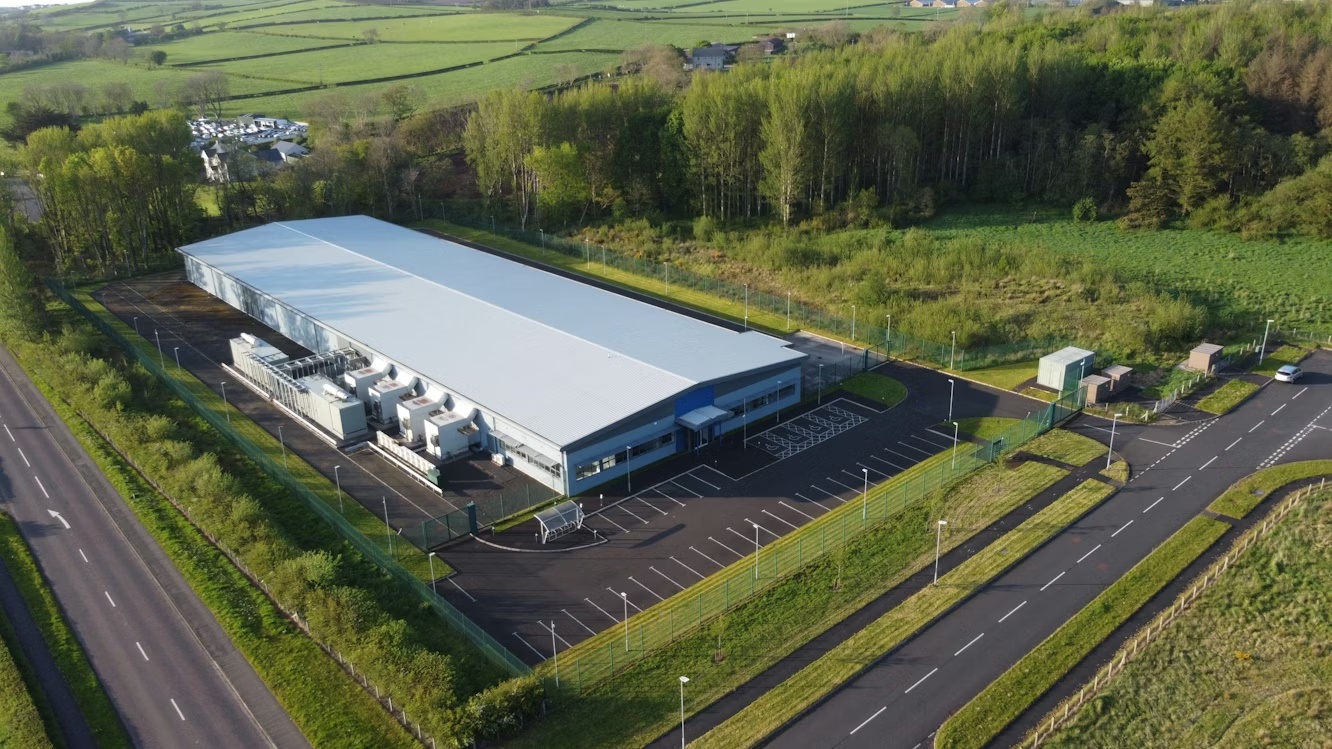
Data centers are physical systems with real-world constraints. Location determines resilience, emissions, and compliance exposure across the systems that run the business. That means location is now a governance decision.
What used to be a technical choice now shapes exposure to heat, water stress, grid reliability, and emissions. These factors are increasingly regulated. Frameworks such as the EU Energy Efficiency Directive and the Corporate Sustainability Reporting Directive require energy and water use to be reported and audited, along with where systems run.
Meanwhile, AI is accelerating both demand on data centers and the scrutiny around them.
As compute demand rises and cooling shifts to more complex designs, infrastructure constraints become visible. They show up as cost volatility, compliance exposure, and operational risk. When AI workloads are delivered through cloud platforms backed by distributed data centers, those constraints shape how ERP systems perform.
Location Sets Energy, Cooling, and Reliability Constraints
Location sets the operating conditions. It determines how much energy a data center uses, how it is cooled, and how reliably it runs. These risks are already measurable.
Energy is the first constraint. Power costs vary by region, shaped by energy mix, market structure, and grid stability, and can account for a large share of operating expense. Regions with stable grids and access to renewables offer more predictable performance, while constrained grids introduce price and availability risk.
Climate adds a second layer. Cooler regions can reduce cooling demand using outside air, while hotter or humid environments require more intensive systems and higher energy use. Many facilities already operate outside optimal temperature ranges, increasing baseline cooling requirements.
Water is increasingly a limiting factor. In drought-prone regions, data center clusters draw significant volumes for cooling, placing pressure on local supply and long-term sustainability. In parts of the western United States, this demand is already visible at scale.
Heat exposure adds a broader layer. Data centers can raise local temperatures, while a majority of major hubs already face elevated heat exposure, with risk expected to increase. This affects not only cooling demand, but also grid stability and surrounding communities.
Analysis
What This Means for ERP Insiders
Location fixes the cost curve for compute. Regional energy, water, and heat constraints lock in long-term cost, resilience, and scalability limits.
Climate Risk Is Concentrating in Key Data Center Regions
Location shapes cost and latency. It now also defines climate risk exposure.
Cool, renewable-rich regions are becoming more attractive. Locations such as the Nordics, Canada, and northern US combine lower temperatures, stable grids, and access to hydropower, reducing cooling demand and supporting more predictable operations.
Other regions face the opposite conditions. In the western United States, reporting from Stanford found data center growth is accelerating in hot, water-stressed areas, where facilities already account for 7.4% of electricity demand in Arizona and 11.4% in Oregon.
Data analysis from Rest of World shows how widespread the issue already is. According to a recent report, every data center operates in climates above optimal temperature ranges in at least 21 countries. By 2040, up to two-thirds of global hubs could face high or very high heat risk, particularly across Asia-Pacific and the Middle East.
Maplecroft, meanwhile, quantifies how that risk escalates. Today, 56% of the world’s top data center hubs are already in high or very high heat-risk zones. That rises to 68% by 2040 and 80% by 2080 under high-emissions scenarios.
Analysis
What This Means for ERP Insiders
Geography is becoming a capacity constraint. As climate risk concentrates, viable regions shrink, forcing competition, higher costs, and strategic workload redistribution.
ESG Regulation Turns Infrastructure Performance Into Disclosure
Regulation is turning these conditions into reporting requirements.
The EU is setting the pace. Under the Energy Efficiency Directive, data centers above defined thresholds must report energy use, water consumption, efficiency metrics, and location into a central database. This makes resource use a regulated disclosure.
Frameworks such as the EU Energy Efficiency Directive and the Corporate Sustainability Reporting Directive require how systems use energy and water to be reported and audited. ESG moves from narrative to measurable performance.
The impact is not limited to Europe. These rules apply to non-EU companies with significant EU operations, and similar approaches are emerging elsewhere.
California now requires Scope 1, 2, and 3 emissions disclosure for large companies doing business in the state, while US federal rules continue to evolve. The SEC has narrowed its approach to climate disclosure, but public companies still face scrutiny over climate-related risks and ESG claims through existing reporting requirements.
Other regions are taking their own approach. Singapore and the UAE are tying data center expansion to strict energy and sustainability conditions, while other countries are exploring legislation that guides where and how capacity is built based on energy availability, water constraints, and long-term infrastructure limits.
Analysis
What This Means for ERP Insiders
Disclosure is guiding where infrastructure can grow. Reporting is steering investment toward efficient regions and designs that can meet verifiable performance expectations.
Hyperscalers Manage Infrastructure Risk While Expanding It
Hyperscalers are managing infrastructure risks. They are also increasing exposure to them. As cloud providers, they operate the data centers that underpin AI and ERP workloads.
They manage risk through engineering. Amazon Web Services has introduced direct-to-chip liquid cooling to support higher-density workloads while reducing energy and water use. Google DeepMind uses AI to optimize cooling systems in real time, cutting energy consumption. Microsoft is developing chip-level cooling to manage heat more precisely.
They also create risk through scale. AI increases compute intensity and shifts workloads to always-on operation. This raises total energy demand, concentrates capacity in specific regions, and increases reliance on constrained resources such as power and water. Efficiency gains reduce cost per unit, but overall consumption grows.
AI sits on both sides of this dynamic. It finances sustainable initiatives while driving demand infrastructure in regions that are often not well-equipped to absorb it.
This tension reflects the position hyperscalers operate within.
On one hand, ESG expectations require measurable improvements. On the other, digital sovereignty laws require infrastructure to be located within national boundaries, often in regions that are not optimal from a climate or energy perspective.
This can mean building capacity in hotter, water-stressed, or grid-constrained locations, and increasingly co-locating infrastructure to meet regulatory requirements.
Analysis
What This Means for ERP Insiders
Hyperscalers are redistributing risk. Customers inherit shifting exposure across regions, requiring visibility into workload placement, costs, and resilience.
ERP Systems Inherit Infrastructure and ESG Risk
All of these pressures converge at the infrastructure layer. Data centers are no longer a background dependency. They are becoming a board-level ERP risk domain.
Investor scrutiny reflects this shift. Data center expansion is increasingly assessed as a test of climate credibility. Attention is moving beyond targets to how infrastructure performs in specific locations, including exposure to heat, water stress, and grid constraints. Community opposition and project delays reinforce that these risks are already material.
Regulation extends that visibility. Frameworks such as the EU AI Act and emerging laws in Asia formalize how AI systems must be governed, but those requirements depend on how and where infrastructure is deployed. These regulatory interests link compliance back to data center location, energy use, and operational resilience.
Those requirements carry into ERP systems. AI-driven workloads now run continuously, making dependence on data center infrastructure persistent. Because ERP systems run on cloud platforms backed by distributed data centers, enterprises inherit this exposure without directly controlling where workloads run or how those environments perform.
Constraints in power, cooling, and capacity create operational risk across finance, planning, and compliance. Data centers become a GRC issue, requiring visibility, measurement, and governance within ERP operations.
Analysis
What This Means for ERP Insiders
ERP risk now extends beyond system boundaries. Infrastructure dependencies tie financial outcomes to external constraints, requiring governance across vendors, regions, and energy conditions.
About Us
ERP Today covers how ERP, cloud, and AI change the way businesses run. Our editors speak with practitioners, vendors, and analysts to surface the technology, contracts, and risks that matter for enterprise leaders.
Alongside our newsroom coverage, we run in‑person summits where ERP leaders compare notes on programs like yours, and a research practice that turns reporting like this into organization‑specific briefings and content.