Interest rate whiplash, foreign exchange (FX) shocks, and fragile supply chains have pushed cash and risk from back-office hygiene to front-page strategy for CFOs and treasurers. In an exclusive interview with SAPinsider, Tom Callway, VP of product marketing at Kyriba, shares that most organizations are still trying to solve a multi-bank, multi-ERP, multi-platform problem with tools that only ever see a slice of the picture.
“Treasury is sitting on some of the most critical data in the business,” Callway says. “But a lot of the time it’s still locked away in spreadsheets, bank portals, or ERP modules that were never designed for real-time decision-making.”
Treasury Needs a Single, Connected System to Manage Liquidity
Traditional treasury tools have become point solutions attached to a single ERP or a handful of banks. That model starts to break when a business runs dozens of bank relationships, multiple ERPs from different vendors, and regional payment platforms across markets. Callway’s view is that the real challenge is no longer just “having a Treasury Management System,” or TMS, but building a connectivity and data layer that can treat cash, debt, investments, and risk as one system of record.
“What customers are asking for now is a real-time view of liquidity across the whole enterprise,” he says. “That means cash, credit lines, investments, and exposures. And being able to trust that view enough to make decisions today, not a week later when the picture has changed.” That necessitates automating bank connectivity, normalizing formats, and feeding that data into a platform that can talk to whichever ERP or planning tools finance already runs.
Data and AI Move Treasury from Reporting to Recommendations
Once that visibility is in place, the conversation shifts from reporting to recommendations. Callway describes how treasurers are increasingly asking for scenario views rather than static reports.
“They’re asking questions like, ‘If I move this level of cash from one region to another, or change the hedge ratio on this exposure, what does that do to my risk profile or my cost of capital?’” he explains. To answer those questions at speed, platforms like Kyriba deliver three levers:
- APIs and bank connectivity. Automating multi-bank and multi-rail connections so cash positions and payment statuses update continuously, not as a once-a-day file.
- Data consolidation across ERPs. Pulling in actuals, forecasts, and exposures from multiple ERP systems into a single liquidity view, regardless of vendor.
- AI and advanced analytics. Using models to predict short-term cash needs, highlighting unusual payment patterns, and simulating the impact of FX and rate moves on P&L and the balance sheet.
Callway stresses that AI only adds value when it sits on clean, timely data. “If you don’t trust the underlying data, you’re not going to trust an algorithm telling you to move €50M from one region to another,” he says. The early wins he sees are in anomaly detection on payments and improved short-term cash forecasting, where better signals can translate directly into lower borrowing costs or more efficient investment of surplus cash.
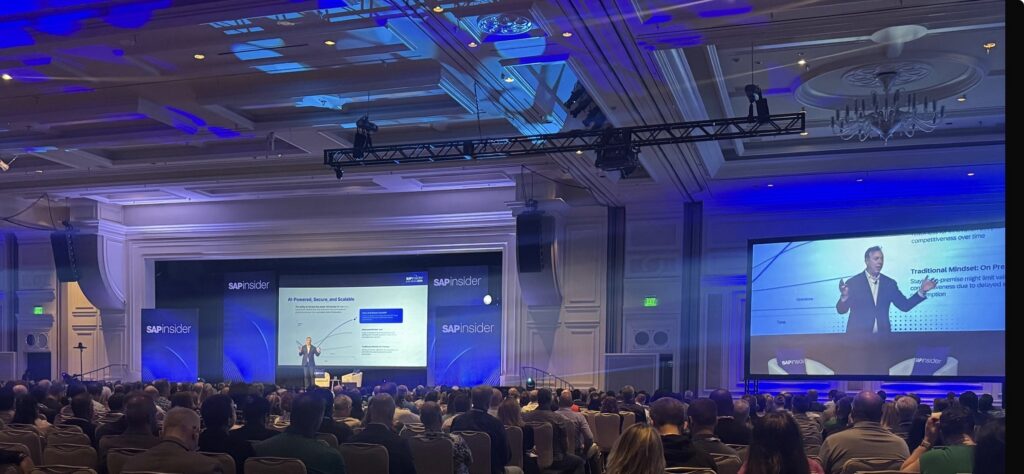
Listen to the interview clip and watch for the feature article in SAPinsider magazine: Watch this sneak peek of the SAPinsider interview with Tom Callway and read our expanded four‑page feature article in SAPinsider magazine, debuting at SAPinsider North America in Las Vegas, March 16–19. Register for the event here.
What This Means for ERP Insiders
Treasury and liquidity decisions now sit at the center of ERP strategy. The Office of the CFO is being asked to manage liquidity, risk, and working capital as an integrated system while ERP landscapes become more hybrid, regional, and multi-cloud, with multiple financial platforms in play. That means treasury can no longer be treated as a bolt-on module; connectivity and data models for cash, payments, and risk need to be considered as part of the core enterprise architecture.
The factors that unlock the most value often are connectivity and data. Callway’s comments show the first-order problem is stitching together multi-bank, multi-ERP data into a trustworthy, near real-time view of cash, debt, and exposures, not adding more dashboards. Enterprise architects should prioritize projects that automate bank connectivity, standardize formats, and centralize liquidity data across platforms, so whatever treasury or planning tools they adopt can operate on a single, reliable picture of the truth.
AI in treasury will reward organizations that fix the foundations early. Use cases like anomaly detection on payments, short-term cash forecasting, and scenario analysis for FX and interest-rate moves are already delivering efficiency and insight gains for early adopters, but only where clean data and strong controls are in place. The practical takeaway is to see AI as the layer that sits on top of good connectivity and governance; teams that get those basics right will be best placed to turn every dollar, euro, or yen in motion into a strategic lever when markets shift.