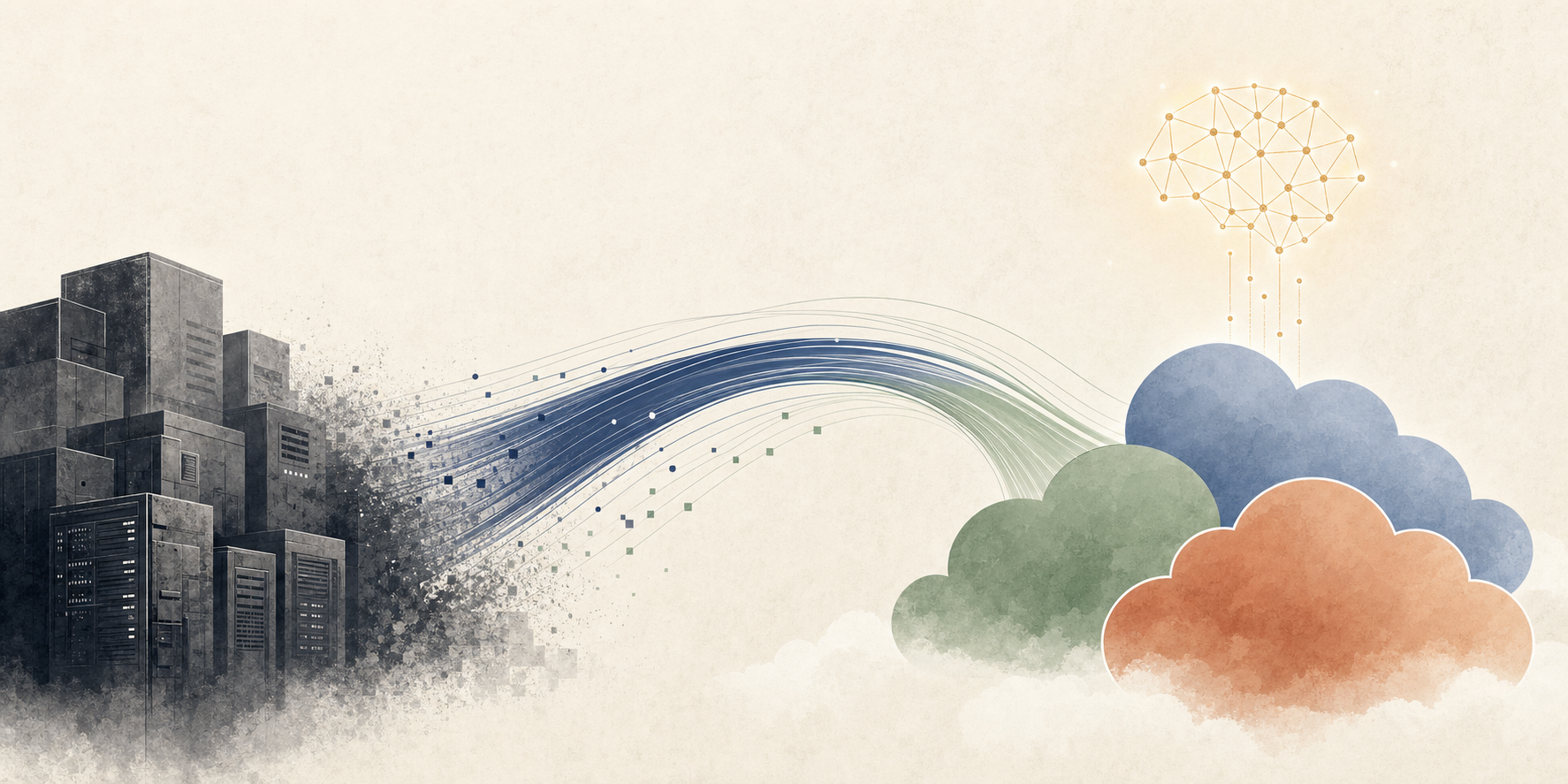
International food wholesaler METRO AG has completed a multi-year data center migration program with Wipro, moving legacy IT operations into a modern multi-cloud ecosystem as part of the international food wholesaler’s cloud-first transformation strategy.
Wipro announced the milestone on June 18, describing the program as a large-scale migration delivered through a phased and risk-controlled approach. The project gives METRO a more resilient, scalable, and secure digital foundation designed to support automation, cloud development, and AI adoption.
The migration builds on a longer technology relationship between METRO, Wipro, and Google Cloud. METRO Digital announced in 2021 that it was collaborating with Google Cloud and Wipro to accelerate cloud adoption and support innovation across its wholesale and retail operations. Wipro and METRO also renewed their strategic partnership in June 2025, extending work across cloud, data, application development, and AI-enabled IT support services.
For ERP and enterprise technology leaders, the story is less about the end of a data center project and more about what it unlocks. METRO is trying to remove legacy infrastructure constraints that can slow modernization, limit automation, and make large-scale AI harder to operationalize.
Cloud Exit Created the AI Runway
METRO CIO Khaled Bagban said the completion marks a key milestone in the company’s move toward a scalable, cloud-based, and AI-ready IT landscape.
That language is important. Many enterprises describe themselves as AI-first, but their infrastructure still runs on aging systems that limit agility, visibility, and resilience. Moving workloads out of legacy data centers can create the technical runway for faster innovation cycles, more flexible application development, and more consistent operational management.
The program also strengthens METRO’s cybersecurity posture and digital capabilities, according to Wipro. For an international food wholesaler, those capabilities are tied directly to daily business continuity. Technology infrastructure supports ordering, supply chain operations, stores, logistics, customer-facing services, and back-office systems across markets.
Cloud migration does not automatically make a company AI-ready. But it can remove some of the constraints that prevent AI, automation, and data-driven decision-making from reaching production scale.
Automation Started with IT Operations
Wipro said the migration has also enabled intelligent automation across key operational areas, including user lifecycle management.
The company is using Wipro Intelligence, its suite of AI-powered platforms and offerings, to support more autonomous service request handling. Wipro said the automation is expected to improve turnaround times, accuracy, and operational efficiency. It has also applied AI-driven engineering tools to accelerate software development cycles, improve code quality, and resolve issues faster.
That is a practical starting point for enterprise AI. Before AI reshapes front-office or supply chain processes, many organizations first use it to automate IT support, development, service management, and operational workflows. Those areas produce measurable improvements and help build confidence in AI-enabled operations.
For METRO, that matters because the business depends on reliable digital services across a distributed, international operating model. Reducing IT bottlenecks can improve the speed at which new services, integrations, and process improvements reach the business.
Cloud Partnerships Carry Long Implementation Timelines
The partnership traces back to Wipro’s 2020 strategic digital and IT deal with METRO, followed by cloud adoption work with Google Cloud and Wipro in 2021 and a renewed strategic partnership in 2025. The completed data center migration reflects years of infrastructure, operating model, and partner execution work rather than a single technology deployment.
That timeline should be familiar to ERP leaders. Moving away from legacy infrastructure is often a prerequisite for modernization, but it requires sequencing, risk control, application dependencies, security planning, and operational continuity. The work is foundational, and often invisible, until it enables the next phase of transformation.
For METRO, the next phase is AI at scale. For other enterprises, the broader lesson is that cloud modernization becomes valuable when it creates a platform for faster decision-making, resilient operations, and business process innovation.
What This Means for ERP Insiders
AI readiness starts with infrastructure discipline. METRO’s migration shows how legacy data center exits can clear the path for automation, cloud development, and AI adoption. ERP leaders should treat infrastructure modernization as part of the AI roadmap, not as a separate IT cleanup project.
Operational automation proves AI value before enterprise reinvention. Wipro’s use of AI-enabled service management and engineering tools points to a pragmatic path for scaling AI inside complex organizations. Technology leaders can build momentum by automating high-friction IT and support workflows before extending AI into more sensitive business processes.
Cloud transformation takes partner and governance stamina. METRO’s program unfolded across multiple years, partners, renewals, and operating model changes. ERP teams can expect major cloud and AI-readiness programs to require phased execution, clear accountability, security discipline, and continuous alignment between infrastructure decisions and business priorities.