EMEA

Shedding Data Baggage for a Leaner SAP Cloud
Migrating to SAP Cloud ERP Private promises streamlined processes and agility, but organizations must first conduct a thorough assessment of their data to avoid complicating the transition with unnecessary legacy information, which can drive up costs and hinder performance.
The Cloud Velocity Trap for Testing
CIOs face significant challenges during ERP migrations due to inadequate testing strategies and a rush towards AI solutions, highlighting the necessity for continuous testing and thorough documentation to ensure successful system integration.
GCC emblem with digital code background
How Gulf States Are Approaching Digital Sovereignty
Gulf states are building digital sovereignty frameworks to strengthen infrastructure and move from importing to operating cloud and AI services locally. National regulations, major investments, and regional collaboration support this transformation.
How the digital sovereignty agenda in the EU reshapes cybersecurity
The EU's push for digital sovereignty is transforming cybersecurity into a critical, integrated discipline, prompting businesses to adopt stringent regulations, lifecycle-embedded practices, and proactive risk management.
How SAP Experience Centers Win Transformation
SAP's Experience Centers have transformed from showrooms to operational labs, exemplified by the fully functional S.Mart Store in Walldorf, illustrating the company's commitment to co-creating practical industry solutions with customers.
SAP NS2 defense
The New SAP Defense
As organizations transition to SAP S/4HANA and hybrid-cloud architectures, the necessity for a layered Zero Trust security approach, supported by Unified Risk Management and consolidated monitoring solutions, becomes critical to address the expanded attack surface.
Microsoft Teams App opened on a phone that is sitting on a keyboard
Microsoft Teams Security Update Activates January 12, 2026
Microsoft Teams will enable new messaging safety features on January 12, 2026, strengthening protection against weaponizable file types and malicious links and adding options for users to report incorrect security detection.
Microsoft Research Maps 2026 AI Agenda: From Lab Assistants to Trusted Agents
Microsoft Research forecasts 2026 as a pivotal year where AI evolves into collaborative 'digital coworkers' across sectors, emphasizing security, agentic systems, and quantum advancements that align with human-centered goals and redefine enterprise resource planning.
SAP, Partners Turn Embedded Business AI into Concrete ERP Wins
SAP and its partners are transforming AI from concept to implementation by integrating SAP Business AI and SAP BTP into workflows that enhance efficiency and collaboration, as illustrated by successful case studies from companies like FRoSTA and Aspen Pumps.
kyano
Why Industry-Built ERP Will Lead the Next Wave of Manufacturing Modernization
Manufacturing executives are increasingly favoring vertical ERP systems over generic platforms due to the former's ability to provide tailored, out-of-the-box solutions that align with industry-specific workflows.
RPA Pushes Healthcare from Manual Admin to Intelligent Automation
Hospitals are increasingly adopting robotic process automation (RPA) to alleviate administrative burdens and workforce shortages while enhancing patient experiences, evolving from basic scripts to AI-enabled intelligent automation that reshapes claims management, scheduling, and compliance.
MCP Platform
How to Choose an MCP Platform for Production-Scale AI Agents
Model Context Protocols (MCPs) standardize secure, real-time access for AI agents to enterprise systems. MCP features such as plug-and-play integration, real-time monitoring, and scalability become a differentiator as businesses embed AI into core workflows.
ClickUp AI Agents
ClickUp Addresses Work Sprawl with Codegen Acquisition
ClickUp has acquired AI startup Codegen to enhance its platform with autonomous software engineering capabilities, integrating execution engines with enterprise context for a unified workspace that enables AI agents to perform tasks across multiple systems.
Oracle Database
Oracle Database@Azure expands to the Netherlands, launches in Brazil
Oracle has expanded its Oracle Database@Azure service into the West Europe region and Brazil Southeast, allowing customers to run Oracle databases within Microsoft Azure environments while benefiting from local compliance and reduced latency, thus reinforcing its strategy to integrate database services with major cloud platforms without the need for architectural changes.
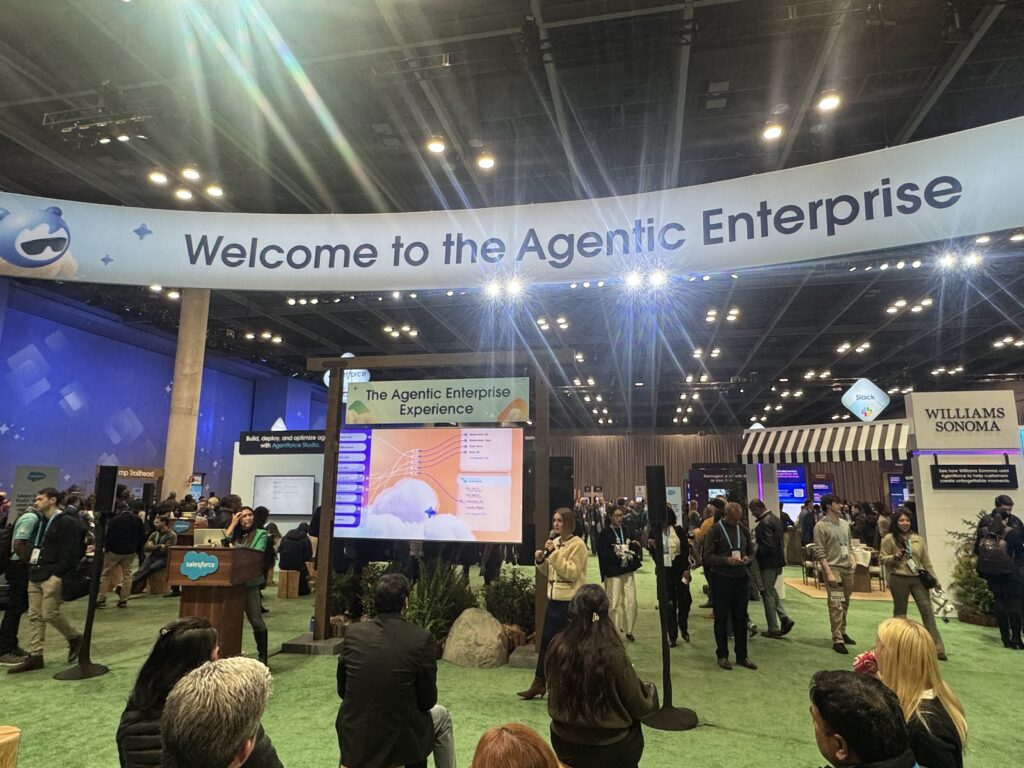
Inside Salesforce’s Agentforce Roundtable: How Did Leaders Really Use AI Agents in 2025?
Executives are shifting their focus from the hype of AI to practical implementation, emphasizing the importance of data activation, hybrid reasoning models, and effective change management to ensure AI agents deliver value in real-world applications.
data maturity ai
Data Maturity Is the Strongest Predictor of AI Success in 2026, Says New CData Study
Despite investment in AI copilots, many enterprises' lack of robust data infrastructure hampers their ability to derive sustainable ROI from AI initiatives, with only 6% of organizations considered genuinely AI-ready due to fragmented data systems.
SAP security
How SAP Customers Responded to Rising Cybersecurity Threats in 2025
In 2025, SAP customers expressed increasing concern over cyberattacks, particularly regarding data exfiltration and integration risks, while patch management remained a significant challenge, highlighting the necessity for enhanced security strategies and investments in SAP-specific protections.
Cognizant AI
Cognizant and Microsoft Target the Last-Mile Problem in Enterprise AI
Cognizant and Microsoft have expanded their AI partnership to co-develop industry-specific solutions and integrate Microsoft's AI stack into Cognizant’s services, primarily benefiting sectors like financial services and healthcare, as they aim to enhance AI deployment and operational impacts through deeper collaboration and streamlined workflows.
Cybersecurity
Impersonation Attacks Are Reshaping Workplace Cyber Risk
Accenture's research reveals that 24% of employees under 35 are likely to respond to suspicious work messages impersonating colleagues, highlighting a shift in cybersecurity risk from technical vulnerabilities to social engineering, driven by AI advancements that exploit everyday communication practices.
IBM Advances Generative, Agentic AI Deeper into SAP Operations with ICAMS
IBM announced its Application Management Suite for SAP (ICAMS), designed to enhance SAP transformation through generative and agentic AI, thereby streamlining management processes and improving operational efficiency across SAP environments amidst the complex transition to S/4HANA.
Oil and Gas ERP Leaders Signal Agentic AI Push in Recent Deployments
Oil and gas operators are prioritizing digital transformation through cloud ERP modernizations with autonomous AI agents and unified data platforms, highlighting the industry's focus on operational efficiency and competitive advantage.
Aptean Launches AppCentral 2.0, Bringing Vertical AI Into Daily Industrial Operations
Aptean’s AppCentral 2.0 is a Vertical AI platform that enhances operational efficiency in manufacturing and distribution by integrating AI agents for real-time decision-making, automating routine tasks, and providing predictive insights.
Cloud Security Has Hit a Speed Wall as AI, Multicloud Outpace Defenses
The December 2025 Palo Alto Networks State of Cloud Security Report reveals that cloud security is lagging behind the rapid growth and complexity of modern IT, with a critical emphasis on identity risks and the urgent need for integration of security operations to protect increasingly vulnerable cloud systems.
IFS Acquiring Softeon, Bringing Industrial AI to Warehouse Management
IFS's planned acquisition of cloud-native Softeon aims to enhance warehouse management capabilities, integrating AI and robotics into operations, amidst a growing $8.6 billion market driven by labor shortages and automation demands.
Tax compliance and readiness
Vertex Expands Role in Oracle Cloud ERP Environments with Full-Scale, End-to-End Tax Automation, Compliance Platform
Vertex has enhanced its tax determination and compliance capabilities within Oracle Cloud ERP through a unified platform that supports global requirements, automates processes, and improves operational efficiency for over 1,700 mutual customers.
Oracle Database@Google Cloud
Oracle Database@Google Cloud Expands to Canada and India in Digital Sovereignty Push
Oracle has launched its Database@Google Cloud service in Canada and India, using a standardized multicloud model that integrates directly with Google Cloud data centers, highlighting a strategic approach focused on data sovereignty and operational flexibility for enterprises across diverse regulatory environments.
Tekniska verken Picks IFS Cloud to Strengthen Digital Transformation, Service Delivery
Tekniska verken has chosen IFS Cloud to digitize its operations and enhance service delivery by integrating legacy systems into a unified platform that utilizes industrial AI for improved efficiency, visibility and asset management.
AI-First Monetization and Zuora
The Death of the Static SKU: Why AI-First Monetization Demands a New Architecture
The generative AI revolution is prompting a shift in software product roadmaps, necessitating a move from rigid billing systems based on static SKUs to dynamic pricing models that enhance agility and allow for complex consumption-based monetization.
NGO AI ERP
Nonprofits Want AI, but They Need Modern ERP Platforms First—Unit4 Study
Nonprofits are facing operational challenges due to increased demand from crises and economic uncertainties, prompting 83% to invest in generative AI and modernized ERP systems for better data integration, mission impact, and donor transparency.
SAP S/4HANA Projects and DMI
The Gift No CIO Asks For (But Always Gets): Why SAP S/4HANA Projects Keep Inheriting the Past
CIOs face the challenge of managing legacy systems and historical ERP data, which often drains resources and complicates migration to SAP S/4HANA, but organizations can overcome this by decoupling data from applications using platforms like JiVS.