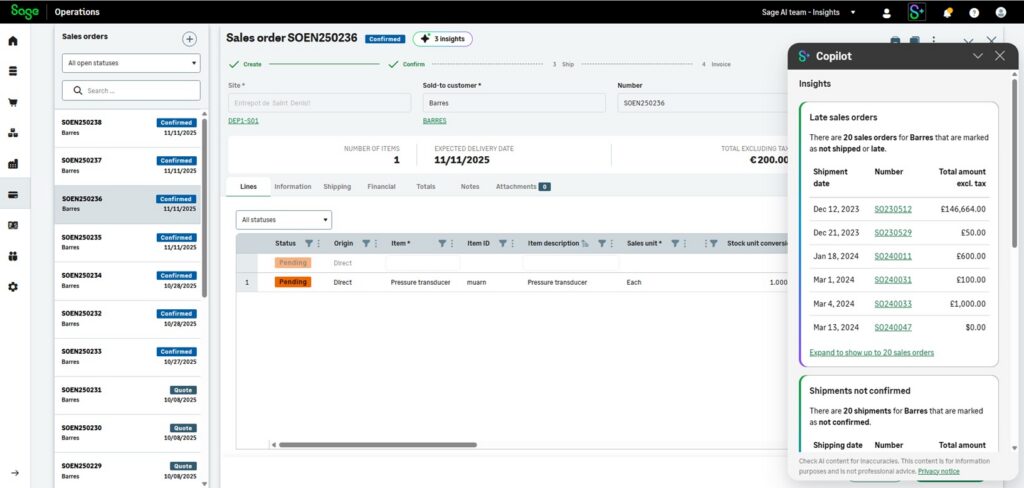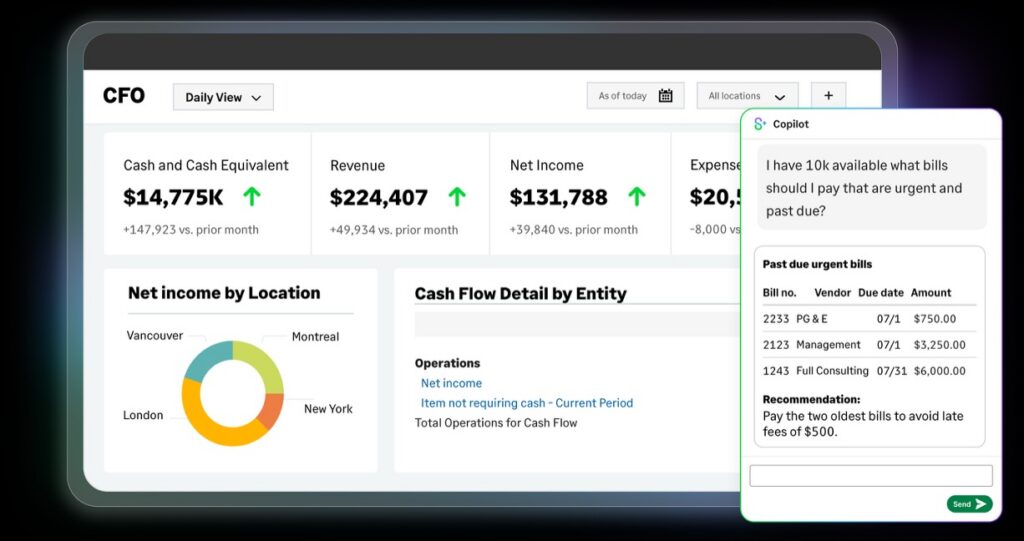

Sage and PwC are bringing agentic AI into the heart of Sage Intacct delivery with an implementation model designed to get finance teams live faster and with more consistent outcomes. The collaboration applies AI agents to key stages of design, configuration and testing so onboarding becomes a repeatable, governed process rather than a one off project defined by spreadsheets and manual checklists. This will be highlighted during the Sage Future Conference in San Francisco from April 28-30, which ERP Today will be covering.
Analysis
What This Means for ERP Insiders
Agentic AI will reshape ERP implementation models. The Sage and PwC approach shows how AI agents can standardize configuration, mapping and testing, signaling a broader shift toward semi autonomous delivery factories for cloud ERP programs.
Agentic AI Enters the Implementation Lifecycle
Traditional finance system deployments often rely on manual workshops, configuration builds and testing cycles that can stretch timelines and drain both internal teams and external partners. The Sage and PwC model addresses that friction by embedding AI into implementation workflows, using agentic patterns that can analyse requirements, propose configurations and support test design while keeping consultants and finance leaders in control of final decisions.
In practice, PwC and Sage are using agents to standardize parts of the process that are common across Intacct rollouts, such as mapping legacy structures to Intacct dimensions, proposing role and permission models and preparing test scenarios from historical data. That work would typically be performed manually by consulting teams and validated with the client, consuming significant hours before value is visible.
The companies say early deployments have shown potential to streamline implementation and improve quality, even though formal metrics on time savings or cost reduction have not yet been disclosed. For project sponsors, that translates into shorter periods where finance teams operate in parallel on old and new systems and fewer late stage surprises when configurations and integrations hit user acceptance testing.
Sage frames the initiative as an extension of its broader agentic AI strategy, which already includes workflow focused agents inside Intacct for close management, AP and AR automation and cash visibility. PwC is bringing experience from agentic AI programs across ERP and application estates, including Application Evolution Services that use AI agents to support continuous improvement of live systems.
Analysis
What This Means for ERP Insiders
Implementation governance must expand to cover AI. As agents participate in design and build work, ERP leaders will need explicit policies for data access, decision validation and audit trails during projects, not just in live operations.
Changes for Finance, Project Teams
For CFOs and finance technology leaders, the most immediate impact is on how projects are structured and staffed. Instead of allocating large blocks of finance time to manual data mapping and configuration reviews, teams can spend more effort on validating AI generated proposals, refining processes and planning change management. That shift changes daily project work from building basic artifacts to making higher level design decisions.
On the consulting side, PwC practitioners can reuse agent driven assets across clients, which should improve consistency and free capacity for more complex requirements and advisory work. Over time, that may translate into more predictable delivery patterns and a clearer separation between commodity implementation tasks handled by agents and strategic design areas where human expertise remains critical.
Evaluation criteria for finance leaders considering Intacct and similar platforms will need to expand. Beyond functionality and price, questions will include how AI is used during implementation, what safeguards exist around data ingestion and configuration suggestions and how transparent agent decisions are during the project. Trust, governance and explainability become as important in deployment as in production use.
The partnership also highlights best practices that apply beyond Intacct. PwC’s broader guidance on agentic AI stresses the need for unified knowledge bases, feedback loops and human in the loop controls when agents gain more autonomy across applications. For organizations modernizing SAP or other ERP systems, similar patterns will likely be required as agentic AI shifts from labs into project delivery and ongoing operations.
Analysis
What This Means for ERP Insiders
Partners with agentic playbooks will have the advantage. PwC’s investment in agentic methods for Intacct and ERP more broadly suggests that system integrators able to industrialize AI assisted delivery will have a competitive edge in timelines, quality and margins.