Sage is moving beyond AI copilots toward task focused agents that work directly inside finance, HR and operations workflows across Sage Intacct, Sage HCM and Sage X3. The company’s latest release embeds what it calls AI agents into core systems to automate parts of payment, payroll and operational processes while maintaining auditability and human oversight.
“Our focus is simple: apply AI where it genuinely helps finance teams and business owners do their work better,” says Aaron Harris, Chief Technology Officer at Sage in a press release. “That means reducing manual work, improving visibility and helping people act faster with confidence. In finance, ‘almost right’ isn’t good enough. AI must be accurate, auditable and reliable in real workflows, not just impressive in a demo.”
This is being highlighted during the Sage Future Conference in San Francisco from April 28-30, which ERP Today will be covering.
Finance Intelligence Agent Puts AI Inside Workflows
Analysis
What This Means for ERP Insiders
Agentic automation will redefine finance and HR roles. Sage’s expansion of AI agents across Intacct, HCM and X3 signals a shift from manual transaction processing toward exception management and decision oversight as core responsibilities for finance and HR teams.
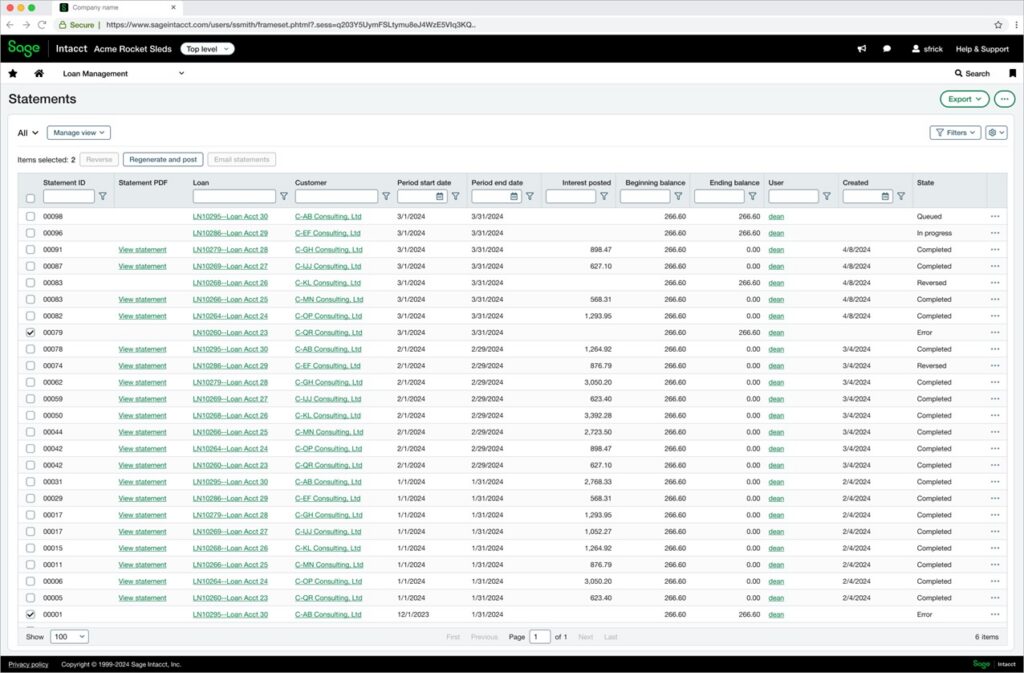
At the center of the announcement is the Sage Intacct Finance Intelligence Agent, a capability built on Sage’s financial AI models that is being rolled out in phases. The agent is designed to help finance teams retrieve insights, analyze performance, identify anomalies and progress tasks such as payment reminders, approvals and write offs from within existing workflows.
Instead of running separate analytics and then manually updating transactions, finance staff can interact with the system using natural language and have the agent prepare actions inside standard Intacct processes. Every recommendation includes a clear explanation of the underlying data, logic and assumptions so teams can interrogate how outputs are generated before final approval. That shifts day to day work from manual execution toward review and decision making.
All AI driven actions are logged, including what was recommended, what was approved and by whom, creating a complete audit trail for regulated environments where accuracy and traceability are critical. Sage positions this “glass box” approach as a differentiator in financial systems that require deterministic rules and explainable outputs rather than opaque model behavior.
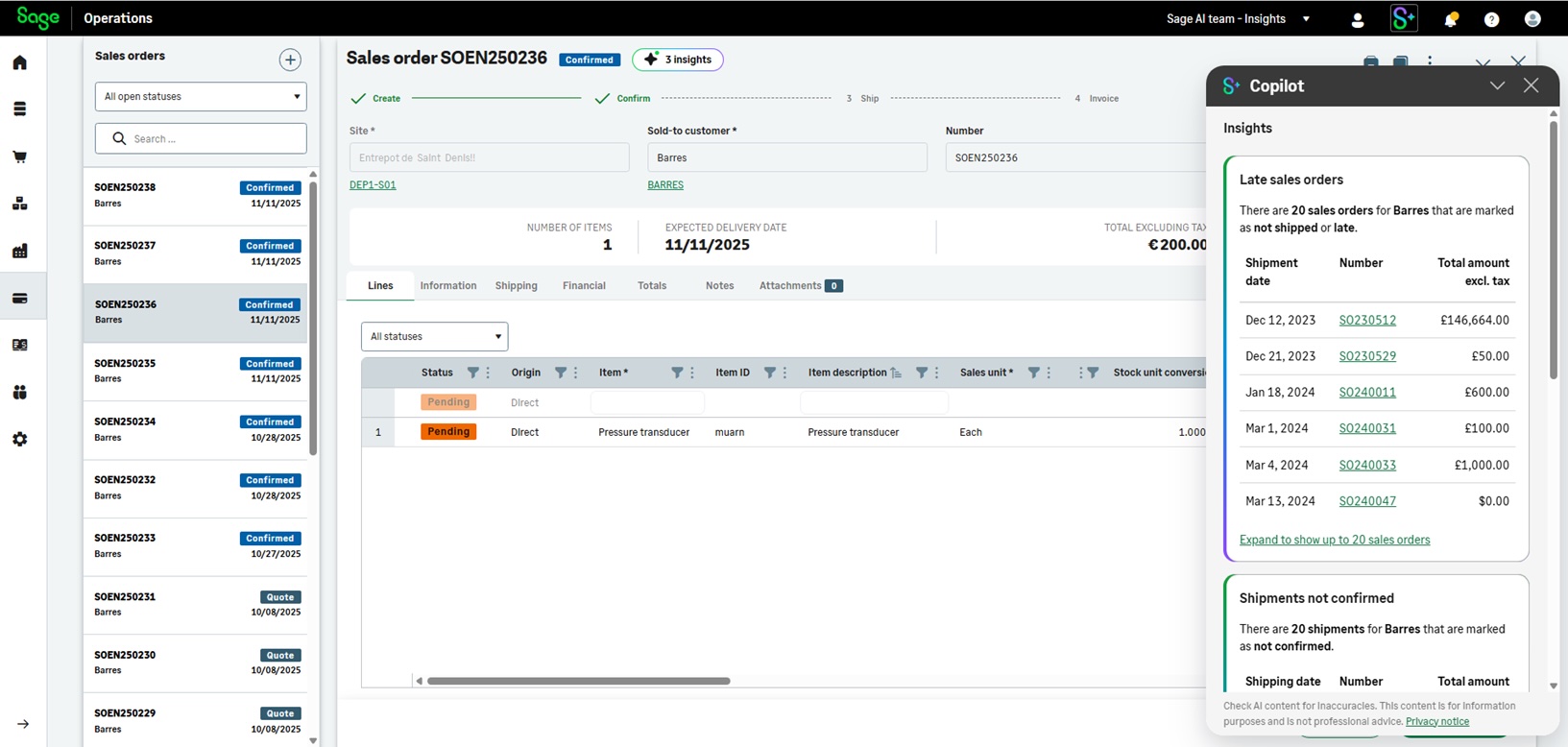
Beyond Intacct, Sage is introducing Sales and Operational Intelligence agents for Sage X3 that surface risks in sales performance and operational workflows. These agents are intended to identify issues earlier in areas such as order patterns or production metrics so operations leaders can respond before problems affect customers or financial results.
Analysis
What This Means for ERP Insiders
Governed AI platforms become ecosystem battlegrounds. The introduction of AI Gateway, Agent Builder and an Agent Marketplace shows that ERP aligned vendors will compete on how safely partners can embed domain expertise in agents that operate on production data.
Governed Platform Opens Door For Partner Built Agents
Sage is also expanding its AI platform with capabilities such as AI Gateway, Agent Builder tools and an Agent Marketplace, which are designed to let partners and developers create specialized agents that integrate directly with Sage data and workflows. The goal is to enable industry specific automation while enforcing standards for trust, security and interoperability across the ecosystem.
For HR and workforce management, Sage is extending AI into Sage HCM with an HCM agent focused on workforce management, labor allocation and payroll compliance. That agent is aimed at reducing administrative burden in tasks such as schedule validation, exception handling and compliance checks, while improving accuracy in pay and allocation flows.
Sage Copilot, the company’s natural language interface, is expanding across Sage Intacct, Sage X3, Sage Accounting, Sage Active, Sage Operations, Sage 50, Sage Individual and Sage for Accountants. Copilot helps users interact with financial data, automate document capture and reconciliation and surface insights and recommendations to support decision making, effectively acting as a front end for underlying agents and workflows.
For technology executives, the announcement reframes AI strategy from isolated pilots to orchestrated agents across finance, HR and operations. IDC forecasts that by 2030 about 45 percent of organizations will orchestrate AI agents across core business functions, reinforcing the need for platforms that combine automation with transparency and control. Sage’s emphasis on explainable outputs, logging and governed partner extensions reflects that requirement.
Analysis
What This Means for ERP Insiders
Explainability and auditability turn into hard requirements. Sage’s glass box approach, with logged actions and documented logic, underlines that future ERP linked AI will need transparent, auditable behavior to win trust in high stakes workflows like payments and payroll.