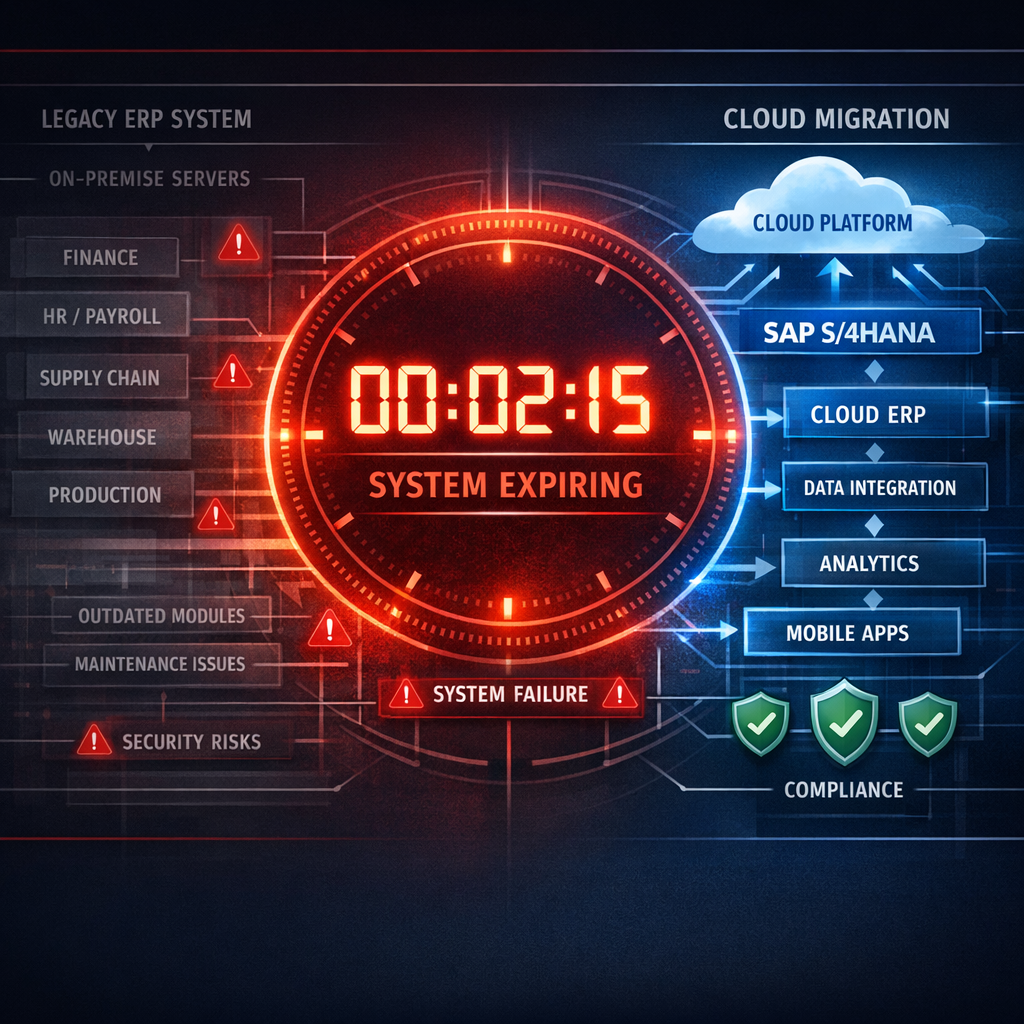
SAP ECC is not the only 2027 deadline putting pressure on ERP teams. SAP Solution Manager support is also winding down in 2027, forcing organizations to rethink the change-management, ITSM, monitoring, and audit-trail processes that have governed SAP production moves for years.
REALTECH, a longtime SAP technology specialist, recently explained in a blog what that means for the unglamorous but mission-critical work of SAP change management, and the gap it leaves behind is larger than many teams assume.
Solution Manager Creates a Second 2027 Risk
According to REALTECH, maintenance for SAP Solution Manager will end in 2027. Companies can, at best, extend maintenance to 2030, but only by paying an additional Extended Maintenance fee. The catch is what disappears with it. The discontinuation includes Change Request Management (ChaRM), IT Service Management, and Monitoring. For organizations that have built their entire SAP application lifecycle management strategy on Solution Manager, this means removing the platform that governs how changes move into production.
SAP’s designated successor to SAP Solutions Manager is SAP Cloud ALM, which is positioned as the preferred ALM solution for cloud-first companies, but, as REALTECH notes, it does not offer an adequate replacement for SolMan, as the range of functions is hardly congruent with its predecessor and ChaRM in particular is not included. Additionally, important functions are missing for companies still running on-premise landscapes, and SAP Cloud ALM does not replace all SolMan and ChaRM scenarios on a one-to-one basis. There is also no official SAP migration path for existing ChaRM data, which is the kind of detail that turns into an audit problem if ignored.
Change Management Becomes the Hardest Gap
ChaRM is where the pain concentrates because it is where compliance lives. For regulated SAP customers, ChaRM provides the audit-traceable record of who approved a change, what transport carried it, and when it reached production. Lose that without a replacement, and IT leaders do not just lose a feature; they lose the evidence trail auditors expect.
REALTECH closes that gap with SmartChange, which it describes as a quick-to-implement, audit-proof alternative that replaces ChaRM processes, automates SAP transports, integrates with Jira and ServiceNow, and supports audit-ready documentation across on-premise, hybrid, and cloud environments. REALTECH also notes a tool-supported approach for extracting and backing up existing ChaRM documents without data loss, and offers SmartITSM as a replacement for the Solution Manager ITSM module.
Get Our Free Weekly Newsletter
ALM Modernization Collides with ERP Migration
The SAP Solution Manager deadline does not exist in a vacuum. It collides with the same migration wave reshaping everything else in the SAP estate. SAPinsider’s ERP Migration and Transformation 2026 report found that although there has been rapid growth in the number of organizations that have deployed SAP S/4HANA over the past year, 36% are still in the process of implementing, evaluating, or building a business case for the transition. Four percent have kept this project on hold, while 5% currently have no plans for SAP S/4HANA.
Organizations are already managing the largest change program in their SAP history, and the tool many of them use to govern change is itself being retired on a parallel timeline. SAPinsider’s Technology Leaders’ Strategic Agenda for 2026 found cost pressure defining priorities, with leaders juggling optimization, migration, and cloud expansion at once. Thus, a forced Solution Manager replacement is exactly the kind of unplanned, parallel workstream that strains a budget already stretched thin.
Sponsor Industry‑Grade Research
What This Means for ERP Insiders
ERP teams need to put ALM on the migration risk register. Solution Manager end-of-life is not a side issue if ChaRM, ITSM, and monitoring are embedded in how changes move to production. CIOs and ERP leaders should inventory which SolMan functions they depend on, identify the highest-risk gaps, and assign ownership before ALM replacement becomes a late-stage migration scramble.
Cloud ALM needs a function-by-function reality check. SAP Cloud ALM may be the strategic successor, but it is not a one-for-one replacement for every Solution Manager and ChaRM scenario. ERP program teams should compare current change-management, retrofit, monitoring, documentation, and audit requirements against Cloud ALM capabilities before assuming the transition is covered.
Audit evidence must survive the tool change. For regulated ERP environments, the biggest risk is losing the traceable record of who approved a change, which transport carried it, and when it reached production. Any successor tool or process should preserve historical ChaRM data, support audit-ready documentation, and keep change evidence intact across on-premise, hybrid, and cloud landscapes.
Editor’s note: A version of this article was originally published by SAPinsider on 7/1.