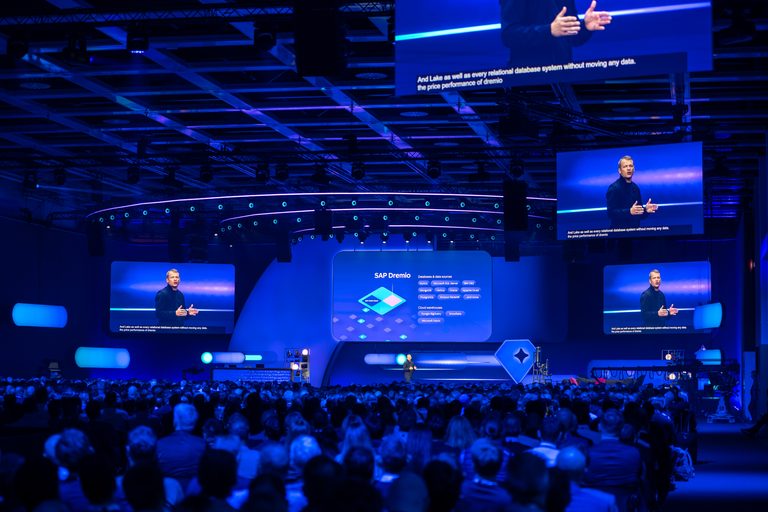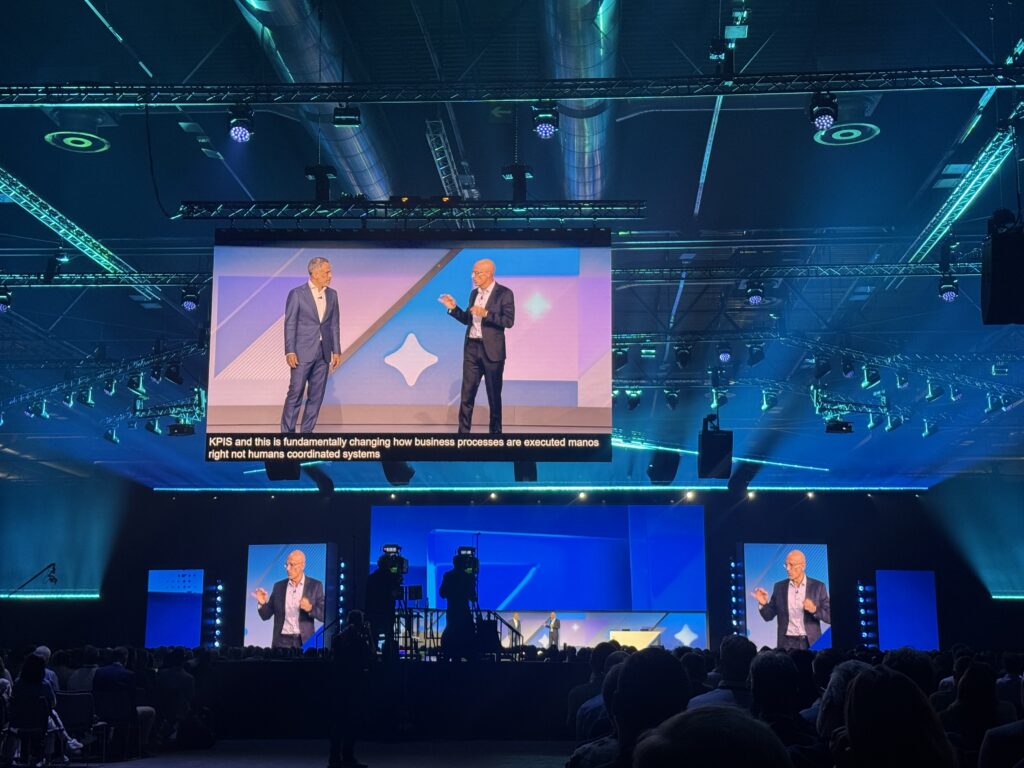

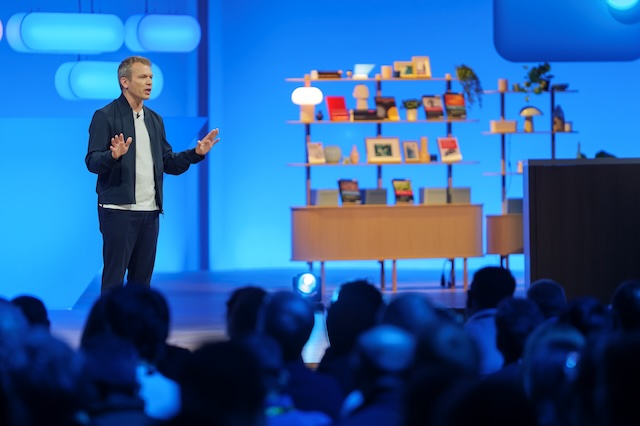
Thirty years after the first SAP TechEd, SAP used its 2026 developer conference to make a clear statement about the future of enterprise software. The focus of the keynote and the announcements coming from the event is that AI is no longer simply assisting work, it is increasingly becoming the mechanism through which work gets done. The theme running through the keynote, delivered by Philipp Herzig, CTO of SAP SE, was the transition from AI-powered assistance to autonomous execution across the enterprise.
At the center of the announcement portfolio was Joule Work, SAP’s new AI-native work environment designed to help users focus on business outcomes rather than navigating applications. Already running at approximately 200 customers in early adopter care, Joule Work brings together new enhancements to Joule Studio, SAP Business AI Platform, SAP Business Data Cloud, and a growing ecosystem of autonomous agents, to provide the most concrete step yet toward realizing SAP’s Autonomous Enterprise strategy. As Herzig said, “This year, we are showing how we are moving from AI learning your business to running it.”
Joule Work Becomes the Front Door to SAP
The headline announcement from TechEd was the expansion and general availability rollout of Joule Work, which SAP positions as a unified entry point across SAP and non-SAP environments. Rather than requiring users to understand individual applications and workflows, Joule Work allows them to express intent in natural language while agents coordinate the necessary actions behind the scenes.
In a pre-TechEd converstion with SAPinsider, Atul Deo, SVP and Global Head of AI Product Management and Partnerships at SAP, described the shift as moving away from application-centric work toward intent-centric execution. “Users had to understand their specific applications and user experiences,” Deo explained. “With Joule Work, the approach is that you focus mostly on what you want to get done. It’s all about your intent.”
SAP is making Joule Work available through browser, desktop, and mobile experiences, with support extending to voice interfaces and Apple CarPlay. During the conversation, Deo emphasized that SAP already has more than 70,000 employees actively using the platform internally, providing substantial real-world validation ahead of broader customer adoption.
One particularly notable innovation is Joule Spaces, demonstrated multiple times during Herzig’s keynote, which enables users to create dynamic, AI-generated workspaces tailored to specific business outcomes. Rather than static dashboards, these spaces automatically refresh with the latest business data and can be shared across teams and, once created, team members can be invited to view and participate.
From AI Assistants to Autonomous Execution
A recurring theme throughout the keynote was the maturation of SAP’s autonomous enterprise vision. Introduced at SAP Sapphire earlier in the year, SAP Connect was about highlighting customer adoption. SAP TechEd 2026 focused on demonstrating how the underlying infrastructure is now reaching production readiness. According to Deo, this is the point where “the rubber is meeting the road.”
To support that transition, SAP announced new agentic capabilities that allow Joule Work to plan, orchestrate, and execute complex multi-step business processes using open standards such as Agent2Agent (A2A) and the Model Context Protocol (MCP). The platform also introduces expanded interoperability that allows third-party agents to securely invoke SAP agents through a governed framework.
Supporting these capabilities are new governance investments, including the SAP Enterprise AI Gateway, enhanced controls in SAP AI Agent Hub, and an AI Governance Assistant designed to help organizations address requirements related to the EU AI Act.
Developers Gain a New AI-Native Environment
While business users are the audience for Joule Work, SAP TechEd has always been about developers. With that in mind, SAP positioned Joule Studio as its AI-first development environment, accessible directly through Joule Work. The platform combines no-code and pro-code development tools and supports more than 70 AI models. SAP also announced support for n8n workflows within Joule Studio and introduced new observability and administrative controls that improve visibility into agent behavior, model consumption, and costs.
During the pre-event conversation, Deo highlighted several new capabilities, including a Process Consulting Agent that analyzes process performance across SAP and non-SAP systems and recommends optimization actions. He also pointed to a Computer Use Agent capable of interacting with third-party applications even when APIs are unavailable, expanding automation opportunities across heterogeneous enterprise landscapes.
The message for developers was about accelerating the journey from business intent to deployed AI solutions while reducing the complexity traditionally associated with enterprise application development.
Data Context Becomes the Differentiator
Perhaps the strongest strategic message delivered during TechEd was that enterprise AI success will depend less on model selection and more on business context.
When asked why contextualized business data matters more than the underlying AI model, Deo was direct. “Context is more important today than anything else,” he said, arguing that foundation models are rapidly becoming commoditized while business understanding remains a key differentiator.
That belief is reflected in SAP’s continued expansion of SAP Business Data Cloud (BDC) and SAP Knowledge Graph. SAP announced that its knowledge graph will incorporate additional SAP and non-SAP data sources unique to each customer, allowing AI systems to reason using customer-specific business structures and processes.
SAP also introduced the SAP Business Data Cloud Ontology Manager, which provides an AI-native way of defining relationships across enterprise data assets. Additional announcements included expanded lakehouse capabilities through Dremio, broader integration with Databricks, and the addition of multidomain master data management through SAP Reltio. Together, these capabilities are designed to provide trusted, governed data foundations for autonomous business processes.
SAP-RPT Pushes Business AI Beyond the Enterprise
Another major TechEd announcement focused on SAP’s growing investment in tabular foundation models. At the event, SAP unveiled SAP-RPT-2.0, extending its tabular AI capabilities beyond classification and regression into anomaly detection, outlier identification, and advanced structured-data analysis. The company also announced SAP-RPT-TS, a specialized time-series forecasting model aimed at planning and forecasting use cases.
Perhaps the most attention-grabbing example came from outside the enterprise. SAP revealed that SAP-RPT is being deployed aboard the International Space Station (ISS) through a partnership with HPE, where the model will support mission-health monitoring and predictive analysis without requiring data transmission back to Earth by reconstructing missing data points from telemetry data from computer systems on the Columbus module of the ISS.
The announcement underscored SAP’s effort to demonstrate that enterprise-grade AI can operate reliably in some of the most demanding environments imaginable.
The Ecosystem’s Role in the Autonomous Enterprise
SAP also emphasized the importance of partners in expanding the reach of its AI platform. New integrations and extensions from partners including Intel, Docusign, Parloa, and Redwood were highlighted as examples of how ecosystem innovation can extend SAP’s autonomous capabilities.
Deo noted that while SAP will continue developing core first-party agents, partners will play an increasingly important role in delivering industry-specific expertise and specialized autonomous workflows.
What This Means for ERP Insiders
On the 30th anniversary of SAP TechEd, SAP’s message was less about introducing individual AI features, assistants, or agents, although during the keynote it was noted that there are now 40 assistants and 300 agents that have been released as part of the Autonomous Enterprise, the focus was about launching foundational features and reinforcing the fact that the building blocks of the Autonomous Enterprise are coming together. Joule Work provides the user experience, Joule Studio provides the development environment, SAP Business Data Cloud supplies trusted context, and SAP Business AI Platform delivers governance and orchestration.
For ERP Insiders, the significance of TechEd 2026 is not in the number of new agents or assistants announced, but that SAP sees autonomous business execution moving from vision to operational reality. As the company enters its fourth decade of TechEd, the conversation is no longer about whether AI can support enterprise processes. It is about how much of those processes AI can execute on behalf of the business.