As organizations modernize their ERP landscapes, the transition from legacy systems to SAP Cloud ERP Private (formerly RISE with SAP) introduces significant shifts in governance, support, and technical management.
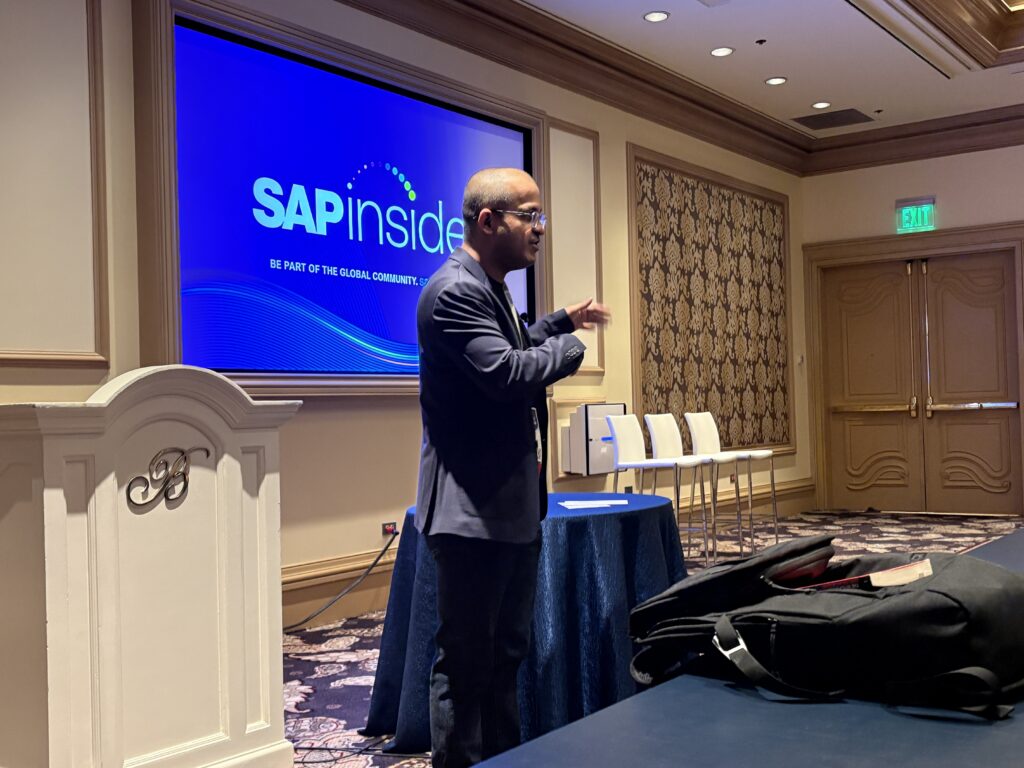
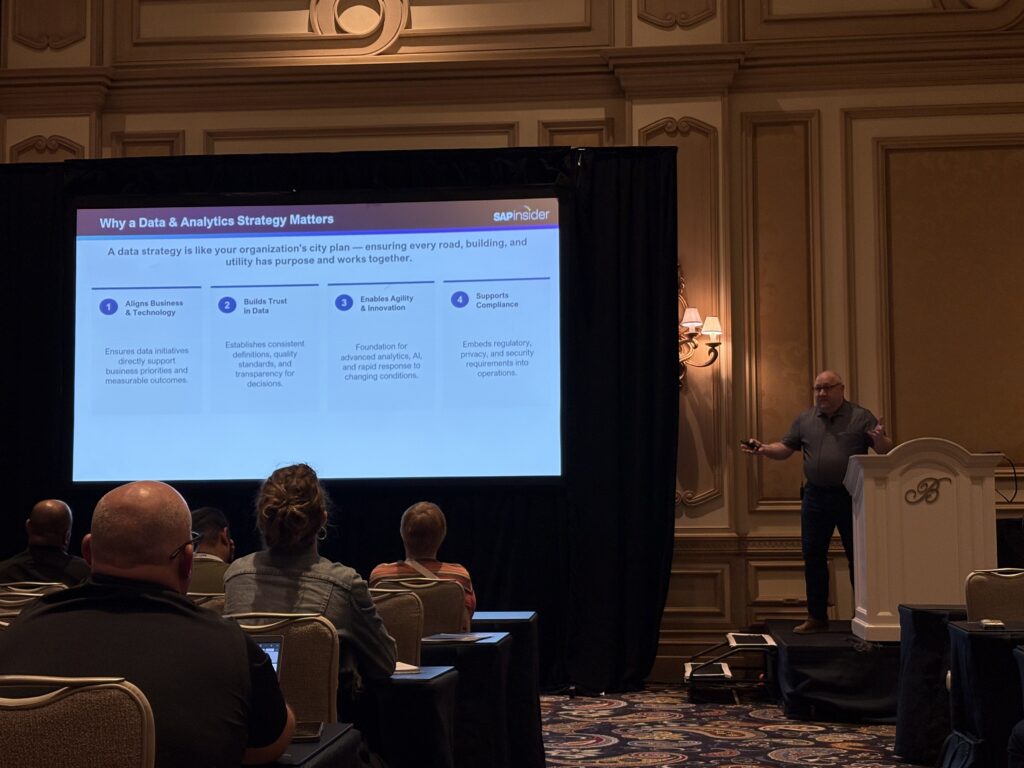
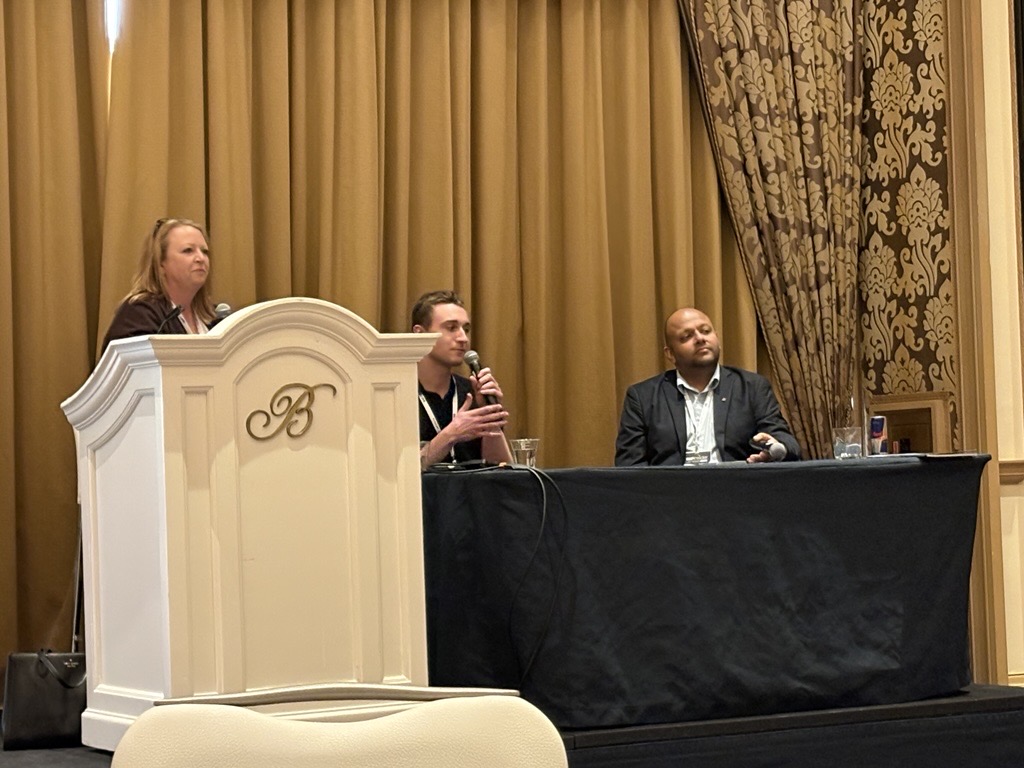
During a panel at SAPinsider Las Vegas, moderated by Kristen Scheffler, Vice President of Customer Engagement at SAP, two veteran leaders shared candid insights into their cloud journeys: Bryce Lightner, Enterprise Architect at Woodstream Corporation, and Srinivas (Srini) Balasubramanian, Senior Manager for ERP Platforms at Kyocera International.
The session reinforced a critical shift: in cloud ERP, success is no longer defined by implementation, but by operational discipline.
The “Why” Behind the Move: Beyond Simple Migration
For both companies, the move to the cloud was driven by a need for operational stability that their previous environments could not provide.
Woodstream underwent a greenfield implementation, migrating from a proprietary AS/400 DB2 instance. Lightner described the move as a “blessing in disguise,” as their previous legacy setup lacked a formal testing environment or a viable disaster recovery plan. Before the move, Woodstream had a “zero hour RPO” (Recovery Point Objective) with no technical means of actually achieving it; the multi-tiered cloud environment finally allowed them to properly plan, test, and roll out changes.
Kyocera, an SAP customer for 32 years, sought to eliminate the “game of pointing fingers”. Previously, they managed a complex landscape involving SAP, an AMS partner, and AWS. By consolidating under SAP Cloud ERP Private, they simplified their vendor relationships and replaced “shelfware” licenses with modern tools like SAP Datasphere and SAP Analytics Cloud (SAC). However, the operational reality post go-live was far more complex than the initial business case.
The Technical Debt Reality Check
One of the most sobering reflections from the panel was the impact of technical debt and undocumented customizations. Lightner revealed that Woodstream inherited a “messy” security landscape from their third-party system integrator, featuring over 4,000 custom roles for only 500 users.
Furthermore, both panelists emphasized the danger of “classic” ABAP customizations. Lightner noted that Woodstream lost significant “tribal knowledge” because legacy customizations were neither documented nor justified, leading to significantly higher ticket triage times today. To avoid this, they now recommend following the BTP (Business Technology Platform) Guidance Framework to ensure a “clean core”.
Analysis
What This Means for ERP Insiders
Operational complexity moves, it doesn’t disappear. Cloud introduces dependencies on service requests, SLAs, and vendor coordination. Without strong processes and visibility, these dependencies can slow response times and erode expected efficiency gains post‑implementation.
Operational Shifts: From “Basis Calls” to Service Requests
The transition to a managed cloud environment requires a fundamental mindset shift regarding IT operations. In the on-premise world, Balasubramanian noted he could simply “call his basis guy” and have a system refresh done by the next day. In the cloud, these activities require planned lead times.
Analysis
What This Means for ERP Insiders
Cloud ERP shifts control from ownership to orchestration. Enterprise IT teams no longer directly control infrastructure, but must coordinate across SAP, partners, and internal stakeholders. This requires new governance models to maintain accountability, speed, and operational alignment.
Key operational takeaways included:
Lead Time Awareness: A standard system refresh typically requires a lead time of three business days and must be scheduled within specific available windows provided by SAP.
Template Discipline: Woodstream found that a major breakthrough in their relationship with SAP Support was learning to use the correct service request templates. Failing to do so caused tickets to be passed between teams, leading to unnecessary delays.
The Power of the CDM: Both panelists stressed the importance of identifying and building a relationship with your Cloud Delivery Manager (CDM) or Cloud Engagement Manager immediately after signing the agreement to set expectations and establish escalation paths.
The Discovery of SAP Cloud ALM
A common theme was the late discovery of SAP Cloud ALM. Lightner admitted Woodstream was not even aware of the tool until after go-live. Once implemented, however, it became a critical diagnostic tool.
Cloud ALM helped Woodstream identify expired certificates that were silently breaking shipping integrations with UPS and FedEx. Most surprisingly, the tool uncovered open deliveries that had been sitting in the production system for nearly two years since go-live.
The Generational Gap in User Experience
The debate between the traditional SAP GUI and the modern Fiori interface remains a central challenge for adoption. Balasubramanian warned against putting “Fiori on the back burner,” noting that while legacy users rely on “muscle memory” and often resist change, the newer generation has different expectations.
He shared an anecdote of a new college graduate who, upon seeing the “green screen” GUI, asked, “What is this?” Srini emphasized that many new S/4HANA functionalities are now Fiori-exclusive, making it a mandatory focus for any long-term strategy.
Final “Mandatories” for Success
The panelists concluded with essential advice for those currently in the transformation process:
- Clean Your Data: Following the “garbage in, garbage out” mantra, Balasubramanian urged companies to manually vet and cleanse master data rather than performing a blind “lift and shift”.
- Utilize SAP S/4HANA Features: Do not use SAP S/4HANA as if it were a legacy ECC system; leverage CDS views and modern reporting rather than relying on outdated “Embedded BW” setups, which Balasubramanian described as a “disaster” for full data warehousing.
- Leverage CQCs: Utilize Continuous Quality Checks (CQCs), specifically the Go-Live Readiness Check and the Modification Justification Check, to identify risks and justify (or eliminate) customizations before they become permanent technical debt.
- Empower the Team: As Lightner concluded, it is important to “have fun with it”—recognizing that the IT team is leading a massive, high-impact transformation for the entire company.
Analysis
What This Means for ERP Insiders
Long-term value depends on discipline beyond go-live. Clean data, limited customization, and adoption of capabilities like SAP Fiori and SAP Cloud ALM determine long-term outcomes. Organizations that treat cloud ERP as an operating model, not a project, are more likely to sustain ROI.