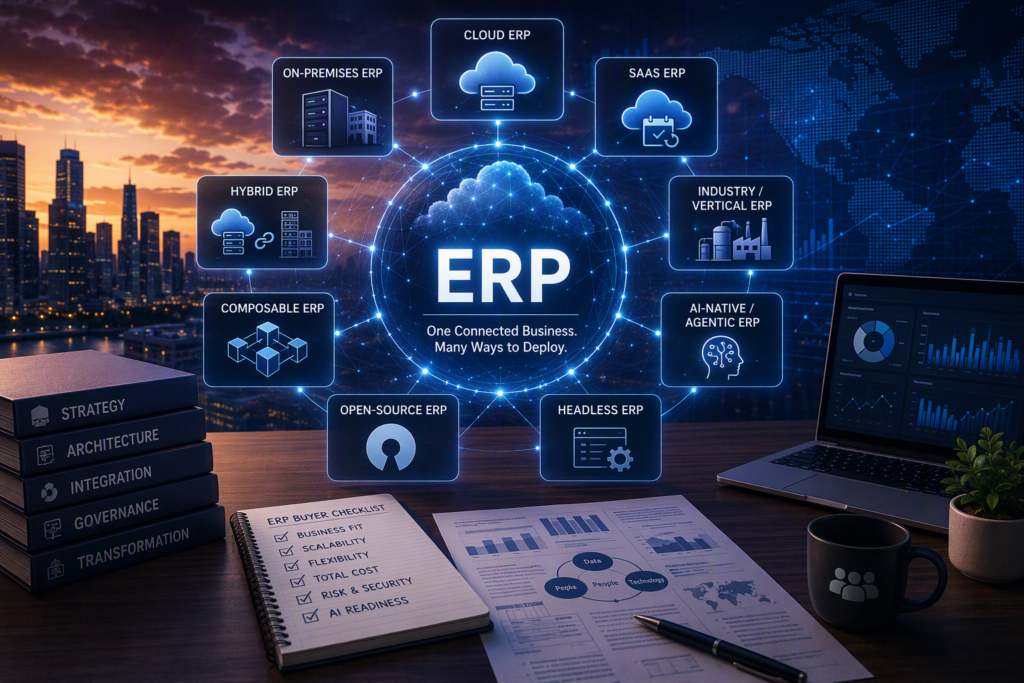
ERP Architecture

Composable ERP: Architectural Reality or Executive Imperative?
ERP strategy is transforming from long-cycle, capital-intensive systems to a more agile, composable architecture driven by the need for adaptability in response to dynamic market conditions, highlighting the importance of intentional modular evolution, governance frameworks and AI integration.
Liquidity as a Real-Time Operating System: Kyriba on the Future of Treasury
As CFOs face escalating challenges from interest rate fluctuations and FX shocks, they urgently need connected treasury systems that provide real-time liquidity insights by integrating multi-bank and multi-ERP data, enabling strategic decision-making through AI-driven recommendations.
Agentic AI Defined and How It Is Reshaping the Enterprise Architect’s Role
The rise of agentic AI in enterprise applications is transforming the role of architects from static designers to dynamic overseers, requiring new workflows and governance models as AI increasingly undertakes decision-making tasks historically handled by humans.
Coda
How Advanced Data Integration Bridges ERP Systems with Modern Analytics
ERP systems protect vital financial data essential for FP&A teams, but integration into modern analytics platforms like Databricks and Snowflake faces challenges due to a lack of connectors, the need for a unified data view across various systems, and the necessity for real-time data access, prompting the emergence of solutions like CData to streamline this integration while enhancing operational efficiency, data utility, and security.