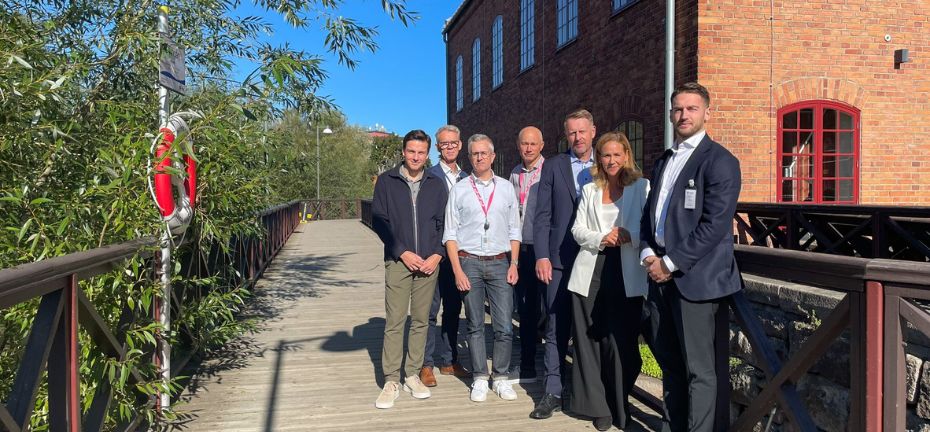
Tekniska verken, a Swedish energy and utilities group, has selected IFS Cloud to support its mission of delivering essential services. Tekniska verken, which serves households and businesses with essentials such as heat, energy, water, waste management, fiber and biogas, is embarking on a major digital transformation to unify operations and strengthen service delivery even further.
With IFS Cloud, the company is looking to replace several legacy systems with one single, connected and composable platform powered by industrial AI. The solution will give Tekniska verken a real-time view across its entire value chain. This will increase efficiency regarding planning, decision-making and coordination between business units.
By integrating ERP, EAM, FSM and AIP, IFS Cloud is designed to enable Tekniska verken to optimize maintenance, safeguard project planning and execution, improve asset reliability, and efficiently allocate field resources – connecting day-to-day operations with long-term investment strategy.
By adding IFS Copperleaf, Tekniska verken gains an AI-powered decision layer that prioritizes and balances energy investments across the complete portfolio of investments across networks and generation. This helps ensure every project advances according to business goals for long-term resilience, sustainability, and strategic value.
Conny Udd, CEO of Tekniska verken, said in a press release, “The energy sector is evolving rapidly, and we must ensure that we’re equipped to meet the future with the right tools. The new business system provides a shared foundation for planning, execution, and follow-up, helping us work in greater coordination. This marks an important step in further strengthening our service and achieving our long-term vision of offering the industry’s most competitive products and services.”
Implementing IFS Cloud supports Tekniska verken’s transformation into a process-oriented organization that combines operational excellence with environmental responsibility. The platform will unify core business functions with advanced asset and field service management.
What This Means for ERP Insiders
Legacy consolidation drives modern platform adoption. Tekniska verken’s move to replace fragmented legacy systems with IFS Cloud’s composable architecture signals a critical shift for enterprise architects. This consolidation validates the industry trend toward unified ecosystems where ERP, EAM and FSM converge. This eliminates data silos to enable real-time visibility and streamlined cross-functional coordination.
AI-driven decision layers redefine strategic asset management. The integration of IFS Copperleaf demonstrates that industrial AI is evolving from simple automation to high-level investment prioritization. For transformation leaders, this highlights the necessity of embedding AI-powered decisioning within operational platforms. Also, it ensures capital-intensive industries can balance immediate maintenance execution with long-term infrastructure resilience and sustainability.
Operational unification bridges execution and sustainability goals. This implementation illustrates that modern ERP success relies on transforming into a process-oriented organization rather than just upgrading software. By merging core finance and HR functions with field operations, vendors must deliver solutions that directly link daily service delivery to broader environmental responsibilities and competitive product strategies.