Cloud Platform and Technology

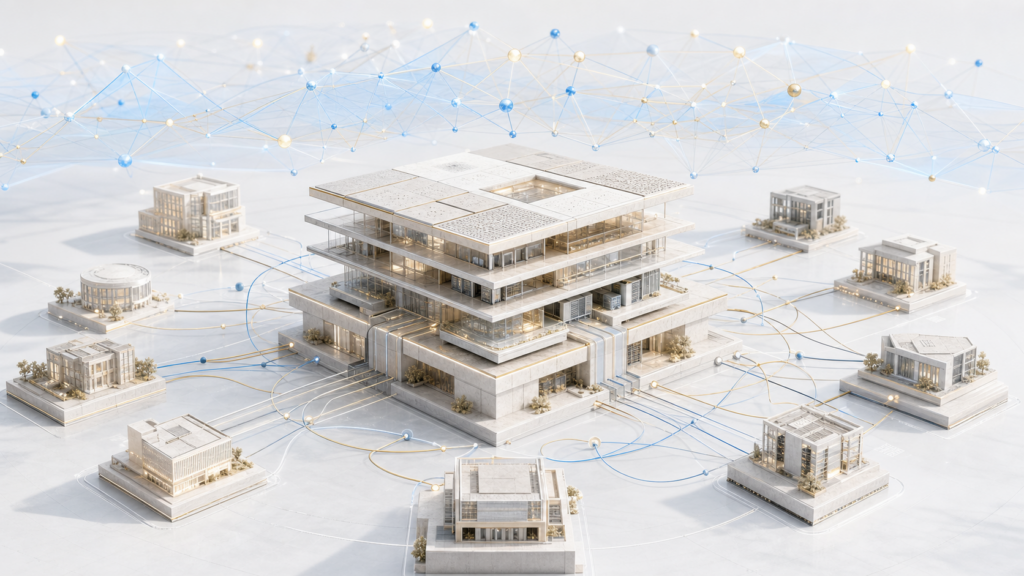
Enterprise Resource Planning (ERP) integrates smoothly with cloud platforms, representing a pragmatic evolution in technology. The collaboration between ERP and cloud technology offers practical advantages, including scalability, accessibility, and agility for businesses. This combination enables real-time collaboration, data analytics, and improved security. Embracing the cloud allows ERP systems to adapt dynamically to changing business needs. Cloud-based ERP solutions offer efficient resource utilization, cost-effectiveness, and swift deployment, contributing to operational efficiency. In the current landscape of digital transformation, the integration of ERP with cloud technology serves as a practical strategy, ensuring businesses remain adaptable, competitive, and technologically proficient.

HCM Industry Trend Review & 2026 Forecast
The 2026 report explores AI's impact on HR, highlighting key success metrics and a human-in-the-loop framework that empowers executives to drive transformation while ensuring workflow stability across teams.
The Responsible Path to Agentic AI for Enterprise Apps
The whitepaper offers CIOs and leaders a practical roadmap for deploying domain-specific agentic AI in HCM, SCM, and Finance, including governance guardrails, an adoption timeline, and measurable outcomes.
The Future of ERP Is Agentic Opkey
The article discusses the sustainability of manual enterprise management and highlights how agentic AI is transforming the enterprise lifecycle by autonomously managing key processes while emphasizing the importance of balancing automation with human oversight for successful implementation.
2026 State of Enterprise Testing & App Lifecycle
A majority of IT leaders are struggling with the challenges of managing cloud updates, high costs from manual testing, and operational demands, while showing a strong interest in adopting agentic AI to improve testing and app lifecycle management.
Solution Brief: Design Studio for Sls
Opkey's agentic AI streamlines the discovery and design phases of Oracle and Workday implementations, enabling SIs to reduce timelines by 50%, cut design efforts by 20-50%, and allow consultants to concentrate on high-value advisory tasks.
Platform Brief: Opkey for Workday
Opkey enhances Workday ecosystems with pre-built tests and custom agents, facilitating migrations, post-implementation support, and ongoing updates through tools like Training Agent and Testing Agent.
Platform Brief: Opkey for Oracle
Opkey provides a comprehensive suite of tools, including thousands of pre-built tests, to assist Oracle app users with migrations, updates, and ongoing management.
Glowing AI brain on a CPU chip surrounded by a digital circuit board, representing enterprise cloud and AI infrastructure
Your AI Roadmap Has a Cloud Problem: New NTT DATA Research Reveals Why Enterprise Cloud Maturity Is the Gating Factor for AI Success
Despite extensive investments in cloud migration, only 14% of enterprises have achieved the advanced cloud maturity necessary to support AI-driven innovations, posing significant strategic challenges as organizations grapple with legacy systems and the urgent need for integrated cloud and AI strategies.
SAP earnings results showing cloud revenue growth, current cloud backlog, and Business AI strategy
SAP Q1 Earnings Shows Cloud Strength, but Can the AI and Backlog Momentum Hold?
SAP delivered a Q1 earnings beat, but the more important story was beneath the headline numbers. The company showed strong cloud growth and expanding backlog, while also signaling likely deceleration ahead and a gradual shift toward Business AI as a consumption-based revenue model.
Shipping containers stacked at a logistics facility, representing supply chain operations in a SAP S/4HANA transformation context.
Clorox Shows What SAP S/4HANA Transformations Require Before 2027
Clorox’s $580M SAP S/4HANA transformation highlights how design, benchmarking, and execution decisions shape outcomes beyond go-live.
Construction ERP cloud adoption
Construction ERP Survey Shows Demand for Cloud, but the Gains Remain Uneven
Construction firms emphasize the need for modern ERP systems with real-time data, mobile access, and integration, yet adoption rates vary, as many still experience operational challenges and unclear cloud migration progress despite a majority already using cloud-based solutions.
AI in higher education
Drivestream Opens AiPEX University to Show Higher Education What Agentic AI Can Actually Change
Drivestream has launched AiPEX University, a new immersive experience center built with Oracle to help higher education leaders see how agentic AI could operate across enrollment, financial aid, academic planning, student engagement, HR, and finance.
Infor’s April Update Sharpens CloudSuite WFM for Frontline Reality
Infor's April 2026 Cumulative Update enhances CloudSuite Workforce Management with user-friendly improvements in scheduling and time and attendance functions, aiming to boost productivity and operational efficiency for supervisors and frontline managers.
Modern office buildings in Mumbai, where TCS is based.
What TCS and SAP Show About the Future of ERP Delivery
TCS and SAP show how ERP delivery is shifting toward integrated, partner-led models that combine workforce skills, system implementation, and ongoing operations.
Sovereign AI Gains Ground in Asia as Control, Compliance, Infrastructure Collide
Sovereign AI is gaining traction in Asia as governments, like India and Singapore, prioritize local control over AI infrastructure and data governance, prompting enterprises to adapt their systems and strategies to comply with varying regulations and infrastructure conditions across the region.
Automation, Cloud Redrawing ERP Market Boundaries
Enterprise resource planning is evolving into an intelligent, automated framework driven by cloud technology and AI, with projected software revenue reaching $157 billion by 2033, emphasizing the critical role of ERP in automating workflows and enhancing organizational responsiveness to disruptions.
ERP cloud lifecycle management dashboard showing integration complexity and AI-driven automation
Opkey Report Signals ‘Cloud Velocity Crisis’ as ERP Complexity, Costs, AI Expectations Collide
A new report from Opkey finds enterprise ERP teams struggling to keep pace with cloud release cycles, rising integration costs, and manual lifecycle processes, with agentic AI emerging as a key response.
Enterprise IT monitoring environment with multiple screens displaying system data, representing SAP security patching and authorization risk management.
SAP Security Patch Day April 2026: Critical Vulnerabilities, CVSS 9.9 SQL Injection, and Authorization Risks
SAP Security Patch Day April 2026 introduces a critical SQL injection vulnerability and high-severity authorization flaws across SAP BPC, BW, ERP, and S/4HANA. This analysis explains how these vulnerabilities affect enterprise risk and where exposure concentrates across SAP environments.
Frankfurt business district skyline representing enterprise finance systems, data infrastructure, and AI-driven collections workflows in Europe.
Zuora Collections Launches in Europe with Germany Data Center for In-Region Data and AI-Driven Workflows
Zuora has launched Collections in Europe with a new Germany data center, bringing AI-driven workflows and in-region data handling to finance teams managing cash collection and forecasting.
High-rise office buildings in La Défense business district in Paris, representing enterprise technology and infrastructure environments.
France Defines a New Model for Managing Technology Dependencies
France’s move to Linux is part of a broader program to reduce technology dependencies across government systems. The shift introduces a structured approach to dependency mapping that could influence how ERP environments are evaluated over time.
cloud costs
The Cloud Cost Squeeze Has Arrived: 88% of CFOs Report Rising Spend
Cloud costs are rising fast, and CFOs are stepping in. New research shows inefficiencies, AI-driven demand, and hyperscaler spending are reshaping enterprise cloud economics. For ERP leaders, cost optimization is now critical to funding innovation.
Oracle Database@AWS Reaches 12 Regions, Broadening Multicloud Database Footprint
Oracle Database@AWS has expanded to 12 regions across North America, Europe, and Asia Pacific, increasing deployment flexibility and high-availability support for enterprises seeking to migrate on-premises applications while addressing locality and regulatory requirements.
Hoshizaki Bets On IFS Cloud For Future AI Manufacturing Modernization
Hoshizaki is transitioning from customized legacy ERP systems to the standardized IFS Cloud platform to enhance manufacturing efficiency, support Industrial AI applications, and streamline operations across its production sites.
Solex Thermal Science: Flexibility Builds Productivity
Learn how manufacturer Solex Thermal Science, an Epicor customer since 2017, found that Epicor cloud solutions helped alleviate data silos by implementing one unified ERP system across different departments.
Clorox manufacturing team at Aberdeen, MD plant during SAP S/4HANA cutover, showing frontline operations and production environment.
What Happened During Clorox’s SAP S/4HANA Cutover—Insights from the CSCO
Clorox’s SAP S/4HANA cutover shows how ERP changes manufacturing and supply chain execution. From inventory timing effects to stabilization and workflow integration, the transformation reshapes how work moves across the network.
SAP automotive sales ERP
How SAP Is Powering the Global Shift in Automotive Sales From Argentina to Saudi Arabia 
Automotive sales companies are rethinking ERP as a platform for sales, operations, and customer engagement. Cloud ERP and AI are enabling real-time decision-making across dealer networks, inventory, and customer experience.
SAP Shifts to AI Consumption Pricing as Agents Threaten Saas Revenue Model
SAP is shifting from per-user and subscription-based pricing to a consumption-based model in response to the automation of workflows by AI agents, reflecting a significant transformation aimed at aligning costs with AI usage rather than user access.
Data center facility in Coleraine showing physical infrastructure and energy systems in a real-world environment.
How Data Center Location, ESG Regulations, and AI Infrastructure Are Reshaping Risk
Data center location is becoming a governance decision. As AI demand grows and ESG regulation expands, energy, water, and climate constraints are shaping ERP risk, cost, and performance in ways enterprises can no longer ignore.
Photo of a glass wing butterfly_Anthropic Project Glasswing
Anthropic Enlists Hyperscalers, Security Giants to Secure Critical Software Infrastructure With AI
Anthropic has launched Project Glasswing, enlisting hyperscalers and security giants to use AI to detect and fix vulnerabilities across critical software infrastructure.
Universities Accelerate ERP Transformations to Standardize Systems and Enable AI
Higher education institutions are rapidly modernizing their ERP systems, transitioning from heavily customized, fragmented infrastructures to standardized, integrated platforms that enhance operational efficiency and are better aligned with AI-driven capabilities, as exemplified by Central Michigan University’s move to a new system and UNLV’s expansion within an existing cloud platform.