Enterprise Architecture

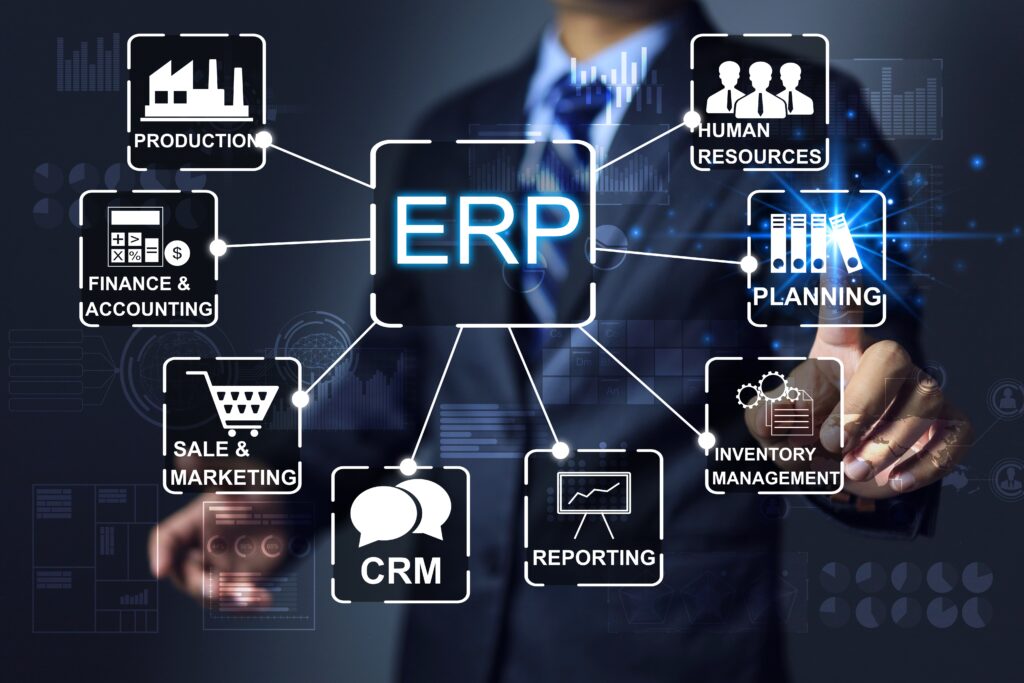
Enterprise Architects shoulder the responsibility of maintaining an organization’s IT networks and services, overseeing the enhancement and upgrading of enterprise services, software, and hardware. A pivotal aspect of their role involves mapping the alignment of business processes with the infrastructure and software utilized, ensuring a cohesive IT landscape. In this context, Enterprise Architects leverage Enterprise Resource Planning (ERP) systems to streamline and optimize business processes. This includes understanding the challenges faced by the organization, collecting relevant data, and utilizing ERP knowledge to identify effective solutions. Communication skills are crucial, as they articulate these solutions clearly across the organization, contributing not only to technical upkeep but also to strategic alignment and efficiency through ERP integration.

SAP logo displayed on a vertical banner outside an office building
SAP, AWS Embed Generative AI Directly Into SAP Consulting Work
SAP and AWS are embedding generative AI into SAP consulting work through SAP Joule for Consultants, integrating Anthropic Claude models via Amazon Bedrock to support delivery teams.
Business user interacting with AI-powered analytics on a laptop, illustrating enterprise AI and real-time data intelligence.
The New ERP Backbone: Databricks, Inetum, and the Shift to AI-Native ERP Architectures
ERP systems are entering an AI-augmented era, but many data foundations are not ready. This analysis examines why AI-native ERP architectures are emerging, how Databricks is becoming the intelligence layer, and how Inetum helps enterprises operationalize AI with trust, governance, and scale.
ERP in 2026: What Changes When Systems Start Acting on Our Behalf
As ERP transitions from a control-centric model to one empowered by agentic AI that autonomously executes decisions, CIOs must rethink governance, accountability, and operational readiness to address new risks and ensure effective outcomes.
Microsoft Q2 2026 Results Show AI, Cloud Growth Accelerating as Spending Surges
Microsoft reported strong Q2 FY2026 results with $81.3 billion in revenue, driven by significant growth in cloud and AI services, despite a sharp increase in capital expenditures to support infrastructure demands, reflecting the company's aggressive AI ambitions.
man at desk
AR Complexity Is Exposing ERP System Limits
A new study examines where ERP systems fall short in accounts receivable, highlighting how automation gaps, system fragmentation, and rising complexity affect cash-flow execution.
Microsoft Sharpens Dynamics 365 ERP for Asset-as-a-Service Rental Models
Microsoft is evolving ERP through Dynamics 365 to actively manage rental operations and address fragmentation in asset utilization by introducing rental-specific capabilities that enhance workflows, financial clarity, and customer experiences in a cloud-based, AI-extended ecosystem.
Public Sector ERP and AI Are Running on Two Clocks: Will That Gap Become a Strategic Risk?
Public sector technology strategy is conflicted by the slow, methodical pace of legacy system modernization, exemplified by the UK's Defence and Bank of England initiatives, contrasted with the rapid, high-profile push for AI and advanced computing, leading to a widening gap between ambition and execution.
MISO, Microsoft Partner on Azure-, AI-Powered Grid Platform to Streamline Planning Cycles
Microsoft and MISO are collaborating to develop an AI-driven data platform on Azure to enhance grid planning and operations, aiming to reduce analysis cycles from weeks to minutes and support a more resilient, data-informed energy system as demand for electrification and renewables grows.
Syspro Acquires Evocon to Strengthen Digital Shopfloor Capabilities, Operational Efficiency
Syspro has acquired Estonia-based Evocon to enhance its digital shop floor capabilities, providing manufacturers with improved real-time production monitoring and operational efficiency tools, enabling better decision-making and deeper integration.
Charted Opens London Office to Take ERP Native AP Automation Deeper into UK, EMEA
Charted is expanding its ERP-native accounts payable automation into London and the EMEA market, focusing on an end-to-end solution fully integrated within ERP systems, while leveraging a partner-led growth model and preparing for region-specific capabilities, including e-invoicing by 2026.
Retail AI Hits NRF 2026: SAP, Microsoft, Workday Turn Agentic Platforms into New Operating System for Stores and Commerce
Retail tech giants SAP, Microsoft, and Workday are leveraging AI to transform commerce operations into integrated, agent-driven systems at the NRF 2026 event, showcasing a shift from isolated applications to comprehensive retail infrastructure.
Brazil Probes Microsoft Cloud Licensing as UK Antitrust Findings Ripple into Latin America
Brazil's competition authority, CADE, has launched an antitrust investigation into Microsoft's cloud and software licensing practices, drawing from UK findings that suggest these practices may harm competition for local customers.
SAP
RISE with SAP: Cloud ERP Adoption Accelerates Ahead of 2027 Deadline—SAPinsider Benchmark Report
SAPinsider’s RISE with SAP 2025 benchmark shows cloud ERP adoption accelerating as the 2027 end-of-maintenance deadline approaches. New data reveals how generative AI, security readiness, and organizational size are shaping SAP S/4HANA Cloud Private migration decisions.
How the digital sovereignty agenda in the EU reshapes cybersecurity
The EU's push for digital sovereignty is transforming cybersecurity into a critical, integrated discipline, prompting businesses to adopt stringent regulations, lifecycle-embedded practices, and proactive risk management.
Year in Review: ERP AI Integration Went from Promise to Performance in 2025
End users in 2025 stopped seeing AI as a futuristic buzzword for enterprise planning. What had long been pitched as a future differentiator finally began delivering measurable operational benefit this year. According to ERP Today’s reporting on the manufacturing sector, 82% of companies increased...
How SAP Experience Centers Win Transformation
SAP's Experience Centers have transformed from showrooms to operational labs, exemplified by the fully functional S.Mart Store in Walldorf, illustrating the company's commitment to co-creating practical industry solutions with customers.
The New SAP Defense
As organizations transition to SAP S/4HANA and hybrid-cloud architectures, the necessity for a layered Zero Trust security approach, supported by Unified Risk Management and consolidated monitoring solutions, becomes critical to address the expanded attack surface.
ServiceNow’s Armis Acquisition Signals Strategic Enterprise IT Push
ServiceNow's $7.75 billion acquisition of Armis aims to enhance its cybersecurity offerings by merging its configuration management database with Armis' real-time asset discovery tools, thereby tripling its security revenue and addressing the integrated vulnerability management needs of enterprises.
Microsoft Research Maps 2026 AI Agenda: From Lab Assistants to Trusted Agents
Microsoft Research forecasts 2026 as a pivotal year where AI evolves into collaborative 'digital coworkers' across sectors, emphasizing security, agentic systems, and quantum advancements that align with human-centered goals and redefine enterprise resource planning.
Alphabet’s Intersect Buy Tightens Link Between AI Data Centers and Clean Energy Infrastructure
Alphabet is acquiring Intersect for $4.75 billion to enhance its data center and energy infrastructure capabilities as part of its AI strategy, while Intersect will operate independently and collaborate closely with Google on new facilities.
Epic’s Healthcare-Native ERP, AI Gambit: Disruption or Long Game Against Major Players?
Epic's development of a healthcare-native ERP aims to integrate seamlessly with its EHR and AI features, potentially disrupting the market by consolidating operational functions while forcing health systems to reflect on their existing application frameworks, though full capabilities are not expected until 2027.
IBM Advances Generative, Agentic AI Deeper into SAP Operations with ICAMS
IBM announced its Application Management Suite for SAP (ICAMS), designed to enhance SAP transformation through generative and agentic AI, thereby streamlining management processes and improving operational efficiency across SAP environments amidst the complex transition to S/4HANA.
Rimini Street Pushes Agentic AI into ERP Without Forcing Upgrades
Rimini Street's launch of the Rimini Agentic UX, an AI-driven layer for existing ERP systems, aims to enhance productivity and process automation without the need for costly upgrades as strategic third-party support.
IFS appoints Matt Breslin as President, North America to drive Industrial AI growth
Dixstone Deploys IFS Cloud to Unify Offshore Operations Across 10 Countries
Dixstone, an offshore energy services provider, has chosen IFS Cloud to enhance its operations in 10 countries amidst the growing trend toward cloud-based ERP solutions in the construction and engineering market.
Anthropic Set to Donate MCP to New Linux Foundation Agentic AI Foundation
The Model Context Protocol (MCP) donation to the Agentic AI Foundation, under the Linux Foundation, aims to ensure its neutral governance and collaborative development within a multi-vendor environment.
CGI Wins Texas DIR Cooperative Contract for Government SaaS ERP and Case Management
CGI has secured a Cooperative Contract with the Texas Department of Information Resources to provide statewide access to its government-centric SaaS solutions, CGI Advantage and CGI Transcend, enhancing procurement efficiency and adoption of modern ERP and case management systems across public-sector organizations in Texas.
Agentic AI Defined and How It Is Reshaping the Enterprise Architect’s Role
The rise of agentic AI in enterprise applications is transforming the role of architects from static designers to dynamic overseers, requiring new workflows and governance models as AI increasingly undertakes decision-making tasks historically handled by humans.