Enterprise Architecture

Enterprise Architects shoulder the responsibility of maintaining an organization’s IT networks and services, overseeing the enhancement and upgrading of enterprise services, software, and hardware. A pivotal aspect of their role involves mapping the alignment of business processes with the infrastructure and software utilized, ensuring a cohesive IT landscape. In this context, Enterprise Architects leverage Enterprise Resource Planning (ERP) systems to streamline and optimize business processes. This includes understanding the challenges faced by the organization, collecting relevant data, and utilizing ERP knowledge to identify effective solutions. Communication skills are crucial, as they articulate these solutions clearly across the organization, contributing not only to technical upkeep but also to strategic alignment and efficiency through ERP integration.

Abu Dhabi skyline with modern high-rise buildings along the waterfront
UAE Approves SAP for e-Invoicing, Expanding ERP’s Role in Compliance Architecture
The UAE has pre-approved SAP as an e-invoicing service provider, becoming the first ERP vendor in the framework. The decision places ERP systems within compliance architecture ahead of the 2027 mandate.
Abstract geometric data structure representing a unified ERP data architecture across connected systems
SAP Business Data Cloud Explained: A New Model for ERP Data and Analytics
SAP Business Data Cloud reflects a shift in ERP data architecture, introducing a unified, governed data layer that changes how data is structured, managed, and used across systems.
Abstract digital grid representing SAP security architecture, benchmarking, and layered control environments.
SAP Security Investment Still Misses Where Risk Is Highest, Benchmark Data Shows
CRIS benchmark data reveals SAP security maturity is moderate overall but uneven, with persistent gaps in access, data, and governance controls where business risk is concentrated.
Maersk Shipping Containers on trucks_SAP on Azure cost optimization
Maersk Uses SAP on Azure to Cut Costs and Enable AI-Driven Logistics
Maersk’s move to SAP on Azure highlights how cloud ERP modernization can reduce costs, improve operational control, and enable AI-driven decision-making at scale.
SAPinsider benchmark report March 2026 cover showing digital data flows representing ERP and AI priorities under cost pressure.
Cost Pressures Reshape ERP and AI Priorities in 2026, SAPinsider Benchmark Finds
Cost pressure is redefining how organizations approach ERP and AI in 2026. SAPinsider’s latest benchmark shows S/4HANA transformation, platform investment, and operational efficiency shaping technology decisions. The findings highlight a shift toward execution across overlapping priorities.
Professional services team using AI automation dashboard for project delivery and PSA workflows.
Rocketlane Launches Nitro to Automate Professional Services Delivery
Rocketlane has launched Nitro, an AI execution layer embedded within its PSA platform to automate repeatable delivery tasks. The platform extends AI from planning and reporting into execution inside live projects. This approach aims to improve consistency and predictability across professional services delivery.
Deltek Expands AI-Driven ERP and PSA Positioning with IDC MarketScape Recognition
Deltek is establishing itself as a specialized AI platform for project-based industries, focusing on lifecycle orchestration rather than standalone ERP functionalities, as validated by IDC MarketScape, which underscores its strength in integrating AI across project workflows to enhance efficiency and compliance.
M&A
AttivoERP Expands Advisory Capabilities with Acuity Acquisition as ERP Services Shift Upstream
AttivoERP's acquisition of Acuity Consulting Group marks its shift from implementation to higher-value advisory services, responding to midmarket demand for comprehensive ERP guidance and a broader evolution in the industry toward integration of advisory capabilities, vendor neutrality, and full-lifecycle transformation.
Lift-and-Shift ERP Strategies NTT DATA and Microsoft
Demystifying SAP Business Suite and Cloud ERP with SAP Transformation Leader Anurag Barua
As SAP customers navigate the challenges of transformation deadlines, increasing cloud options, and rapid AI advancements, Anurag Barua emphasizes a structured approach to modernize with clarity amidst complexity, presenting vital insights at SAPinsider 2026 on utilizing RISE and GROW strategies for successful migration to SAP Cloud ERP.
Levi’s ERP Overhaul Hits 60% as Retailer Positions for AI-Driven Orchestration
Levi Strauss & Co. is advancing its digital transformation with a 60% complete global ERP modernization aimed at enhancing AI-driven orchestration and data visibility, as the company shifts towards direct-to-consumer sales expected to represent 55% of its growing revenue, while simultaneously upgrading its supply chain and e-commerce infrastructure.
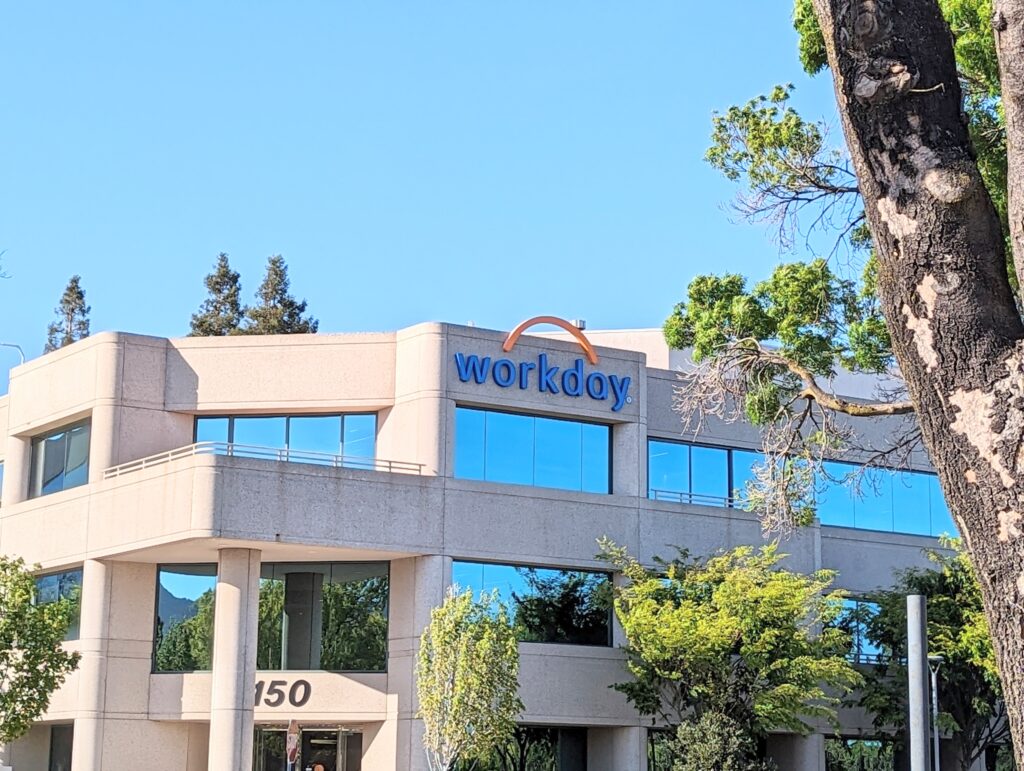
image of Workday building | Interview with Jim Stratton
Enterprise Apps as Systems of Action: Workday Pushing AI into Execution with Sana Launch
Workday has launched Sana, a unified AI interface that integrates directly into its HR and finance platform, enabling users to not only analyze but also execute tasks within governed workflows, thereby redefining enterprise AI adoption by embedding it in critical business processes.
Oracle Launches Fusion Agentic Applications and Expands AI Agent Studio to Operationalize Enterprise Workflows
Oracle's launch of Fusion Agentic Applications marks a significant evolution in ERP, embedding AI agents directly within its cloud applications to facilitate outcome-driven execution and seamless integration with existing business processes.
‘The Critical Gap Isn’t Technical — It’s Architectural Judgment:’ Sanjay Vijay Mhaskey
Composable ERP, often discussed yet rarely implemented strategically, requires organizations to demonstrate architectural discipline and governance readiness through established standards, intentional modernization practices and proactive management.
SAP Cloud ERP Private
SAPinsider Las Vegas: SAP Cloud ERP Private Lessons from Woodstream and Kyocera
At SAPinsider Las Vegas, Woodstream and Kyocera shared real-world lessons on SAP Cloud ERP Private, highlighting governance, service management, and post–go-live operational challenges.
Composable ERP: Architectural Reality or Executive Imperative?
ERP strategy is transforming from long-cycle, capital-intensive systems to a more agile, composable architecture driven by the need for adaptability in response to dynamic market conditions, highlighting the importance of intentional modular evolution, governance frameworks and AI integration.
CIOs attend SAPinsider Las Vegas 2026 session on AI adoption and SAP strategy
SAP CIOs Say AI Adoption Remains Early Despite Growing Attention
CIOs report that AI execution in ERP environments remains limited, with organizations prioritizing efficiency, cost control, and data readiness over large-scale AI deployment.
CIO forum discussion at SAPinsider Las Vegas 2026 at the Bellagio conference venue.
CIO Forum at SAPinsider Las Vegas 2026 Opens With Focus on Cost, Alignment, and Execution
CIOs at SAPinsider Las Vegas 2026 emphasized cost pressure, AI adoption, and business alignment as key forces shaping SAP strategy and enterprise technology decisions.
Real-Time Requirements for Accurate Tax Calculations
E-invoicing is often misidentified as the sole challenge of indirect tax compliance, whereas it is merely a symptom of a broader need for enterprises to develop resilient tax architectures capable of adapting to emerging regulatory demands and continuous transaction controls.
Diagram representing a structured ERP delivery framework with interconnected processes and system components.
Unit4 Makes Success4U Default Delivery Model for ERP Deployments
Unit4 is making its Success4U framework the default delivery model for ERPx and existing ERP deployments. The model packages implementation services, advisory guidance, and outcome-based service packages into a single subscription designed to simplify ERP adoption and optimization.
Abu Dhabi skyline representing the UAE as the country prepares to implement its national e-invoicing mandate for businesses by 2027.
UAE E-Invoicing Mandate: What ERP and Finance Teams Need to Know Before 2027
The UAE e-invoicing mandate will require businesses to generate structured invoice data and report transactions through accredited service providers by 2027. The shift moves invoice compliance into ERP systems, where billing data, validation workflows, and compliance architectures determine whether invoices pass regulatory checks.
European Economic and Social Committee building in Brussels representing EU cloud sovereignty and data governance policy.
‘Sovereignty Washing’: Why Cloud Sovereignty Claims Don’t Always Match Reality
As concerns about data sovereignty grow across Europe, many cloud providers now promote “sovereign cloud” solutions. But legal jurisdiction, technology dependencies, and supply-chain relationships can complicate these claims. This article explores the emerging phenomenon of sovereignty washing and explains how organizations can evaluate whether cloud services truly meet sovereignty requirements.
Zurich Switzerland street scene representing Microsoft Azure cloud infrastructure region supporting sovereign data and AI deployments.
SAP Business Data Cloud Expands to Azure Switzerland with EU Access Controls
SAP is preparing to launch its Business Data Cloud platform on Microsoft Azure infrastructure in Switzerland in the coming weeks, introducing a deployment designed to meet European data residency and governance requirements. The rollout includes “EU Access” availability, meaning data...
Johor Bahru skyline and transport infrastructure near Singapore, a fast-growing hub for hyperscale data center development in Southeast Asia.
AI Is Redrawing Southeast Asia’s Data Center Map
AI infrastructure investment is rapidly reshaping Southeast Asia’s data center geography. As hyperscale providers expand across Singapore, Malaysia, Indonesia, and emerging markets, the region is evolving into a distributed infrastructure network that will increasingly influence cloud availability, AI compute capacity, and enterprise ERP deployments.
CData logo representing MCP performance optimization and managed AI connectivity platform.
Optimizing MCP for Production: 10 Proven Performance Techniques
Model Context Protocol (MCP) is becoming production infrastructure for AI agents. This article outlines 10 proven performance optimization techniques to improve latency, throughput, and scalability while positioning managed MCP platforms as a foundation for reliable enterprise AI.
Pathlock logo representing SAP threat detection integration with Microsoft Sentinel SIEM architecture.
Pathlock Extends SAP Threat Detection into Microsoft Sentinel’s SIEM Architecture
Pathlock has extended its SAP Threat Detection capability into Microsoft Sentinel’s SIEM architecture, bringing enriched SAP security telemetry into centralized SOC workflows across hybrid SAP environments.
Nvidia logo displayed against stock market chart background symbolizing AI infrastructure growth and earnings performance.
Nvidia Earnings Signal Expanding AI Infrastructure—and New ERP Risk Dependencies
Nvidia’s FY26 earnings confirm accelerating AI infrastructure investment. For ERP leaders, the real story lies in emerging dependencies across hyperscaler leverage, security posture, and enterprise data governance.
OpenAI Expands Enterprise AI Push with Consulting Alliances and $50B Amazon Deal
OpenAI is aggressively partnering with major consulting firms and Amazon to promote its Frontier AI platform, positioning it as a direct competitor to traditional enterprise software vendors by enabling organizations to efficiently deploy and manage AI agents across various business applications.
red hard hat_TRIL clean core strategy
How TRIL is Using Clean Core to Power AI and Achieve Carbon Neutrality Goals
Tata Realty & Infrastructure is modernizing its SAP core to scale AI, digital twins and sustainability, targeting net carbon neutrality by 2045.
Bharat Mandapam New Delhi lit at night during India AI Impact Summit highlighting AI infrastructure and enterprise platform strategy discussions.
At the India AI Impact Summit, SAP Makes the Case for Platform-Centric AI
As infrastructure pledges dominated the India AI Impact Summit, SAP focused on platform-centric AI, positioning Business AI inside enterprise systems rather than competing in the compute investment cycle.
Security analyst monitoring code and identity access controls across multiple screens following accelerated AI-driven breach activity
AI Compressing Breach Timelines as Identity Weaknesses Drive 90% of Incidents
Unit 42’s 2026 Global Incident Response Report finds attackers reaching data exfiltration in as little as 72 minutes, with identity weaknesses involved in nearly 90% of incidents. The findings highlight AI-driven acceleration, over-permissioned identities and multi-surface exposure across modern enterprise environments.