ERP Strategy and Planning

IFS CEO and CPO Offer Candid Views on Industrial AI and Speed-to-Value as the Differentiator in Enterprise Tech
IFS is shifting towards rapid AI adoption with its Nexus Black initiative and aims to double its valuation every three years, focusing on agentic AI tailored for core industries while maintaining a commitment to practical, scalable solutions despite the challenges of industrial AI.
From Productivity to Precision: IFS Unveils Its Industrial AI Reality
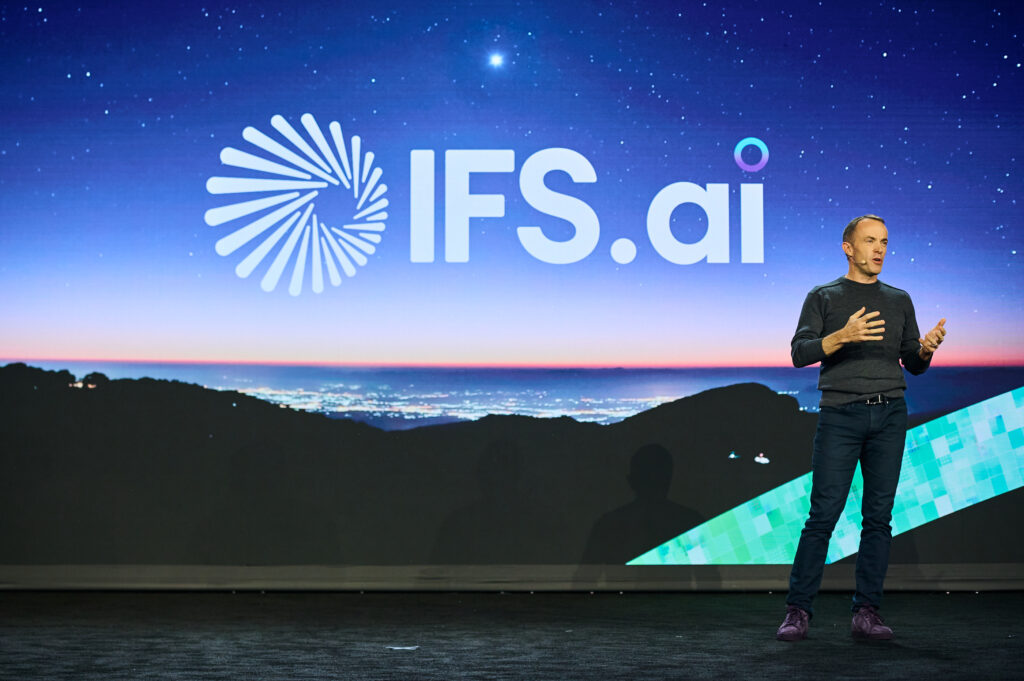
At IFS Connect UKI 2025, IFS executives Christian Pedersen and James Greaves emphasized that AI has become the core foundation of enterprise software, showcasing IFS.ai's capabilities in providing embedded, real-time intelligence for industrial businesses through over 200 integrated AI services that enhance operations and decision-making without human intervention.
IFS Valuation Soars Past €15 B on Major Investment & Strong Growth
From Birmingham, UK: IFS Bets Big on Industrial AI—and Invites Its Customers to Lead the Charge
At IFS Connect UKI 2025, CEO Mark Moffat emphasized IFS's urgent ambition to lead industrial enterprise software by 2029 through AI integration, focused R&D investments, and real-world operational value, while urging customers to embrace AI as a mindset for optimizing asset-heavy industries.
Assessing ERP Software TCO
A comprehensive guide for small and midsized businesses on calculating the total cost of ownership (TCO) for ERP systems. It highlights the challenges of determining TCO due to varied pricing models, infrastructure requirements, and implementation costs. Traditional ERP systems are licensed perpetually, while modern cloud ERP applications are hosted online and licensed annually, offering lower TCO by eliminating costly infrastructure and system administration. The document emphasizes the importance of understanding software pricing, implementation costs, infrastructure costs, and internal expenses. It also discusses industry-specific considerations and provides cost comparisons between perpetual on-premises and cloud SaaS deployments.
Why SMBs Should Prioritize ERP Systems in Their Technology Roadmaps
Small and medium-sized businesses are increasingly adopting Enterprise Resource Planning (ERP) systems to streamline operations, improve efficiency, enable data-driven decision-making, and support growth while overcoming challenges associated with managing limited resources and complex processes.
What Is ERP (Enterprise Resource Planning) And How Does It Work?
This article discusses the significance of enterprise resource planning (ERP) software for businesses, emphasizing its role in integrating and streamlining various departments to enhance efficiency, data visibility, and decision-making amid common organizational challenges.
Power Your Business with Aptean
The video highlights industry-specific software solutions that enhance business operations and growth across various sectors, featuring AI capabilities for precision and adaptability.
Mastering NetSuite ARM
First Water Finance Accelerates FP&A Data Transformation with CData Sync and Microsoft Fabric
First Water Finance leverages CData Sync to streamline financial planning and analysis (FP&A) processes for their clients, dramatically reducing data integration time and friction, building a central source of truth for analytics, and enabling incremental performance visibility through Microsoft Fabric's OneLake.
Global Pharma Biz Streamlines Global Data Operations
Recordati streamlined global data operations with CData Sync, enabling automated data integration across SAP, Salesforce, and Microsoft, driving 31% annual revenue growth.
CData Connectivity Solutions for the Oracle Ecosystem
An overview of how CData Software facilitates connectivity within the Oracle ecosystem
EY Digital Marketplace
Rootstock Unveils Modern ERP for Manufacturers with Spring ’25 Release
Rootstock Software's Spring ’25 Release enhances user experience with a comprehensive UX uplift, introduces AI-powered features for improved operational efficiency, and strengthens financial capabilities, providing faster decision-making and streamlined processes across enterprises.
Streamlining Critical Upgrades: How ViaSat Lowered Risk and Raised Quality with Intelligent Testing
ViaSat's strategic use of Original Software's user-friendly testing platform for their Oracle EBS R12 upgrade significantly reduced risks, improved audit readiness, and enhanced software quality by enabling comprehensive documentation and automation, positioning the company for future efficiency gains.
Continuous ERP Optimization Techniques
ERP optimization is a transformative, ongoing process that refines and enhances ERP systems to align with evolving business needs, unlock hidden efficiencies, and empower decision-makers, ensuring operational agility and sustained growth.
Case in Point: Platforms over Points for ERP Lifecycle Optimization
Companies increasingly rely on both point-based and platform solutions for their ERP systems, with platform solutions being more effective in addressing multiple issues across the SaaS ecosystem while avoiding the complications and costs associated with a 'SaaS mess.'
Achieve Seamless ERP Operations
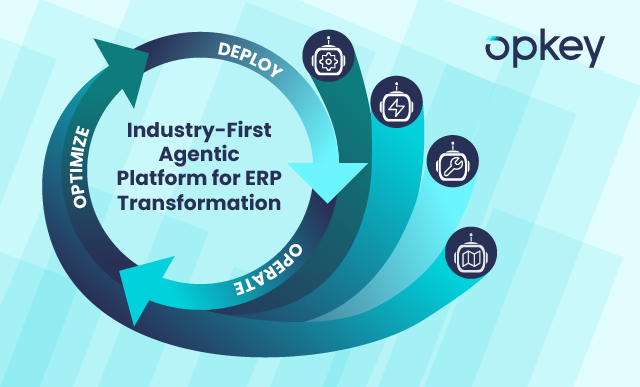
The Opkey platform streamlines the management of complex ERP systems by automating routine updates and patch releases, thereby minimizing downtime and ensuring ongoing stability in critical business functions.
CRM and ERP: Understanding the Differences and Choosing the Right Solution
By 2029, the CRM software market is projected to reach $145.60 billion and the ERP software market $65.29 billion, as CRM focuses on enhancing customer relationships while ERP integrates business operations for improved efficiency and growth.
Want to ace your ERP transformation? Start by thinking like an intelligent buyer
In the critical Phase 0 of ERP selection, the role of the intelligent buyer as a strategist and risk manager is essential for defining objectives, mapping costs, assessing vendors, and planning for risks to ensure a successful ERP implementation that aligns with business goals.
Tech Transformation 2025
The 2025 Tech Transformation Playbook: Lessons from Leading CIOs
In a panel discussion featuring IT leaders, key trends highlighted include business process automation as a priority for 2024, the widespread yet uneven adoption of SAP S/4HANA, the ongoing challenges of AI integration, and the critical importance of data management for successful transformations, underscoring the need for bold organizational changes and a cultural shift towards digital and data-driven methodologies.
A close up of two laptops with someone's hands tapping away at one laptop | Spinnaker Support
RISE to Innovation Powered by a Zero Cost Move
NTT DATA Business Solutions introduces a Zero Cost Move for upgrading to RISE with SAP, enabling businesses to redirect resources towards transformative services that provide immediate and strategic benefits.
Engineering Trust in the Heart of AI
Insights from PWC’s UK Head of AI Public Policy and Ethics.
Implementing Cloud ERP: Codestone’s Six-Phase Approach
Unit4 Accelerates Cloud Innovation and Expands Global Reach Under New Leadership
Unit4 is enhancing its enterprise cloud solutions for people-centric organizations through strategic leadership appointments and successful cloud migrations across various sectors, while also emphasizing tailored support models and a commitment to diversity and professional development.
The unifying factor: How Asteelflash could “act globally and think locally” with QAD
Asteelflash, a European electronics manufacturing services provider, enhanced its global operations and customer experience by transitioning to QAD Cloud, utilizing a unified ERP platform to support rapid growth and efficient site rollouts amid industry disruptions.
QAD appoints Sanjay Brahmawar as CEO
Sanjay Brahmawar will become QAD's new CEO on March 17, succeeding Anton Chilton, with a focus on driving growth through product innovation and customer success, while the company continues to enhance its offerings with integrated solutions and advanced technologies like AI.
IFS Chief Product Officer Discusses Future of AI, Automation, and Quantum Computing in Enterprise Software
IFS Chief Product Officer Christian Pedersen discusses the future of enterprise software, emphasizing the imperative of AI-driven automation and quantum computing to address evolving workforce dynamics and productivity challenges, while ensuring that IFS helps customers navigate these technological advancements seamlessly.
AIRSYS to implement Rootstock ERP
AIRSYS selects Rootstock ERP to fuel global growth
AIRSYS Cooling Technologies has selected Rootstock ERP to enhance its operational efficiency and support its rapid global expansion in sustainable cooling solutions for industries like telecommunications and semiconductor manufacturing, aiming for improved supply chain visibility and decision-making through integration with the Salesforce platform.
Manufacturers face deployment hurdles for smart technologies: SYSPRO
A SYSPRO report highlights a growing demand for AI, automation, and IIoT in manufacturing, although deployment challenges such as integration issues and workforce shortages persist, with only 12% having implemented AI despite 80% planning to allocate resources for it.
The Future of Digital Transformation: Insights from Inetum UK CEO
In 2024, Inetum appointed Kathy Quashie as CEO for the UKI and Growing Markets, strengthened its position as a global ServiceNow partner through the acquisition of Unifii, and focused on scaling its presence while addressing the challenges of digital transformation and AI integration for clients.