
ERP Strategy and Planning

ERP Strategy and Planning provides the foundation for aligning Enterprise Resource Planning (ERP) systems with an organization’s business goals and operational needs. It encompasses assessing existing processes, defining requirements, selecting suitable solutions, and developing a roadmap for implementation and ongoing improvement. Effective planning addresses data migration, system integration, governance, and change management, helping organizations manage costs, reduce risk, and prepare employees for new ways of working. By establishing clear priorities and measurable outcomes, businesses can coordinate ERP investments across finance, supply chain, human resources, and other core functions. A well-defined ERP strategy extends beyond technology selection; it guides decisions about process design, deployment models, and future scalability. This approach helps organizations build a flexible foundation for growth, improve operational performance, and maximize the long-term value of their ERP systems.

Africa Races to Build AI Skills as Training Demand Surges While Budgets Lag
African organizations are rapidly developing AI-focused skills amid tightening training budgets, leading to a significant gap between the growing demand for AI expertise and the resources allocated for skills development.
Join our vibrant Epicor partner ecosystem!
Our partners are essential to Epicor, enabling us to sell, implement, extend, and support our solutions worldwide. Because we’ve forging long-term relationships with our partners for many decades, we know the value of your expertise and capabilities. That’s why we offer a best-in-class program that launches and rewards your success.
The Quebec Advantage
Quebec’s manufacturing sector is unlike any other in North America—where language is more than communication, it’s identity and law. Epicor and gold-certified partner Concerti are helping manufacturers thrive in this unique market by combining world-class ERP solutions with cultural intelligence. From navigating French-language requirements to building trust in close-knit business communities, this partnership ensures SMBs can compete globally while honoring local values.
Unlock New Growth Opportunities – Become an Epicor Channel Partner
Join a global network of trusted partners and deliver industry-leading ERP solutions to businesses worldwide. As an Epicor Channel Partner, you’ll gain access to exclusive resources, training, and support to help you grow your business and maximize profitability.
Data with South Korea flag in the background
South Korea’s AI Basic Law Takes Effect in 2026: What Businesses Need to Know
South Korea’s AI law, effective January 22, 2026, requires organizations using high-impact AI systems to conduct risk assessments, maintain human oversight, and prepare for compliance during a one-year grace period.
CloudPaths NetSuite ARM
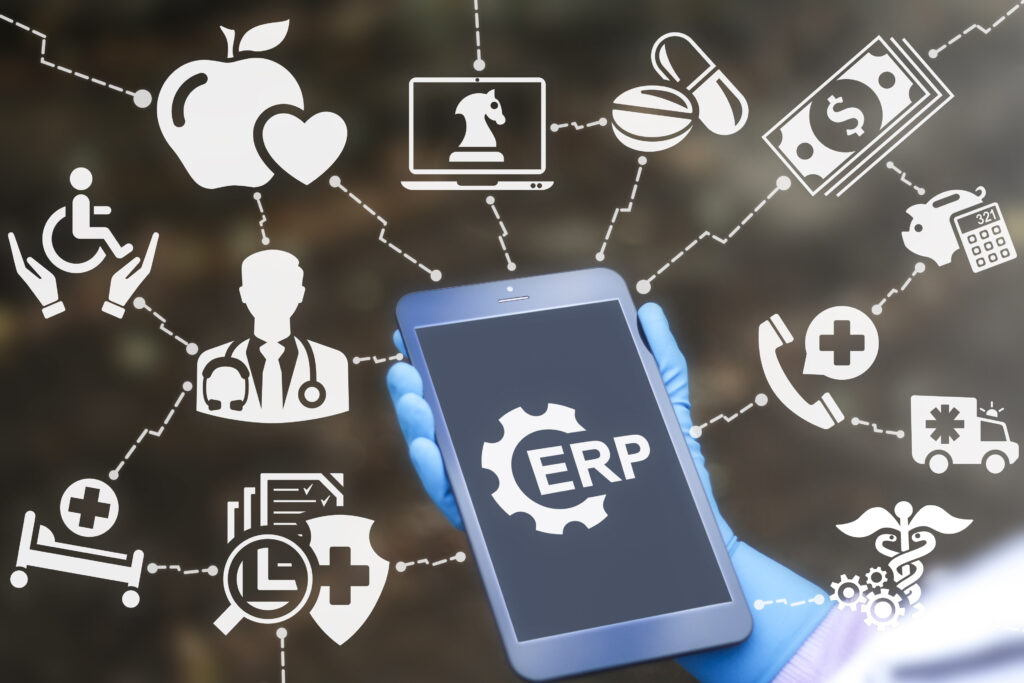
Healthcare ERP Market Set to Double by 2033 as Hospitals Lean on Finance-Led, On-Premises Platforms
The healthcare ERP market is set to more than double from USD 7.5 billion in 2023 to USD 15.7 billion by 2033, driven by hospitals' need for integrated operations and data centralization amidst rising complexity and regulatory pressures, with finance and billing being the leading segments.
Europe’s ERP Vendors Are Gaining Ground Alongside Oracle, Microsoft
European ERP vendors like SAP, Unit4, Odoo, AFAS, and Exact are emerging as viable alternatives to US giants by aligning with regional regulatory, data protection, and localization needs, particularly for organizations prioritizing compliance and sovereignty.
mid-market multi-entity ERP
Five ERP Strategic Implications for Operations Leaders in 2026
As organizations face a pivotal shift in ERP to autonomous action-driven frameworks, leaders must prioritize rapid modernization, governance transparency, and adaptability to remain competitive.
Red Hat signage on a office building.
Red Hat Acquires Chatterbox Labs to Strengthen AI Safety and Governance
Red Hat acquires Chatterbox Labs to add AI safety, guardrails, and risk metrics across its enterprise AI portfolio.
Data processing over infrastructure construction site
Six Data Pivots That Decide Whether Your AI Strategy Scales in 2026
AI is forcing businesses to modernize data architectures. CData’s e-book outlines six pivots to scale AI-driven products.
SAP Sovereign Cloud
SAP Sets May 2026 Cutoff for S/4HANA Compatibility Packs, Offering Final Transition Window
SAP is granting a final five-month extension for on-premises S/4HANA customers to transition from Compatibility Packs to cloud solutions, pushing expiration dates to May 2026 to help manage this critical migration.
Microsoft Dynamics 365 Business Central
How Microsoft Is Rewiring ERP with Composable Dynamics 365
Microsoft's ERP strategy focuses on a composable approach using Dynamics 365 as a modular backbone for industry-specific solutions, emphasizing scenario-driven capabilities, AI integration, and partner specialization to create tailored solutions on a shared cloud platform.
The coast of Da Nang with the city against the beach and ocean
Vietnam Draws More Than $7 Billion in AI Data Center Investments, Reshaping Enterprise Infrastructure
Create Capital Vietnam and Haimaker.ai have unveiled a $1 billion joint venture to build a nationwide AI-focused data center network in Vietnam, part of a broader surge of more than $7 billion in AI infrastructure investment driven by policy incentives and rising enterprise demand.
Engineering the Future of Tax with OCI and Vertex
Black & Veatch modernized its tax infrastructure by migrating to Oracle Cloud ERP and Vertex solutions to enhance global compliance, reduce operational risks, and streamline processes, demonstrating the importance of integrated cloud-native tax services for supporting complex multi-jurisdictional operations.
Shedding Data Baggage for a Leaner SAP Cloud
Migrating to SAP Cloud ERP Private promises streamlined processes and agility, but organizations must first conduct a thorough assessment of their data to avoid complicating the transition with unnecessary legacy information, which can drive up costs and hinder performance.
Oracle AI World’s IBM Sessions: What Enterprises Must Build Before AI Can Deliver
At Oracle AI World, IBM emphasized that successful AI adoption in enterprises relies not on flashy models but on robust foundational preparations, governance, and aligned business processes, showcasing that scalable AI implementations require clean data and integrated workflows.
GCC emblem with digital code background
How Gulf States Are Approaching Digital Sovereignty
Gulf states are building digital sovereignty frameworks to strengthen infrastructure and move from importing to operating cloud and AI services locally. National regulations, major investments, and regional collaboration support this transformation.
Data Integrity is the New ERP Mandate
Data integrity is crucial for ERP success, as reliable information underpins automation and insights; organizations must modernize data handling without full system overhauls, confront legacy issues, and embrace governance to enhance efficiency and decision-making.
Year in Review: Testing, Transformation, and the Race to AI-Ready ERP in 2025
In 2025, the conversation around cloud migration shifted from why to how. According to SAPinsider’s 2025 research report on SAP S/4HANA deployment, for instance, 31% of the organizations who responded to the survey have transitioned to SAP S/4HANA, while another 27% are in implementation. Additionally, 54% of respondents said they plan to incorporate AI or...
How SAP Experience Centers Win Transformation
SAP's Experience Centers have transformed from showrooms to operational labs, exemplified by the fully functional S.Mart Store in Walldorf, illustrating the company's commitment to co-creating practical industry solutions with customers.
Connected Construction: ERP Without the Bottlenecks
Cloud ERP is evolving into a critical operating system for construction and field service companies, enabling resilience, real-time decision-making, and lean operations, as evidenced by the experiences of Tester Construction, Tech Electronics, and Carlson LaVine Construction in their transitions to Acumatica.
5 Predictions: What Salesforce Leaders Expect from Enterprise AI Agents in 2026
At a Salesforce roundtable, executives predicted that by 2026, companies will face a clear divide based on their adoption of AI agents as operational infrastructure, leading to significant changes in voice communication, engineering delivery models, governance structures, and user experiences.
MCP Platform
How to Choose an MCP Platform for Production-Scale AI Agents
Model Context Protocols (MCPs) standardize secure, real-time access for AI agents to enterprise systems. MCP features such as plug-and-play integration, real-time monitoring, and scalability become a differentiator as businesses embed AI into core workflows.
Epic’s Healthcare-Native ERP, AI Gambit: Disruption or Long Game Against Major Players?
Epic's development of a healthcare-native ERP aims to integrate seamlessly with its EHR and AI features, potentially disrupting the market by consolidating operational functions while forcing health systems to reflect on their existing application frameworks, though full capabilities are not expected until 2027.
Oracle Database
Oracle Database@Azure expands to the Netherlands, launches in Brazil
Oracle has expanded its Oracle Database@Azure service into the West Europe region and Brazil Southeast, allowing customers to run Oracle databases within Microsoft Azure environments while benefiting from local compliance and reduced latency, thus reinforcing its strategy to integrate database services with major cloud platforms without the need for architectural changes.
Thai ERP Vendor Dynamics Motion Embeds Google Gemini in MotionERP, Cuts System Costs
Dynamics Motion has launched an AI-enhanced MotionERP integrated with Google Gemini, claiming to improve operational efficiencies by over 30% and reduce system costs by more than 3.5 times, positioning itself as a leader in Thailand's ERP market.
Inside Salesforce’s Agentforce Roundtable: How Did Leaders Really Use AI Agents in 2025?
Executives are shifting their focus from the hype of AI to practical implementation, emphasizing the importance of data activation, hybrid reasoning models, and effective change management to ensure AI agents deliver value in real-world applications.
data maturity ai
Data Maturity Is the Strongest Predictor of AI Success in 2026, Says New CData Study
Despite investment in AI copilots, many enterprises' lack of robust data infrastructure hampers their ability to derive sustainable ROI from AI initiatives, with only 6% of organizations considered genuinely AI-ready due to fragmented data systems.
SAP security
How SAP Customers Responded to Rising Cybersecurity Threats in 2025
In 2025, SAP customers expressed increasing concern over cyberattacks, particularly regarding data exfiltration and integration risks, while patch management remained a significant challenge, highlighting the necessity for enhanced security strategies and investments in SAP-specific protections.
Cognizant AI
Cognizant and Microsoft Target the Last-Mile Problem in Enterprise AI
Cognizant and Microsoft have expanded their AI partnership to co-develop industry-specific solutions and integrate Microsoft's AI stack into Cognizant’s services, primarily benefiting sectors like financial services and healthcare, as they aim to enhance AI deployment and operational impacts through deeper collaboration and streamlined workflows.