Manufacturing Systems and Automation

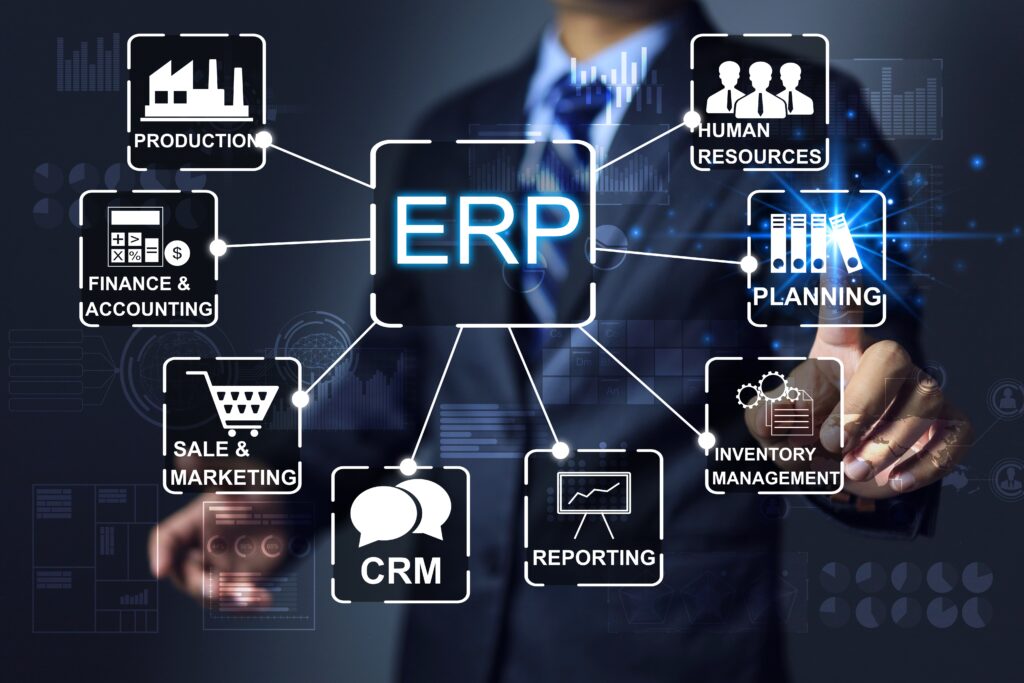
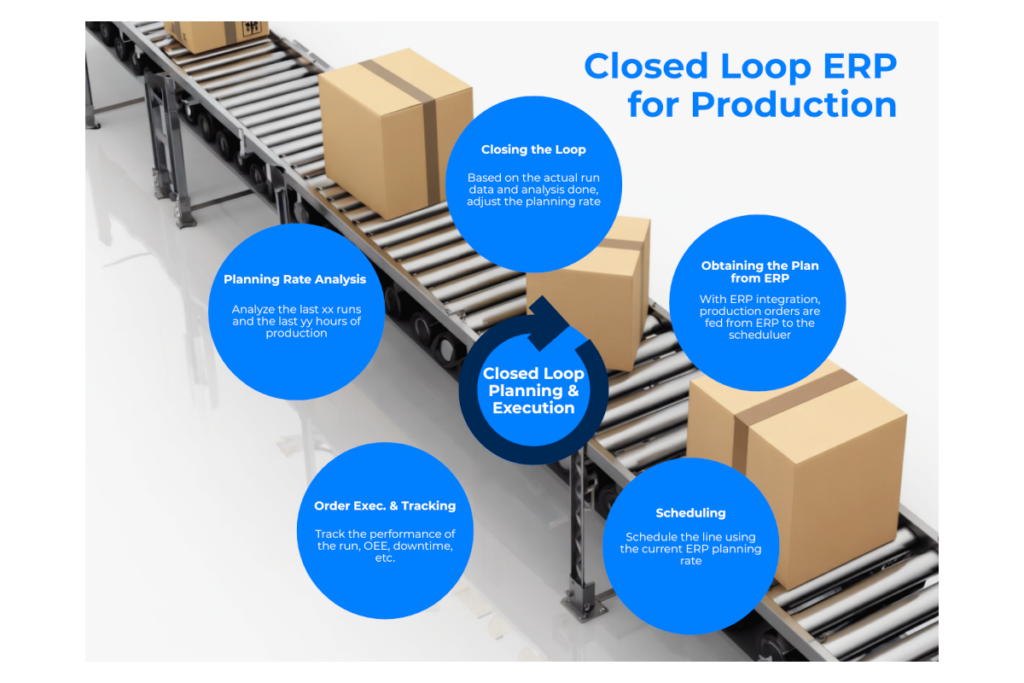
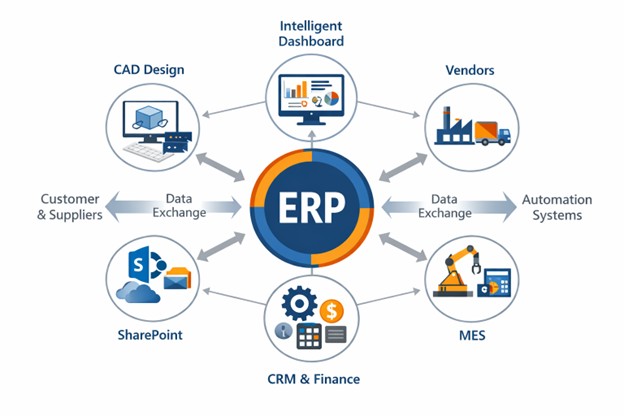
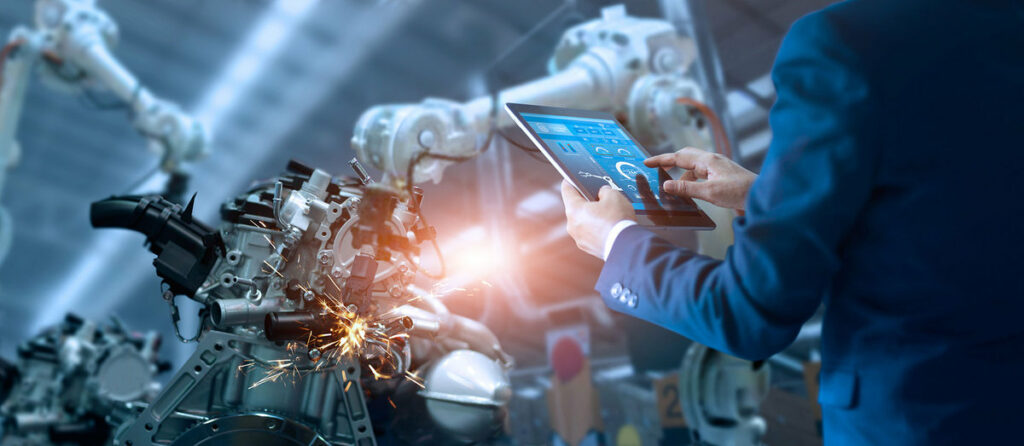
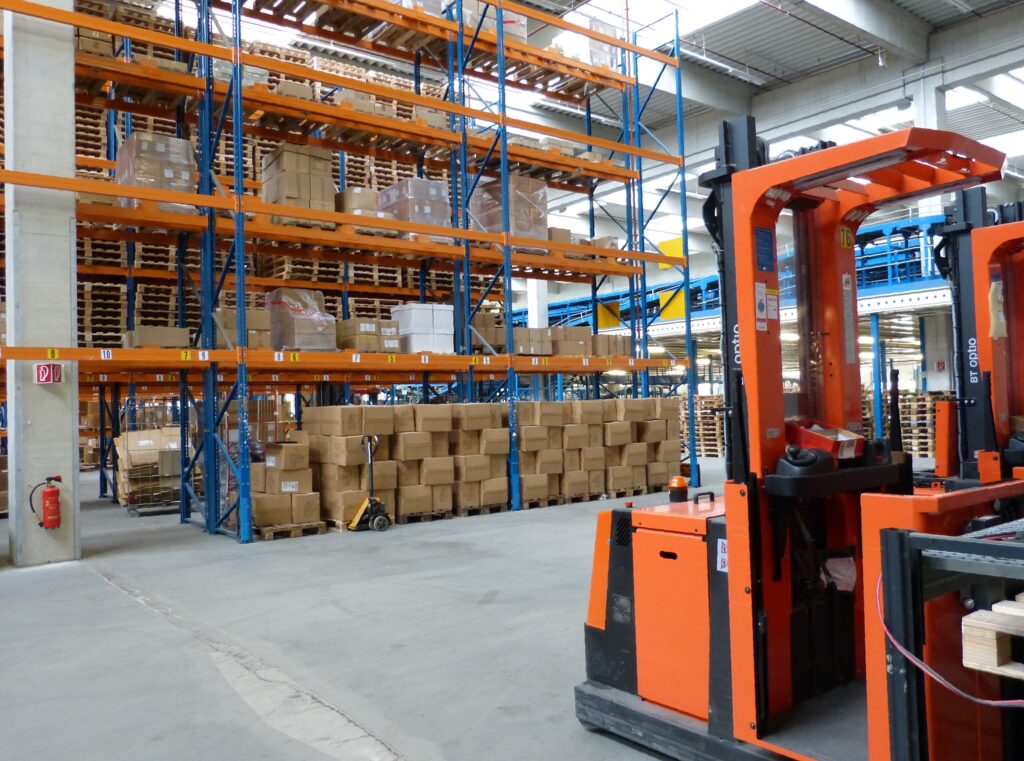
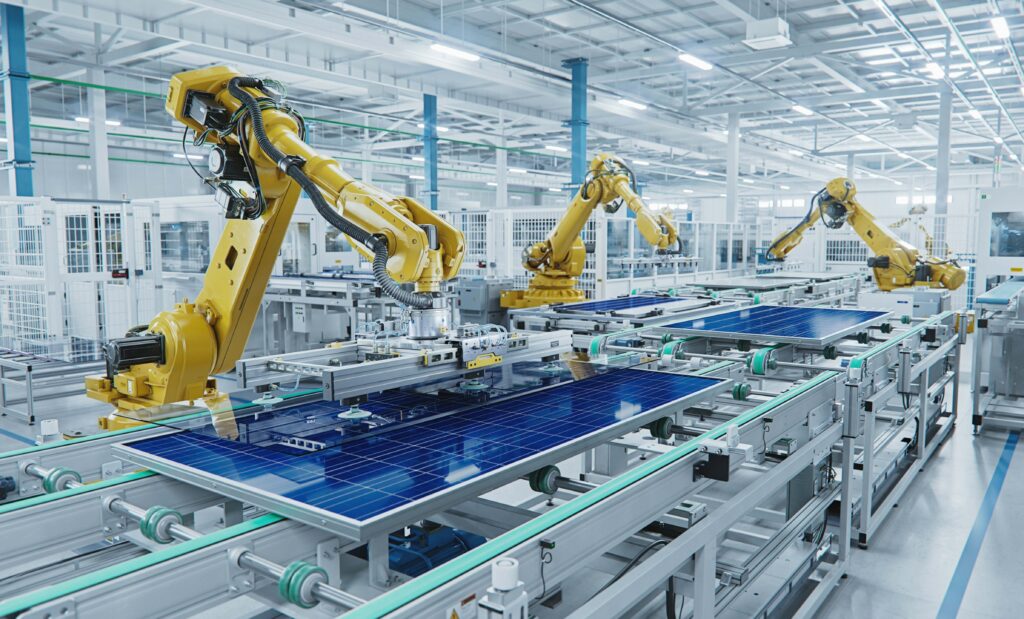
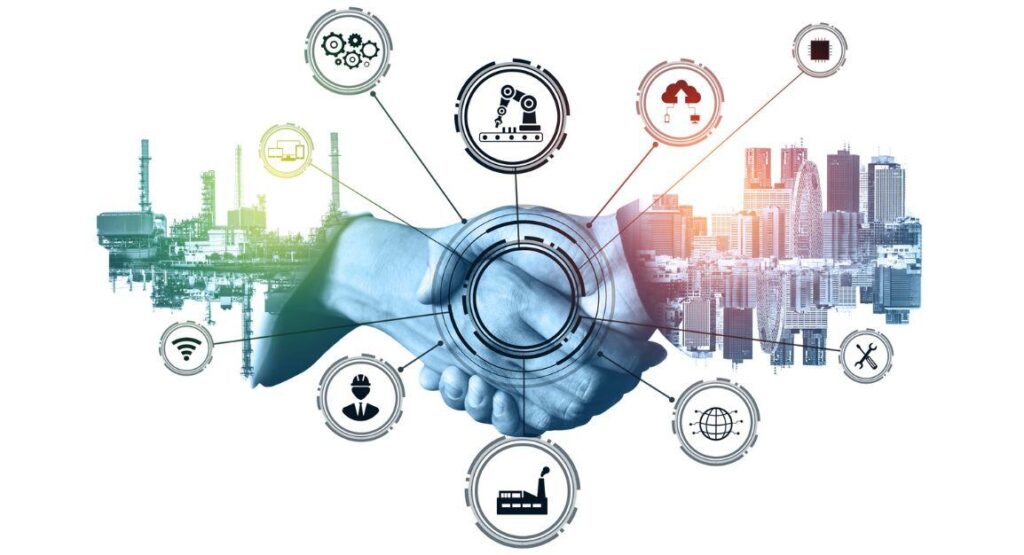
Enterprise Resource Planning (ERP) upholds Manufacturing Systems and Automation by smoothly integrating core functionalities. ERP optimizes production processes, inventory management, and supply chain operations. It provides real-time visibility into manufacturing workflows, facilitating informed decision-making. Through automation, ERP streamlines production scheduling, reduces lead times, and enhances resource utilization. With modules dedicated to quality control and compliance, ERP ensures adherence to industry standards. The integration of ERP with Manufacturing Systems enables data-driven insights, supporting predictive maintenance and minimizing downtime. By unifying manufacturing data, ERP fosters collaboration between departments, suppliers, and partners. This synergy helps organizations to achieve operational excellence, improve production efficiency, and respond adeptly to market demands, creating a robust foundation for success in the manufacturing industry.

Taming Landed Costs
Net at Work Acquires BHE Consulting to Expand Capabilities in Construction, Manufacturing
Net at Work has acquired BHE Consulting to enhance its ERP expertise in construction, manufacturing, and wholesale distribution, positioning itself to support clients throughout the ERP lifecycle as mid-market demand shifts towards cloud-based solutions.
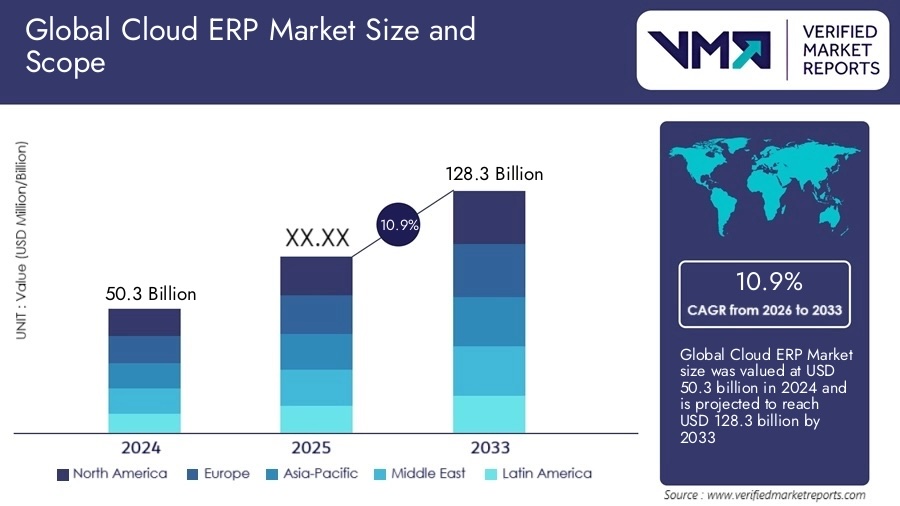
Cloud ERP Market to Reach $128B by 2033 as Digital Transformation Accelerates
The global cloud ERP market is projected to grow from $50.3 billion in 2024 to $128.3 billion by 2033, driven by demand for scalability and real-time data access.
kyano
Zoho Launches AI-Native ERP Platform Targeting Indian Enterprises
Zoho Corporation has launched Zoho ERP, India's first AI-native enterprise resource planning system that embeds AI across its architecture to provide automation, predictive insights and voice-based assistance, targeting fast-growing sectors.
How ERP Vendors Can Turn AI From Weakness into Strength
ERP vendors are pressured to demonstrate the tangible operational benefits of their AI capabilities, with industry-specific implementations like those at Golden State Foods and Polaris showcasing measurable gains as the market continues to expand.
Syspro Highlights Breakthrough Year with AI-Driven Platform Modernization, Global Brand
Syspro reports significant global momentum marked by revenue and ARR growth, expansion of subscription services, and a transition to a cloud-first platform alongside the launch of a new brand.
The Access Group Acquires MaxOptra to Strengthen Supply Chain ERP Portfolio
The Access Group's acquisition of MaxOptra enhances its supply chain division by integrating AI-driven route optimization for mid-market fleet operators, addressing industry-specific operational challenges as the global route optimization software market is expected to grow significantly.
Verisk and Oracle Fusion Cloud
Izzi Software Partners with Virtutem to Extend Valence Modernization
Izzi Software and Virtutem have partnered to offer the Valence application modernization platform, providing IBM i users a low-code alternative to vendor-supported upgrades, thus enabling incremental modernization.
Agentforce Manufacturing Addresses Labor Shortages, Operational Inefficiencies
Salesforce released Agentforce Manufacturing, a suite of AI agent templates enabling manufacturers to enhance autonomy and efficiency while mitigating labor shortages, marking a significant shift in the industry toward predictive and proactive operations.
iBASEt Launches Domain-Specific AI Platform for Aerospace Manufacturing
iBASEt launched Solumina AI, a specialized artificial intelligence platform for regulated aerospace and defense manufacturing, featuring modules that enhance operational workflows while challenging traditional ERP and PLM vendors relying on generic AI.
How ERP, AI Can Improve Logistics and Operations Efficiency
Artificial intelligence is transforming logistics by enabling continuous optimization through integrated ERP systems, facilitating improved decision-making, reducing operational costs, and enhancing delivery performance.
MISO, Microsoft Partner on Azure-, AI-Powered Grid Platform to Streamline Planning Cycles
Microsoft and MISO are collaborating to develop an AI-driven data platform on Azure to enhance grid planning and operations, aiming to reduce analysis cycles from weeks to minutes and support a more resilient, data-informed energy system as demand for electrification and renewables grows.
Autonomous AI and Composable Architectures are Helping ERPs Transforming Energy Sector
The oil, gas and chemical industries are shifting their enterprise resource planning strategies towards autonomous operations and composable architectures, spurred by low commodity prices and increasing regulatory demands, leading to improved decision-making through AI and enhanced operational efficiencies.
Japan Cloud ERP Market Growth Expected as Digital Transformation Accelerates
Japan's cloud ERP market is set for substantial growth at a CAGR of 20.1% through 2032, fueled by government digital transformation initiatives and AI solutions, with major vendors driving deployment across manufacturing and retail sectors.
Agentic AI, Composable Architectures Are Redefining Manufacturing ERP as Autonomous Operations
Manufacturing technology executives are experiencing a major shift in ERP systems from transactional backends to autonomous AI-driven decision engines that automate procurement and production processes, with successful implementations emphasizing governance frameworks over algorithm sophistication.
Syspro Acquires Evocon to Strengthen Digital Shopfloor Capabilities, Operational Efficiency
Syspro has acquired Estonia-based Evocon to enhance its digital shop floor capabilities, providing manufacturers with improved real-time production monitoring and operational efficiency tools, enabling better decision-making and deeper integration.
AI Moves to the Core of ERP: What Technology Leaders Should Expect 
Artificial intelligence is evolving from a supplementary feature to an essential element of ERP, enhancing demand forecasting, operational responses, and executive decision-making.
Syspro, SugarCRM Collaboration Offers Connected Floor Solution for Manufacturers and Distributors
Syspro and SugarCRM have partnered to introduce Sugar for Syspro, an integrated solution that enhances precision selling for manufacturers and distributors by unifying product, customer and sales data for a better connected ERP system.
ERP AI
How Manufacturers Can Achieve Operational Stability in 2026
As manufacturers head into 2026, they face pressure to enhance efficiency and stability through modern ERP technologies, moving from reactive chaos to predictable operations.
The Great Cloud Recalculation Oracle+IBM
Epicor Sets Final On-Premises Release Dates as Cloud Strategy Accelerates
Epicor has announced the timeline for the final on-premises feature releases of its ERP platforms, urging customers to evaluate cloud migration as it transitions towards AI-powered capabilities, with support phases outlined and potential savings highlighted.
ERP Technology Developments Impacting Manufacturing Jobs in 2026
Manufacturing technology executives must decide by late 2025 whether to adopt autonomous AI agents to enhance operational efficiency or risk losing competitive advantages with governance emerging as the key challenge for successful implementation.
Epicor for Manufacturing
Grow, thrive, and compete in a global marketplace with Kinetic—an industry-tailored, cognitive ERP that helps you work smarter and stay connected.
How Microsoft Is Rewiring ERP with Composable Dynamics 365
Microsoft's ERP strategy focuses on a composable approach using Dynamics 365 as a modular backbone for industry-specific solutions, emphasizing scenario-driven capabilities, AI integration, and partner specialization to create tailored solutions on a shared cloud platform.
Three Trends Changing Manufacturing ERP in 2026
The manufacturing ERP landscape is transforming by 2026 due to the emergence of autonomous operations, composable architectures and sustainability ledgers, shifting focus toward action, which requires new governance and integration strategies.
ERP AI
Overcoming AI Adoption Challenges in Manufacturing and Supply Chain
AI is rapidly becoming essential in manufacturing and supply chain management, but uneven deployment due to barriers like data quality and user adoption persists, while vendors are focusing on domain-specific AI to integrate predictive insights directly into core processes.
SAP, Partners Turn Embedded Business AI into Concrete ERP Wins
SAP and its partners are transforming AI from concept to implementation by integrating SAP Business AI and SAP BTP into workflows that enhance efficiency and collaboration, as illustrated by successful case studies from companies like FRoSTA and Aspen Pumps.
Nextworld’s Future-Proof ERP Platforms Redefine Enterprise Agility 
Cloud-native, no-code ERP platforms like Nextworld are emerging as solutions for businesses facing demands for adaptability and cost control, enabling modern architecture for continuous change, reducing technical debt, and facilitating integration with existing systems.
kyano
Why Industry-Built ERP Will Lead the Next Wave of Manufacturing Modernization
Manufacturing executives are increasingly favoring vertical ERP systems over generic platforms due to the former's ability to provide tailored, out-of-the-box solutions that align with industry-specific workflows.