Three days after Anthropic released Claude Fable 5 and expanded access to its more restricted Mythos 5 model, the US government ordered the company to suspend access to both systems for foreign nationals, citing national security concerns.
Anthropic said it had to disable Fable 5 and Mythos 5 for all customers to comply with the order, the New York Times June 12 reports. The restrictions reportedly also affected foreign nationals working inside Anthropic.
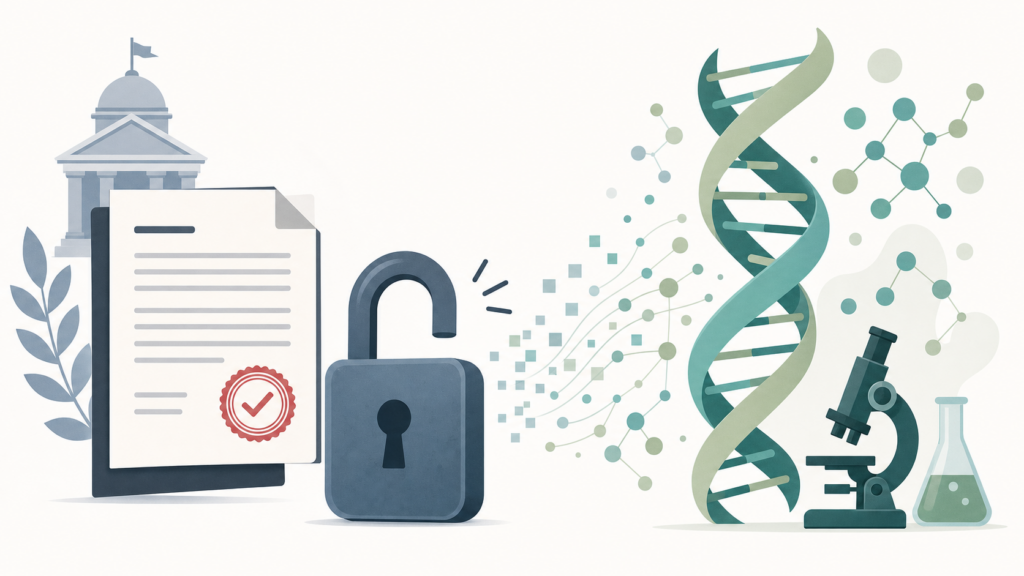
The order marked a sharp escalation in government control over frontier AI access. Export restrictions on chips and other advanced technologies are familiar in national security policy, but direct limits on who can use a software model create a different operational problem for enterprise customers, vendors, and AI developers.
Anthropic said it believed the issue was a misunderstanding and was working to restore access. Reuters on June 14 reported senior technical staff from Anthropic are expected to meet with White House officials to address the dispute.
Fable 5 Launch Became a Control Test
Anthropic announced Claude Fable 5 on June 9 as a Mythos-class model designed for advanced knowledge work and coding, but with additional safeguards for broader use. The company said Fable 5 was built on the same underlying model as Mythos 5, while Mythos 5 would remain available only to a smaller group of cyberdefenders and infrastructure providers through Project Glasswing.
That structure reflected Anthropic’s own concern about dual-use capability. Mythos 5 was positioned as a powerful cybersecurity model that could help defenders find and fix vulnerabilities, but it also raised concerns because similar capabilities could be used to attack computer networks.
Anthropic had previously shared Mythos with about 40 organizations, maintaining critical infrastructure so they could use it defensively. Anthropic later planned to expand Project Glasswing to around 150 additional organizations.
The government order changed the access model almost immediately. Instead of a company-managed, trusted-access program, Anthropic faced a national security restriction that cut across customers, employees, and international users.
Analysis
What this means: AI access is a continuity risk. The US order on Anthropic’s Fable 5 and Mythos 5 models shows advanced AI systems can be restricted after launch when governments determine that capability creates national security exposure. For ERP vendors, CIOs, and enterprise architects, model availability needs to be evaluated alongside uptime, licensing, data residency, and regulatory compliance.
AI Export Controls Move Beyond Chips
The order broadens the AI policy debate from hardware exports to model access.
Governments have already used export controls to restrict advanced chips and semiconductor equipment. This case applied a similar national security logic to AI systems themselves, including who can access them and potentially who inside a company can work on them.
That creates a more complicated compliance burden than blocking a product sale into a specific country. If access is restricted by nationality, companies may need controls over employees, contractors, enterprise customers, API access, internal testing, support teams, and cross-border development workflows.
For multinational enterprises, the implications are practical. A model embedded in cybersecurity, software engineering, infrastructure management, or business workflows could become unavailable to some users or regions with little warning.
The restriction also complicates vendor dependency. AP reported on June 14 that Canadian Prime Minister Mark Carney described the Anthropic limits as a warning about overdependence on a small number of American AI providers, ahead of the G7 summit.
Cybersecurity Capability Drove the Concern
The national security issue centered on cybersecurity capability.
Mythos had raised concerns in Washington and Silicon Valley because it could be used to identify ways to break into computer networks. Anthropic’s public framing has emphasized the defensive side of the model, including its use by selected cyberdefenders and infrastructure providers.
The dual-use problem is difficult to resolve. The same model that helps defenders discover vulnerabilities before attackers exploit them may also help attackers find weaknesses faster. That is why access, monitoring, safeguards, and trusted-user programs are becoming central to AI deployment in security-sensitive domains.
Anthropic’s Fable 5 was intended to be the more restricted version for general use. According to the New York Times, queries deemed risky were designed to route to an older model, Opus 4.8, rather than return unrestricted responses. The US order suggests federal officials were not satisfied that those controls sufficiently addressed the risk, at least in the short term.
For enterprises, that creates a new procurement question of whether a frontier model’s strongest capabilities will remain continuously available once governments assess its dual-use risk.
Analysis
What this means: Dual-use capability complicates enterprise AI procurement. Mythos 5 was designed for cybersecurity and infrastructure defense, but the same capabilities that help protect networks can also raise offensive-use concerns. For security leaders, procurement teams, and systems integrators, frontier model selection should include access governance, monitoring, escalation rules, and fallback plans for sensitive workflows.
Sponsor Industry‑Grade Research
Enterprise AI Strategy Faces a Dependency Problem
The order does not mean enterprises should stop adopting frontier AI. It does mean AI strategy needs to account for regulatory interruption, access controls, and geopolitical dependency.
The market reaction to Anthropic’s Fable 5 release showed frontier model capability can pressure enterprise software valuations. And when frontier models become powerful enough to reshape software, cybersecurity, and knowledge work, governments may treat access as a strategic control point.
A model may be technically superior, but enterprise deployment also depends on access stability, compliance rules, auditability, data residency, customer support, and whether the vendor can keep the service available across regions and user groups. For enterprise customers, it strengthens the case for fallback models, multi-model architecture, and clear contingency planning when frontier AI becomes part of core operations.
Analysis
What this means: AI sovereignty will move beyond data location. The restriction on foreign access highlights a dependency risk that data residency alone cannot solve: control over who can use, support, and develop the model. The practical takeaway is AI sovereignty now includes provider jurisdiction, model access rules, workforce eligibility, and the ability to switch or degrade gracefully when access changes.