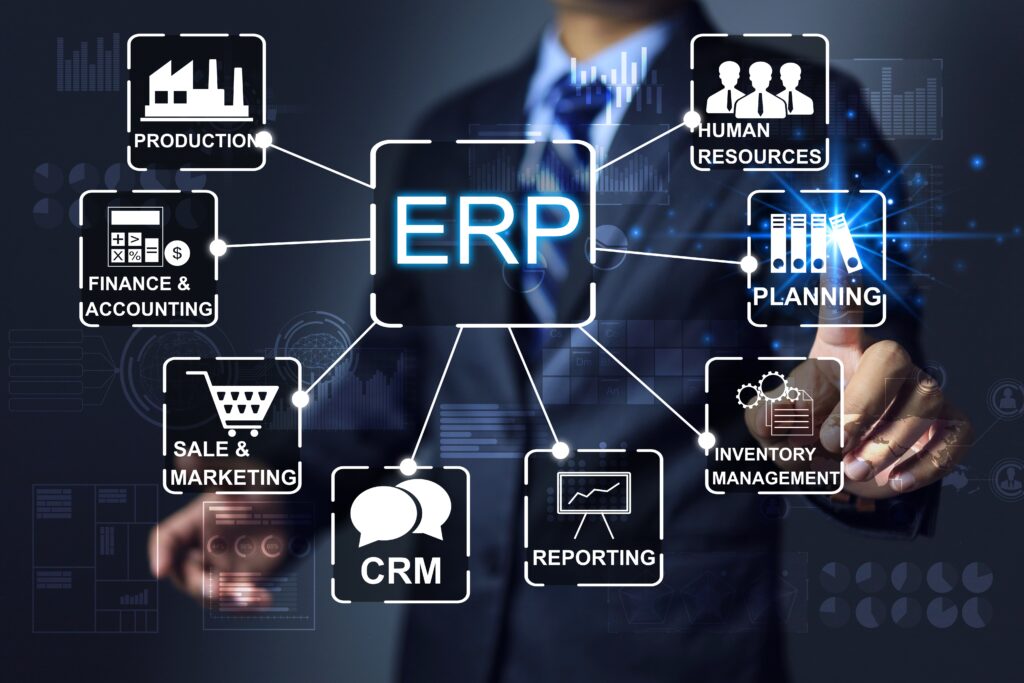
Amazon Web Services (AWS) is introducing its own on-premises AI factory, bringing cloud innovation and control directly into customer facilities and reshaping how organizations run AI alongside their ERP systems.
The new AWS AI factories, announced at the 2025 AWS re:Invent, install Nvidia GPUs, AWS Trainium chips, high-speed networking, storage, and security into customers’ existing data centers. The factories also are wrapped with managed services like Amazon Bedrock and SageMaker so organizations can develop and deploy AI applications at scale without building their own GPU data center from scratch.
AWS described the offering as a dedicated AI infrastructure that “operates like a private AWS Region” inside the customer facility, giving low-latency access to compute, storage, and AI services while helping meet security, sovereignty, and regulatory requirements.
The Sovereignty Bottleneck
AWS is addressing a specific pain point: Enterprises handling sensitive data have been stuck choosing between expensive on-premises hardware or cloud deployments that run into sovereignty and compliance limits.
Network World reports that AI factories extend the AWS Outposts model to AI, installing dedicated hardware and software on-premises so customers can run AI and agentic applications without crossing data-residency red lines. AWS CEO Matt Garman framed it as a private AWS region that uses the customer’s existing space and power while maintaining cloud-like elasticity, a response to mounting data sovereignty pressures. A tech industry analyst quoted called it “arguably AWS’s most significant move in the sovereign AI landscape,” while cautioning that commitments may resemble Oracle’s Dedicated Region model with multi-year, high minimum spend.
AWS is not alone. Oracle has already added Nvidia processors to Cloud@Customer, Microsoft is bringing Nvidia GPUs into Azure Local, and Google Distributed Cloud also ships managed GPU stacks. Other examples include the Sage AI Factory and the recently announced Deutsche Telekom and NVIDIA partnership to build one in Europe.
Nvidia, Dell, and HPE have their own AI factory or private cloud for AI offers, all chasing the role of default on-premises AI platform.
AI Factory Explained
Nvidia’s own glossary defines an AI factory as a specialized computing infrastructure that manages the whole AI lifecycle from data ingestion through training, fine-tuning, and high-volume inference, where the “product” is intelligence measured by token throughput that drives decisions and automation.
In a complementary view, Harvard Business School professors Marco Iansiti and Karim Lakhani described AI factories as interconnected pipelines of data sources, machine learning (ML) algorithms, experiments, and software that create a virtuous cycle between user engagement, data collection, prediction, and continuous improvement.
A March 2025 Nvidia blog puts that abstraction into tangible terms, describing AI factories as purpose-built data centers optimized for AI reasoning workloads, tightly integrating GPUs, high-performance networking, storage, and orchestration so organizations can “manufacture intelligence at scale” rather than run isolated pilots.
Computer Weekly draws an important line between two flavors of AI factory. Sovereign AI factories are national-scale investments, often using Nvidia’s “AI as national infrastructure” framing. Enterprise AI factories, by contrast, focus on producing many smaller automations using templates and standard processes, which helps control costs and reduces the need for large, complex data-engineering projects. Duncan Anderson, formerly CTO of IBM Watson AI, characterized enterprise AI factories as ideal for “large volumes of small AI work” that can often rely on point-to-point data integrations rather than heavy upfront data engineering, reducing the hurdle for incremental automation around existing systems.
Crucially for ERP leaders, enterprise AI factories are not pitched as replacements for systems of record. They sit alongside systems like Oracle, SAP, and Salesforce, with AI agents and automations handling tasks around them rather than displacing them. AI factories focus on discrete processes and standardized outputs, while ERP continues to own core transactional integrity and canonical data models. That puts AI factories in the same orbit as ERP, but on a different layer, where they automate decisions, recommendations, and workflow steps around the transaction backbone rather than replacing it.
Running an internal AI factory demands data engineers, ML and cloud infrastructure specialists, risk and ethics expertise, and strong IT security capabilities. Only a small minority of organizations reportedly have in-house skillsets at that level.
Factory-Scale AI for ERP
McKinsey & Co frames AI factories as operating models as much as infrastructure steps. Moving from bespoke, siloed AI experiments to an “industrialized AI factory” requires standardized, automated MLOps pipelines that let teams churn out “race-ready, risk-compliant, reliable models” and embed them into core processes and customer journeys. That model relies on reusable data products, modular pipelines, and shared monitoring, which align closely with how ERP systems already think about canonical data, shared services, and process governance.
Nvidia’s AI factory narrative adds a geopolitical and infrastructure layer, highlighting national and enterprise investments from EU-backed AI factories to telecommunication players building them for upskilling and sustainability. It pitches full-stack blueprints and “validated designs” for enterprises to raise AI factories on premises or in the cloud in weeks.
AWS AI Factory Impact on ERP
AI factories from AWS arrive at that playing field as a cloud-provider-managed version of the same idea, tightly integrated with Bedrock, SageMaker, and Trainium.
For ERP-heavy organizations in regulated sectors, AWS AI factories effectively move the AI development and inference plant into the same physical footprint as the ERP core. Sensitive data can stay in existing data centers and jurisdictions, while AI workloads still use AWS services and Nvidia’s full-stack software without bespoke integration of GPUs, storage, and networking. Per Network World, the factories combine the on-premises control of AWS Outposts with the broader service catalog of AWS Local Zones, promising both low-latency access to ERP data and a wider palette of AI and agentic services.
That positions AWS as one of several competing “factory as a service” providers, but with the benefit of its two decades of cloud operations and native integration into the broader AWS ecosystem.
The net effect is having an AI layer become a distinct, industrialized platform that runs beside ERP systems yet is managed like a cloud service. That has direct implications for how organizations think about data architecture, integration, security, and day-to-day operations.
What This Means for ERP Insiders
Sovereign-ready AI platforms will become standard companions of ERP cores. As AWS, Nvidia, and others ship AI factories into customer data centers, ERP vendors and system integrators will need clear patterns for running AI agents, copilots, and decisioning services in these environments while keeping systems of record authoritative. Reference architectures that position AI factories as adjacent intelligence plants rather than ERP replacements will be critical in regulated and public sector settings.
Industrialized AI will favor ERP teams that can supply clean, reusable data products. The perspectives above that focused on repeatable “small AI work” point toward standardized data and pipelines as the foundation of value. ERP product and platform leaders who integrate stable, governed data products and process events into AI factories will be better positioned than those who treat AI integrations as one-off point projects around each module.
AI factories will reshape skills, governance, and risk postures around ERP programs. AI factories concentrate decision automation around core business processes, expanding the tools and services in play but also potential security vulnerabilities. That raises the bar for roles spanning data engineering, ML operations, security, and risk within ERP-centric transformations, making centralized governance of AI models, agents, and automations a shared concern across ERP, cloud, and security teams.