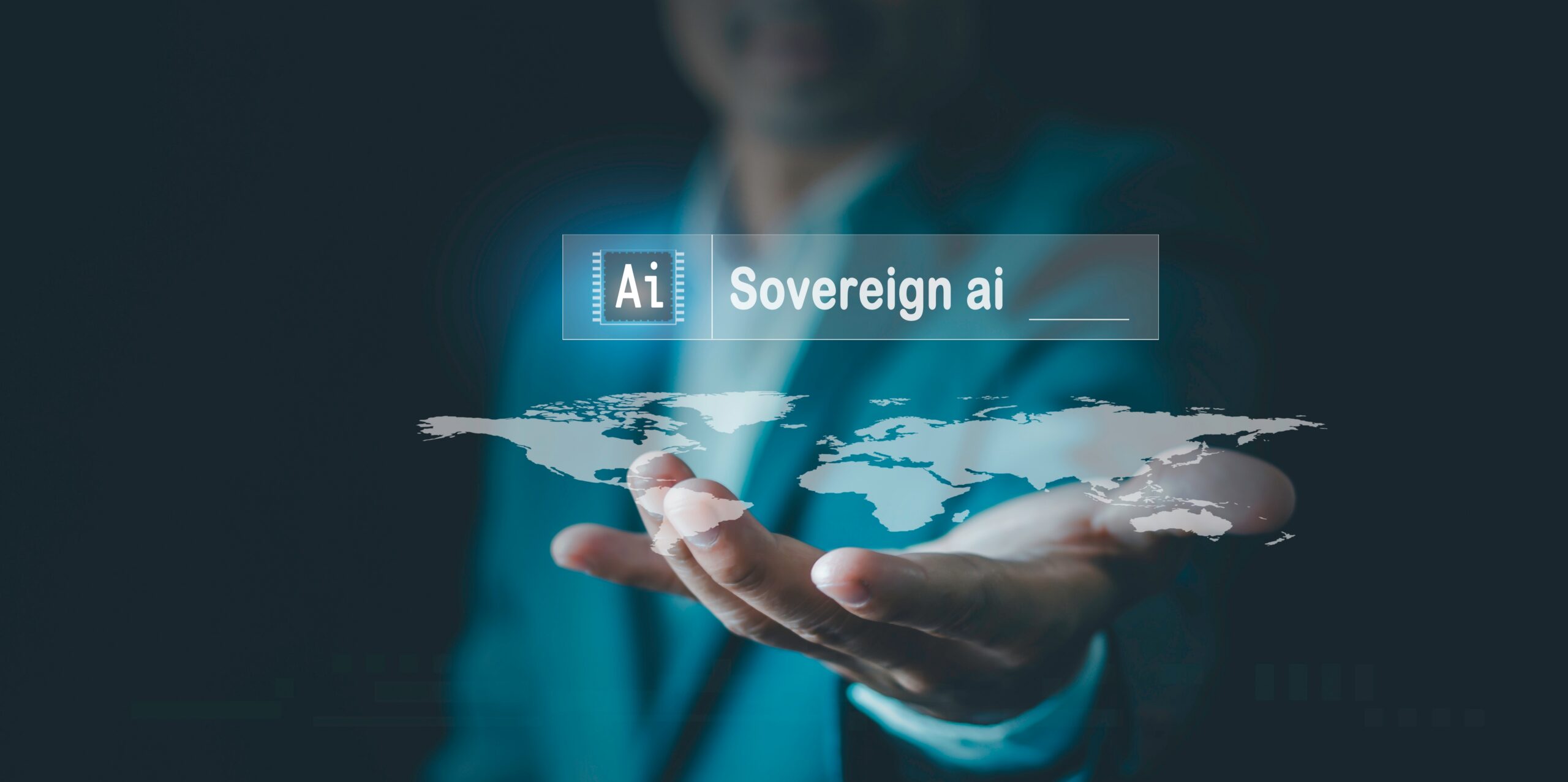
Cognizant and Domyn announced on July 2 a strategic partnership to deliver sovereign AI solutions to regulated enterprises across Europe, the Middle East, and Africa. The companies said the offering will help organizations deploy AI securely on-premise or in sovereign environments while keeping data inside client-controlled systems and supporting compliance with European regulatory frameworks.
The agreement brings together Domyn’s sovereign AI infrastructure and Cognizant’s systems integration, application development, and industry execution capabilities. Domyn will provide the AI infrastructure layer, including large language models that can run in client environments, on-premise, or in private cloud configurations.
Cognizant will handle the application and integration layer. That includes adapting Domyn’s models into small language models, building industry-specific agents and applications, and managing the data pipeline construction, cleaning, and model-alignment work needed for enterprise deployment.
The companies will jointly target customers across the UK and Ireland, DACH, Northern Europe, and Southern Europe and the Middle East. DACH refers to Germany, Austria, and Switzerland.
Sovereign AI as the Operating Model
Regulated organizations often need more than assurances about where data is stored. They need to know where models run, who controls the data, how workflows are governed, how agents are monitored, and how AI decisions can be audited.
Cognizant and Domyn are positioning the partnership around that full-stack problem. Domyn supplies the chip-to-application sovereign AI foundation, while Cognizant turns that foundation into use cases, integrations, human-in-the-loop compliance frameworks, and business outcomes.
That approach matters for sectors such as financial services, government, heavy industry, healthcare, utilities, and other regulated markets where AI adoption can be constrained by data residency, security, model governance, and operational risk.
Local Control as an AI Buying Criterion
Cognizant cited Gartner research saying geopolitics is becoming a key driver behind demand for true sovereign AI solutions and services. The same research projects that 50% of cloud AI workloads will move to sovereign cloud AI deployment models by 2029, up from 5% in 2025.
For enterprises, that creates a new buying question. AI leaders are not only choosing between model providers, hyperscalers, and systems integrators. They are deciding which parts of the AI stack must remain under local or enterprise control.
Domyn is trying to occupy that space as a European sovereign AI infrastructure provider for regulated industries. Cognizant gives the company enterprise reach and delivery capacity across EMEA, where sovereign AI demand is likely to be shaped by regulation, geopolitical risk, public-sector requirements, and industry-specific compliance obligations.
Get Our Free Weekly Newsletter
Agents Still Need Data Work
The partnership is also a reminder that sovereign AI does not remove the hard implementation work.
Cognizant’s role includes legacy data pipeline construction, data cleaning, model alignment, agent development, application integration, and domain adaptation. Those are the tasks that decide whether sovereign AI becomes a usable business capability or remains a protected infrastructure layer with limited operational value.
For ERP and enterprise technology leaders, that is the practical takeaway. Sovereign deployment can help address data control and compliance requirements, but AI still has to connect to business processes, master data, enterprise applications, workflow controls, and human review.
Cognizant is tying the partnership to its AI Builder strategy, which includes more than 60 AI patents, more than 1,500 industry-specific agents, and AI labs in San Francisco and Bengaluru. Domyn brings the sovereign model and infrastructure layer. The market test will be whether the combined offering can make controlled AI deployment fast enough for enterprises that cannot simply send sensitive data to public AI services.
Sponsor Industry‑Grade Research
What This Means for ERP Insiders
Sovereign AI is becoming an enterprise architecture decision. Cognizant and Domyn are targeting regulated organizations that need control over where AI runs, how data is handled, and how model outputs are governed. ERP leaders should evaluate sovereign AI as part of the broader business systems architecture, not as a compliance add-on.
Local deployment still depends on integration discipline. Cognizant’s role covers the data, application, agent, and workflow work required to make Domyn’s infrastructure useful inside enterprise environments. Transformation teams should expect sovereign AI programs to require the same process mapping, data cleanup, controls, and change management as major ERP initiatives.
AI ownership is becoming a strategic question. Domyn’s positioning centers on giving enterprises control over the intelligence behind critical workflows, while Cognizant brings the delivery scale to adapt that intelligence by industry. Regulated organizations should decide which AI capabilities can be consumed externally and which must be owned, governed, and operated closer to the business.