German IT services cooperative DATEV has begun rolling out Microsoft Dynamics 365 across its sales organization as part of a CRM transformation with Capgemini, aiming to improve customer engagement, internal collaboration, and data-driven sales operations.
The project began with a pilot in July 2025 for a select group of users. A full rollout was scheduled for February 2026, when approximately 1,300 sales employees were expected to use Dynamics 365 in their daily work.
DATEV supports tax consultants, auditors, and their clients, serving more than 749,800 customers and employing more than 9,000 people. That makes the CRM program a significant customer-facing systems change inside one of Germany’s largest software companies.
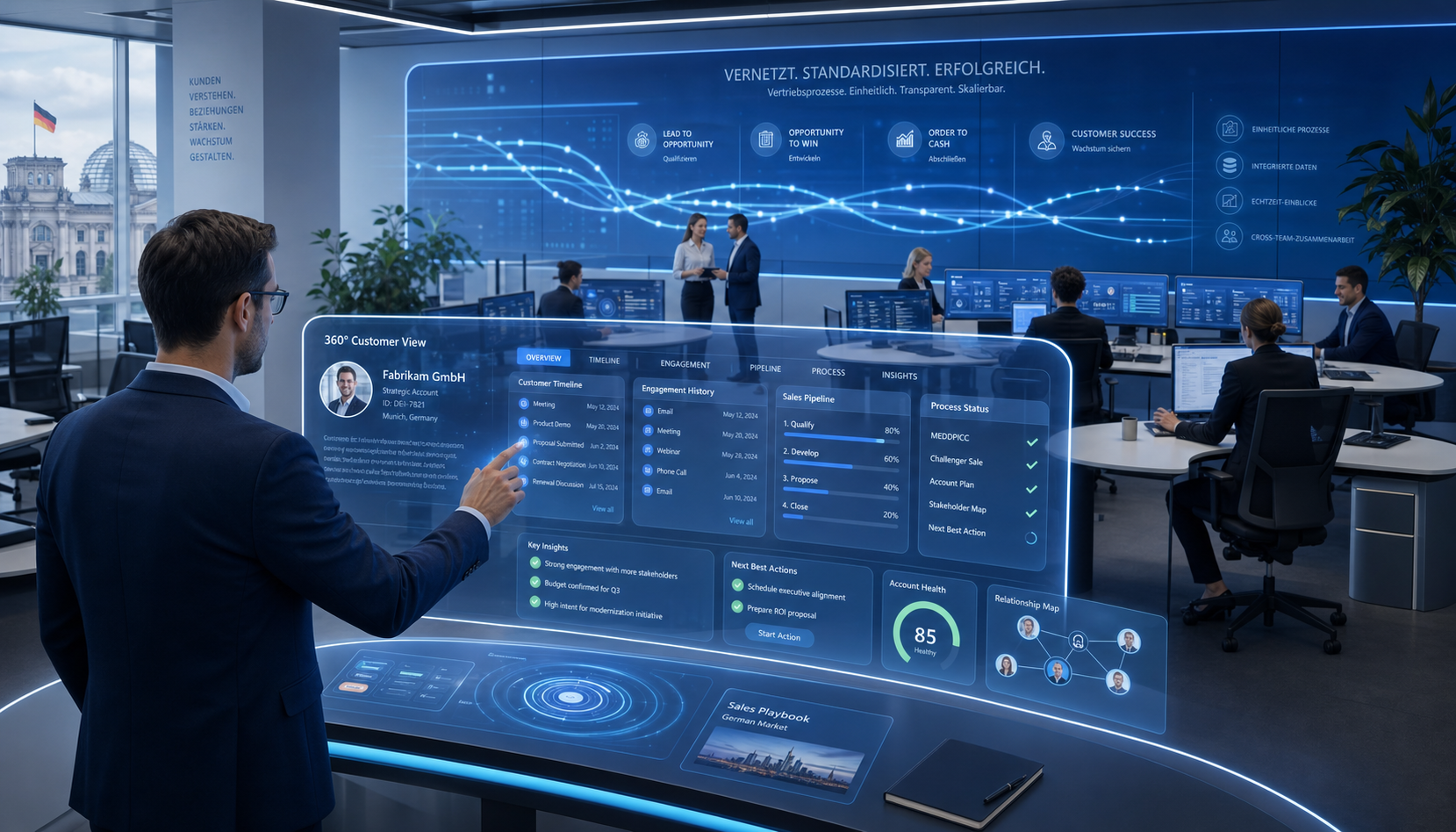
DATEV selected Microsoft Dynamics 365 to modernize a CRM landscape that no longer matched the company’s growth, collaboration, and customer experience requirements. The transformation is designed to give sales teams a unified view of customer data and sales activity, improve process visibility, and support more personalized engagement with clients.
CRM Reset Around Sales Visibility
DATEV’s CRM transformation centers on a practical sales problem: giving teams better access to the customer information, sales activity, and process context needed to respond faster and more precisely to client needs.
The company is using Dynamics 365 to support a 360-degree customer view, improve data quality, and standardize sales processes from first contact through contract closure. Capgemini said the system is intended to help sales teams make more relevant and timely offers based on a customer’s current situation.
The program also includes automation and Microsoft-Copilot-powered support. The goal is to reduce routine administrative work and give sales employees more time for personalized advice, proactive customer engagement, and higher-value client interactions.
That keeps Copilot tied to the operating model rather than treating it as a standalone AI feature. In DATEV’s case, AI-assisted support is being introduced alongside process standardization, customer data visibility, and a more intuitive user experience for sales teams.
Analysis
What this means: CRM modernization carries the same data discipline as ERP transformation. DATEV’s move to Dynamics 365 is not only a sales tooling upgrade; it is a reset of customer data visibility, process standardization, and cross-department collaboration. For ERP vendors, product leaders, and enterprise architects, the case shows how front-office modernization depends on the same data and workflow discipline that drives core ERP programs.
Business and IT Share Delivery Ownership
DATEV and Capgemini established a lean, agile governance model with roles and responsibilities defined jointly by business and IT. Capgemini said this dual leadership structure helped align stakeholders and support faster decision-making during the project.
The delivery model was milestone-driven, with a defined project plan and phase-specific scoping. That structure gave teams a clearer delivery path while preserving flexibility as needs evolved.
DATEV’s leadership framed the transformation as a broader shift in how sales works, not only as a CRM replacement. “Our Sales Transformation marks a strategic shift toward a more customer- and user-centric and connected way of working across our sales organization,” said Lars Riedel, CIO of DATEV. “With Capgemini as a trusted partner, we’ve been able to translate strategic goals into practical solutions… This joint approach lays the foundation for future innovation across our customer-facing teams.”
CRM projects often fail when sales processes, data models, and user adoption are handled as separate workstreams. DATEV’s approach and emphasis on business-IT alignment put those decisions inside the same governance structure.
Analysis
What this means: Copilot adoption gains credibility when it sits inside redesigned work. DATEV’s use of Copilot-powered support is tied to automation, customer context, and the reduction of routine sales activity, rather than positioned as a standalone AI layer. The practical takeaway is AI assistants need a defined operating role inside a process before they can create measurable value.
Customer Service and Field Service Come Next
DATEV is preparing to extend the transformation into Customer Service and Field Service, building on the foundation established in Sales. That sequencing suggests the company is using Dynamics 365 to create a broader customer-facing platform.
The move also aligns with Capgemini’s broader view that enterprise AI and automation need to be embedded in real business processes. In a companion analysis, Capgemini argues data quality, relevant use cases, and human trust are essential to moving AI into production. DATEV’s program reflects that logic in a CRM context; Copilot support is being introduced where customer data, sales processes, and user workflows are being redesigned together.
The next phase will test whether the Sales foundation can support a more connected front-office model across service and field operations. If successful, DATEV will have a common Dynamics 365 base for sales engagement, service interactions, and field-facing customer processes.
Analysis
What this means: Platform sequencing shapes customer-facing transformation. DATEV is starting with Sales and preparing to extend Dynamics 365 into Customer Service and Field Service, creating a staged path toward a more connected front-office architecture. For program owners and partner strategists, that sequencing reinforces the importance of designing the first deployment with downstream customer-facing functions in mind.